Category: Beginner Guide

This beginner guide category features simple, step-by-step explanations of personal finance topics, including budgeting, saving money, and building healthy financial habits.

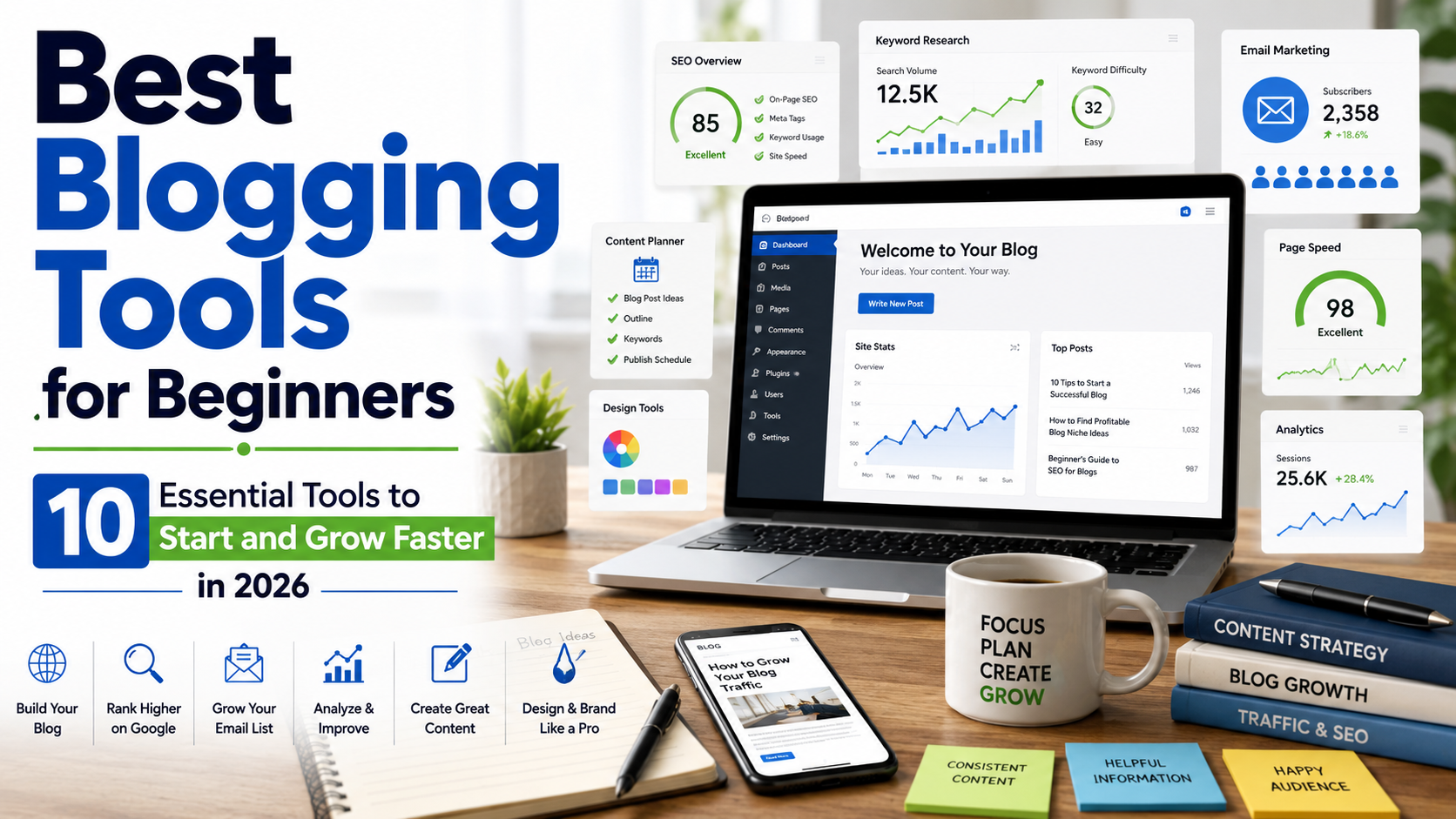
  • Best Blogging Tools for Beginners in 2026 (Start and Grow Faster)

    Best Blogging Tools for Beginners in 2026 (Start and Grow Faster)

    Starting a blog in 2026 is easier than ever — but choosing the right tools can make the difference between slow growth and fast success. Many beginners struggle not because blogging is difficult, but because they use the wrong tools from the beginning.

    The good news? You don’t need dozens of expensive tools to succeed. With just a few beginner‑friendly blogging tools, you can start faster, grow smarter, and build a profitable blog step‑by‑step.

    Direct Answer: What Are the Best Blogging Tools for Beginners?

    The best blogging tools for beginners in 2026 include:

    • Blogging Platform: WordPress.com
    • Hosting Provider: Reliable beginner‑friendly hosting
    • Keyword Research Tool: Free keyword tools
    • SEO Plugin: Beginner‑friendly SEO plugin
    • Email Marketing Tool: Email list building platform
    • Design Tool: Simple graphics creator
    • Analytics Tool: Traffic tracking tool

    These tools help beginners start a blog, create content, grow traffic, and monetize faster without technical complexity.

    Why Choosing the Right Blogging Tools Matters

    Choosing the right blogging tools early helps beginners:

    • Avoid technical frustration
    • Save money on unnecessary tools
    • Grow traffic faster
    • Build professional‑looking blogs
    • Monetize sooner

    Many beginners make the mistake of over complicating their setup. They install too many plugins, use advanced tools too early, or invest in expensive software before their blog starts growing.

    A simple, beginner‑focused setup is often the fastest path to success.

    If you’re still in the early stages, you may also find this helpful: Step‑by‑Step Guide to Starting a Profitable Blog

    Best Blogging Platform for Beginners

    WordPress (Best Overall Blogging Platform)

    WordPress remains the best blogging platform for beginners in 2026 because it offers:

    • Full control over your blog
    • Thousands of plugins
    • Professional themes
    • SEO flexibility
    • Monetization freedom

    Unlike free blogging platforms, WordPress allows you to grow without limitations. This becomes important when your blog starts gaining traffic and generating income.

    Claim → WordPress gives beginners long‑term flexibility.

    Explanation → Free platforms often restrict monetization options, plugins, and customization.

    Example → A beginner who starts with WordPress can easily add email forms, SEO plugins, and ad networks later without migrating their site.

    This is why most successful bloggers start with WordPress from day one.

    Best Hosting for Beginner Bloggers

    Your hosting provider affects your blog’s:

    • Speed
    • Reliability
    • Security
    • SEO performance

    For beginners, choose hosting that offers:

    • One‑click WordPress install
    • Free SSL certificate
    • Good customer support
    • Affordable starter plans

    Fast hosting improves user experience and helps search engines rank your content better.

    Many beginners underestimate hosting, but slow websites often struggle to grow.

    Best Keyword Research Tools for Beginners

    Keyword research helps you find topics people are already searching for.

    Without keyword research, beginners often write articles that receive little or no traffic.

    Beginner‑friendly keyword tools help you:

    • Find low‑competition topics
    • Discover trending ideas
    • Understand search intent
    • Build consistent traffic

    Claim → Keyword research increases traffic potential.

    Explanation → Writing content based on search demand improves discoverability.

    Example → A beginner targeting “budgeting tips for beginners” has a higher chance of ranking than writing random topics.

    If you’re building content strategy, this guide can also help: Digital Marketing Basics for Beginners

    Best SEO Plugins for Beginner Bloggers

    SEO plugins help beginners optimize blog posts without technical knowledge.

    Good SEO plugins help with:

    • Meta titles
    • Meta descriptions
    • Readability checks
    • Sitemap creation
    • Search engine indexing

    This makes it easier for beginners to follow SEO best practices.

    Claim → SEO plugins simplify optimization.

    Explanation → Beginners can follow guided suggestions instead of learning technical SEO.

    Example → A beginner can improve rankings by adjusting titles and descriptions suggested by SEO plugins.

    SEO plugins also help you structure articles better for search engines.

    Best Email Marketing Tools for Bloggers

    Building an email list is one of the smartest things beginners can do early.

    Email marketing tools help you:

    • Collect subscribers
    • Send newsletters
    • Promote new blog posts
    • Build audience loyalty

    Many successful bloggers say email lists are their most valuable asset.

    Claim → Email lists build long‑term traffic.

    Explanation → Unlike search traffic, email traffic is owned and predictable.

    Example → A blogger can send new posts directly to subscribers instead of waiting for search traffic.

    If you want to learn more, see: How to Start an Email List for Beginners

    Best Design Tools for Blogging

    Good design improves credibility and user experience.

    Beginner‑friendly design tools help you create:

    • Featured images
    • Pinterest pins
    • Blog graphics
    • Social media visuals

    Claim → Good design improves engagement.

    Explanation → Professional visuals increase clicks and reader trust.

    Example → A well‑designed featured image can increase click‑through rates from search engines.

    Design tools also help beginners create professional branding.

    Best Analytics Tools for Beginner Bloggers

    Analytics tools help beginners understand:

    • Traffic sources
    • Popular content
    • Audience behavior
    • Growth trends

    This data helps you make smarter blogging decisions.

    Claim → Analytics improve strategy.

    Explanation → Data shows what works and what doesn’t.

    Example → A beginner can create more content similar to their top‑performing article.

    Tracking performance helps accelerate blog growth.

    Must‑Have Blogging Tools (Simple Beginner Setup)

    If you’re just starting, here is a simple tool stack:

    Essential Tools:

    • WordPress platform
    • Beginner hosting
    • SEO plugin
    • Email marketing tool
    • Keyword research tool
    • Design tool
    • Analytics tool

    This setup is simple, affordable, and beginner‑friendly.

    You don’t need advanced tools at the beginning.

    Free vs Paid Blogging Tools: What Beginners Should Choose

    Beginners often wonder whether to use free or paid tools.

    The best approach:

    Start with free tools, then upgrade as your blog grows.

    Claim → Free tools are enough initially.

    Explanation → Beginners should focus on content creation and consistency.

    Example → A beginner can grow traffic using free keyword tools before upgrading.

    Avoid overspending early in your blogging journey.

    Blogging Tools Mistakes Beginners Should Avoid

    Common mistakes include:

    • Installing too many plugins
    • Using complex tools too early
    • Paying for unnecessary software
    • Ignoring analytics
    • Skipping email list building

    Avoiding these mistakes helps beginners grow faster.

    How the Right Tools Help You Make Money Blogging

    The right blogging tools help you:

    • Increase traffic
    • Improve SEO
    • Build email list
    • Create professional content
    • Grow authority

    These factors contribute to blog monetization.

    If you’re also exploring blogging as income, read: 10 Best Side Hustles for Beginners in 2026

    Final Thoughts: Start Simple and Grow

    The best blogging tools for beginners are simple, affordable, and easy to use.

    You don’t need advanced tools to succeed.

    Start with the basics:

    • Blogging platform
    • Hosting
    • SEO plugin
    • Email marketing tool
    • Keyword research tool
    • Design tool
    • Analytics tool

    As your blog grows, you can upgrade your tools and expand your strategy.

    Starting with the right tools helps you avoid mistakes, grow faster, and build a profitable blog in 2026.

    Consistency matters more than tools — but the right tools make consistency easier.

    Start simple, stay consistent, and grow your blog step‑by‑step.


    Frequently Asked Question

    What are the best blogging tools for beginners?

    The best blogging tools for beginners include a blogging platform like WordPress, reliable web hosting, an SEO plugin, a keyword research tool, an email marketing platform, a graphic design tool, and an analytics tool. Together, these tools help you create content, attract visitors, and grow your blog more efficiently.

    Do I need to pay for blogging tools when starting a blog?

    No. Many blogging tools offer free plans or free versions that are sufficient for beginners. As your blog grows and generates traffic or income, you can upgrade to premium features that provide additional functionality and automation.

    Which blogging platform is best for beginners in 2026?

    WordPress is widely considered the best blogging platform for beginners in 2026 because it is flexible, beginner-friendly, highly customizable, and supports thousands of themes and plugins. It also provides excellent long-term scalability for growing blogs.

    Why is keyword research important for beginner bloggers?

    Keyword research helps you discover topics that people are actively searching for online. By writing content around relevant keywords, you improve your chances of ranking in search engines, attracting organic traffic, and reaching your target audience.

    What is the most important blogging tool for long-term success?

    While every tool serves a purpose, many experienced bloggers consider an email marketing platform to be one of the most valuable long-term tools. Building an email list allows you to communicate directly with your audience, promote new content, and reduce your dependence on search engine traffic alone.

  • AI Writing Mistakes to Avoid in 2026: 12 Common Errors That Hurt Your Content

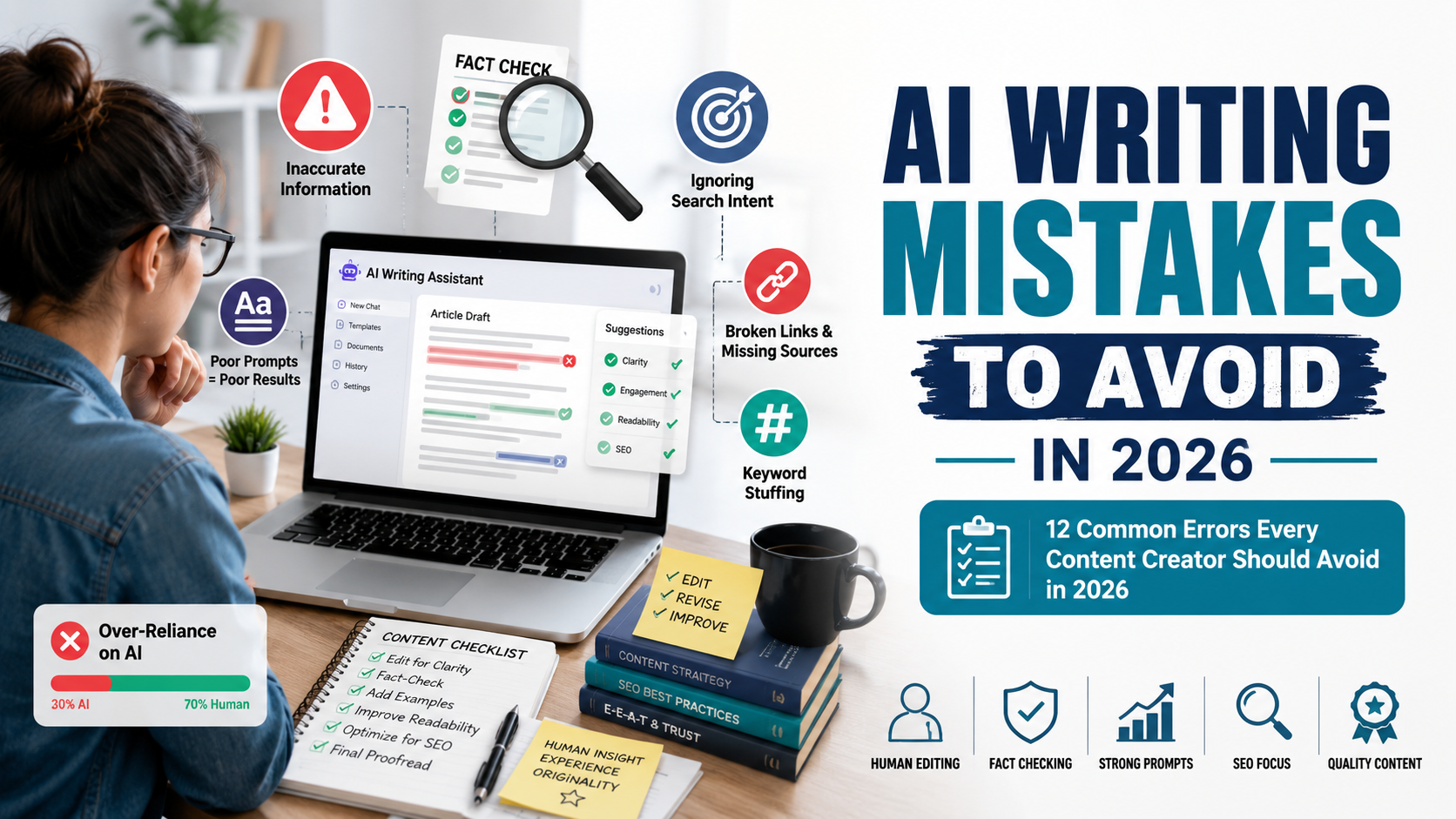
    AI Writing Mistakes to Avoid in 2026: 12 Common Errors That Hurt Your Content

    Hook

    Artificial intelligence has transformed content creation. Bloggers, marketers, freelancers, businesses, and entrepreneurs now rely on AI writing tools to research ideas, draft articles, generate marketing copy, and streamline their publishing workflows.

    While these tools can dramatically improve productivity, they are not capable of replacing human expertise. The quality of AI-assisted content still depends on the decisions made by the person using the technology.

    Many beginners assume that simply asking an AI tool to write an article will produce content that is ready to publish. In reality, this approach often leads to inaccurate information, repetitive writing, weak search engine performance, and a poor experience for readers.

    The most successful AI content creators don’t avoid AI—they learn how to use it responsibly. They understand its strengths, recognize its limitations, and know how to combine artificial intelligence with careful research, thoughtful editing, and professional judgment.

    Whether you’re building a blog, starting a freelance writing career, creating content for clients, or growing an online business, learning what not to do can be just as valuable as learning best practices.

    In this guide, we’ll examine the most common AI writing mistakes people make in 2026, explain why they matter, and show you practical ways to avoid them so you can create content that is more accurate, engaging, trustworthy, and valuable for both readers and search engines.

    Direct Answer

    AI writing mistakes are common errors people make when using artificial intelligence to create written content. These mistakes include publishing AI-generated text without editing, trusting AI without fact-checking, writing vague prompts, ignoring search intent, overusing keywords, relying too heavily on automation, and failing to add original human insights.

    Although AI can significantly improve productivity, it cannot replace critical thinking, creativity, or editorial judgment. The highest-quality content in 2026 is created by combining AI efficiency with human expertise, careful review, and a genuine focus on helping readers.

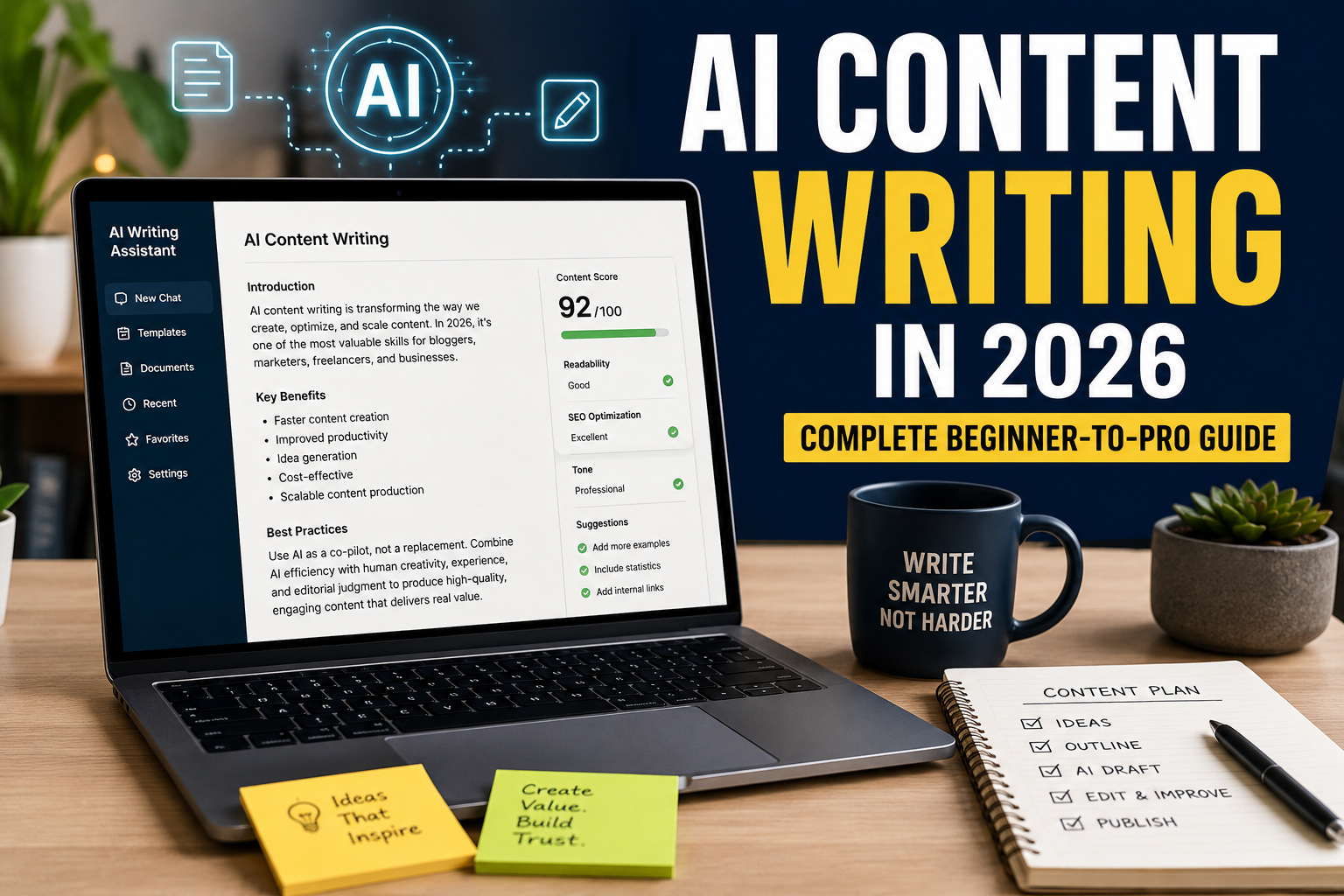
    If you’re new to AI-assisted writing, our AI Content Writing in 2026: Complete Beginner-to-Pro Guide explains the foundations of using artificial intelligence responsibly before exploring the common mistakes covered in this article.

    What Are AI Writing Mistakes?

    AI writing mistakes are errors that reduce the quality, usefulness, or credibility of content created with artificial intelligence. In most cases, these problems are not caused by the AI itself but by how the technology is used.

    Artificial intelligence is designed to predict and generate language based on patterns learned from large amounts of data. It does not think, reason, or verify information in the same way humans do. As a result, it can sometimes produce text that sounds convincing while containing factual inaccuracies, incomplete explanations, or generic ideas.

    This is why experienced content creators treat AI as a writing assistant rather than an independent author. AI can help brainstorm ideas, organize information, draft sections, and improve efficiency, but the responsibility for producing accurate and valuable content always remains with the writer.

    Many common mistakes occur when users expect AI to perform tasks that require human judgment. For example, publishing content without editing, failing to verify important claims, or assuming AI fully understands a specific audience can all lead to articles that disappoint readers and perform poorly in search results.

    Understanding these mistakes is the first step toward avoiding them. Once you recognize where AI works well—and where it still needs human guidance—you can build a workflow that combines the speed of automation with the quality standards readers expect.

    Why Avoiding AI Writing Mistakes Matters

    At first glance, some AI writing mistakes may seem minor. A repetitive sentence, an unchecked statistic, or a vague explanation might not appear to have a significant impact. However, small issues can accumulate throughout an article, reducing its overall quality and making it less useful to readers.

    For bloggers and website owners, poor-quality content can also affect long-term growth. Search engines increasingly prioritize content that demonstrates expertise, provides helpful information, and satisfies user intent. Articles that feel generic, contain inaccuracies, or fail to answer readers’ questions are less likely to build trust or encourage visitors to return.

    Avoiding common AI writing mistakes also helps strengthen your credibility. Readers are more likely to trust content that is accurate, well-organized, and supported by thoughtful explanations rather than articles that simply repeat information available elsewhere. By reviewing AI-generated drafts carefully, adding your own insights, and ensuring every section serves a clear purpose, you create a better experience for your audience.

    Another important reason to avoid these mistakes is efficiency. Correcting problems early in the writing process often saves far more time than rewriting an entire article after publication. Developing good habits from the beginning—such as using detailed prompts, verifying facts, and editing every draft—helps you build a consistent workflow that produces stronger content over time.

    Ultimately, successful AI-assisted writing is not about generating content as quickly as possible. It is about using technology to support a thoughtful process that results in content readers find genuinely helpful. The writers who understand this balance are the ones most likely to succeed as AI continues to reshape digital publishing.

    Mistake #1: Publishing AI Content Without Human Editing

    One of the biggest misconceptions about artificial intelligence is that it can produce a publication-ready article with little or no human involvement. While modern AI writing tools have become remarkably capable, they are not infallible. Treating the first draft as the finished product is one of the quickest ways to produce content that lacks depth, accuracy, and originality.

    Many beginners generate an article, skim through it briefly, correct a few obvious grammar mistakes, and publish it immediately. Although this approach saves time initially, it often creates more problems in the long run. Readers may encounter repetitive wording, awkward transitions, incomplete explanations, or statements that sound convincing but lack supporting evidence.

    Human editing remains an essential part of the writing process because AI cannot evaluate content the way an experienced writer or editor can. It cannot determine whether an explanation truly answers a reader’s question, whether an example is persuasive, or whether the article reflects your unique voice and expertise.

    For example, imagine you’re writing a guide about creating an emergency fund. AI might explain what an emergency fund is and suggest saving three to six months of living expenses. While this advice is generally helpful, it may fail to discuss situations where readers should adjust those recommendations based on irregular income, self-employment, or regional cost-of-living differences. An experienced writer can recognize these gaps and expand the discussion to make the article more practical.

    Editing also improves readability. Breaking up long paragraphs, replacing repetitive phrases, strengthening transitions, and refining awkward sentences all contribute to a smoother reading experience.

    Instead of viewing editing as an extra step, think of it as the stage where your article becomes genuinely valuable. AI creates the foundation, but careful human review transforms that foundation into content readers are more likely to trust and share.

    How to avoid this mistake:

    • Review every AI-generated draft before publishing.
    • Rewrite sections that sound repetitive or unnatural.
    • Add practical examples and personal insights where appropriate.
    • Improve transitions so ideas flow naturally.
    • Read the article from the reader’s perspective before publishing.

    Mistake #2: Trusting AI Without Fact-Checking

    Artificial intelligence can generate information quickly, but speed should never be confused with accuracy.

    One of AI’s most significant limitations is that it can occasionally produce incorrect or misleading information with complete confidence. This phenomenon is sometimes referred to as an “AI hallucination,” where the system generates content that appears credible even though it contains factual errors or unsupported claims.

    For bloggers and content creators, publishing inaccurate information can damage credibility. Readers who discover incorrect facts may lose confidence not only in the article but also in your website as a whole.

    This becomes even more important when writing about topics such as finance, health, technology, taxation, or legal matters, where outdated or inaccurate information could have real-world consequences.

    For instance, an AI tool might provide an outdated tax threshold, reference an obsolete software feature, or cite statistics that are no longer current. Without verification, these inaccuracies can easily find their way into published content.

    Professional writers therefore treat AI-generated information as a starting point rather than a final authority. Every important claim should be checked against reliable sources before publication.

    Reliable sources may include:

    • Government websites
    • Official company documentation
    • Academic research
    • Industry reports
    • Reputable news organizations

    Fact-checking is not about distrusting AI. It is about maintaining the editorial standards that readers expect from trustworthy publishers.

    The few extra minutes spent verifying information can protect your reputation and improve the overall quality of your content.

    How to avoid this mistake:

    • Verify statistics before publishing.
    • Confirm dates, product features, and pricing.
    • Check financial, legal, and medical information against official sources.
    • Ensure quotations and research findings are genuine.
    • Never assume that AI-generated information is automatically correct.

    Mistake #3: Writing Weak or Vague Prompts

    Many people believe the quality of AI-generated content depends mainly on the software they use. In reality, the quality of the output often depends just as much on the quality of the instructions they provide.

    Artificial intelligence responds to context. If your request is vague, the response is likely to be vague as well.

    Consider these two examples.

    Weak prompt:

    “Write an article about budgeting.”

    This instruction provides almost no direction. The AI must guess who the audience is, what aspects of budgeting should be covered, how detailed the article should be, and what tone to use.

    Now compare it with a more detailed request.

    Improved prompt:

    “Write a beginner-friendly article explaining how young professionals can create their first monthly budget. Use a conversational but professional tone, organize the article with clear H2 headings, include practical examples, and finish with actionable budgeting tips.”

    The second prompt gives the AI clear guidance about the audience, purpose, tone, structure, and desired outcome. As a result, the generated draft is usually far more relevant and requires less editing.

    This is one reason prompt writing has become an essential skill for AI-assisted content creators. Good prompts reduce ambiguity and help AI produce content that aligns more closely with your goals.

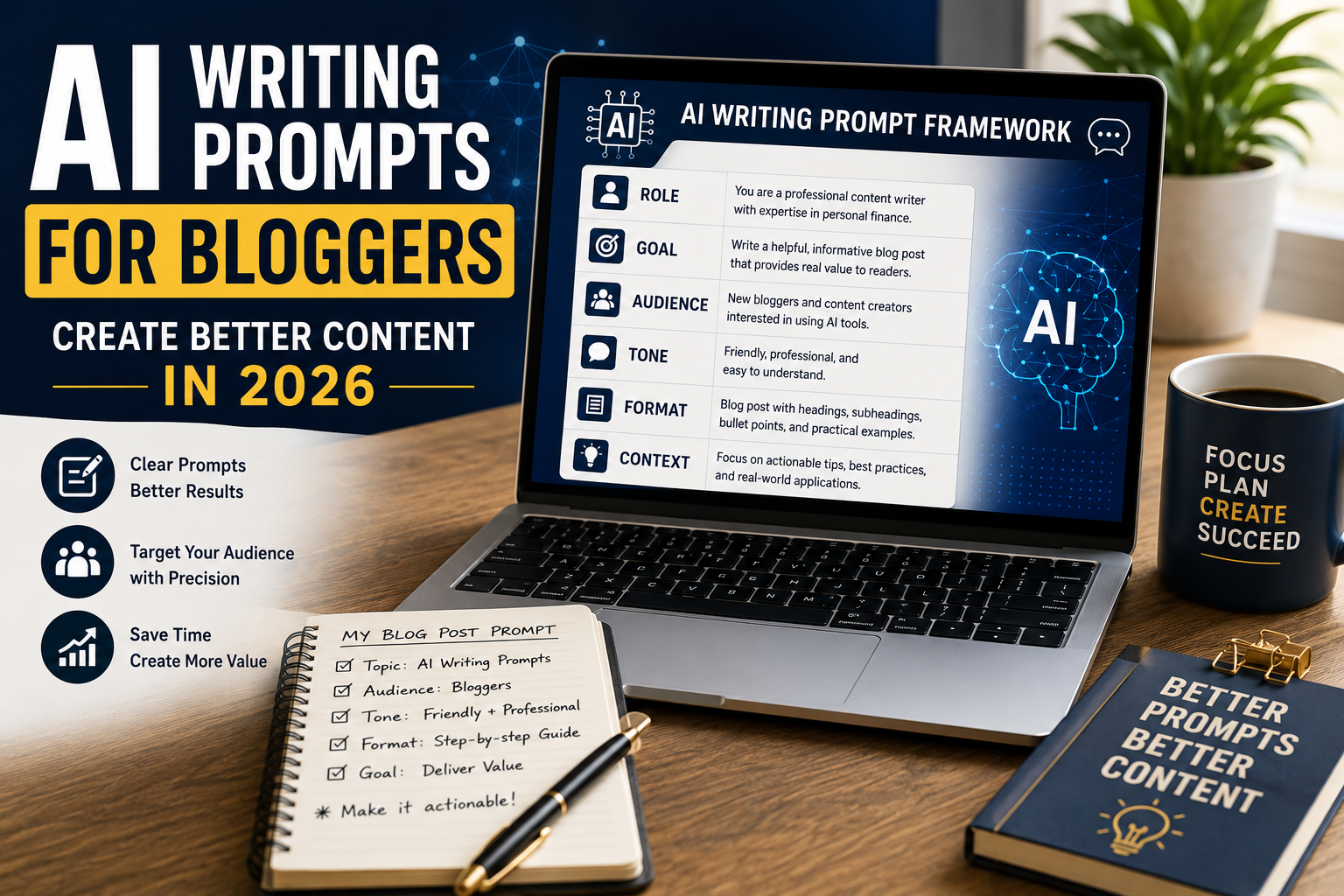
    If you’d like to learn this skill in greater depth, our AI Writing Prompts for Bloggers in 2026 guide explores prompt writing techniques, practical templates, and proven strategies for improving AI-generated content.

    How to avoid this mistake:

    • Clearly define the article’s objective.
    • Identify the target audience.
    • Specify the desired tone and writing style.
    • Describe the preferred structure.
    • Include practical examples or formatting requirements when appropriate.
    • Refine your prompt if the first output doesn’t meet your expectations.

    Mistake #4: Ignoring Search Intent

    A well-written article can still perform poorly if it fails to answer the question readers are actually asking.

    Search intent refers to the reason someone enters a particular query into a search engine. Understanding that intent helps you create content that matches the reader’s expectations rather than simply mentioning the topic.

    For example, someone searching for “best AI writing tools for beginners” is usually looking for product recommendations and comparisons. They expect explanations of features, advantages, disadvantages, pricing considerations, and guidance on choosing the right platform.

    By contrast, someone searching for how to become an AI content writer wants a practical roadmap for building skills, finding opportunities, and developing a career. Although both topics relate to AI writing, they serve completely different purposes.

    One of the mistakes beginners make is generating content around a keyword without first considering why someone is searching for it. This often results in articles that contain relevant information but fail to solve the reader’s actual problem.

    Professional content creators begin by identifying the reader’s objective before writing a single paragraph. Every section of the article is then designed to move the reader closer to that objective.

    Understanding search intent also improves SEO. Search engines increasingly prioritize content that satisfies user expectations, provides comprehensive answers, and keeps readers engaged. Articles that align closely with search intent are therefore more likely to perform well over time.

    If you’re building a structured AI-assisted blogging workflow, understanding search intent should become one of the earliest steps in your content planning process rather than something considered after the article has already been written.

    How to avoid this mistake:

    • Identify what readers are actually trying to accomplish.
    • Study the types of articles currently ranking for your target keyword.
    • Organize your content around answering the reader’s primary question.
    • Remove sections that do not support the article’s main purpose.
    • Focus on solving problems rather than simply mentioning keywords.

    Mistake #5: Letting AI Replace Your Own Experience

    Artificial intelligence is exceptionally good at organizing information, summarizing concepts, and producing readable first drafts. However, one thing it cannot replicate is your own experience, perspective, and judgment.

    Many beginners assume that because AI can produce an article quickly, there is no need to contribute anything further. As a result, they publish content that explains basic concepts but lacks the personal insights, practical examples, and original observations that make an article genuinely valuable.

    Readers rarely remember content simply because it was well written. They remember content that helps them understand a problem from a real-world perspective.

    Imagine two articles explaining how to start a blog. The first repeats common advice that appears on hundreds of websites. The second includes lessons learned from launching a new website, challenges encountered during the first few months, and practical solutions that worked in real situations. Both articles may be accurate, but the second offers something AI cannot generate on its own—authentic experience.

    This is especially important as search engines continue rewarding content that demonstrates expertise and provides meaningful value. Original insights, thoughtful analysis, and practical guidance help distinguish your content from the growing volume of generic AI-generated articles published online.

    That doesn’t mean every article must contain personal stories. Instead, consider where your own knowledge can strengthen the discussion. You might explain why a particular workflow saves time, describe a common mistake you’ve observed, or expand on a concept using an example that makes it easier to understand.

    Your role as the writer is to provide the context that AI cannot.

    Rather than asking, “What can AI write for me?” ask, “What can I add that only I can contribute?”

    That mindset transforms AI from a replacement into a collaborative assistant that helps communicate your knowledge more effectively.

    How to avoid this mistake:

    • Add practical examples wherever appropriate.
    • Include original observations and editorial insights.
    • Explain why a recommendation works, not just what to do.
    • Expand on areas where your own knowledge adds value.
    • Use AI to support your expertise rather than replace it.

    Mistake #6: Publishing Generic Content

    One of the easiest ways to lose readers is by publishing content that feels like it could have been copied from dozens of other websites.

    AI models are trained to recognize patterns in language, which means they naturally generate content that reflects commonly discussed ideas. Without careful editing and expansion, many AI-generated articles end up sounding predictable, repetitive, or overly broad.

    Generic content often provides definitions without meaningful explanations, lists recommendations without justification, or repeats information that readers have already encountered elsewhere. While technically accurate, it rarely leaves a lasting impression.

    For example, an article about saving money might advise readers to create a budget, reduce unnecessary spending, and build an emergency fund. Although these suggestions are useful, they offer little value if they are presented without examples, practical guidance, or deeper explanations.

    Professional content creators go beyond summarizing common advice. They anticipate readers’ questions, address potential challenges, compare different approaches, and explain concepts in ways that are both informative and engaging.

    One effective way to avoid generic writing is to ask yourself whether each section teaches the reader something genuinely useful. If a paragraph merely repeats information that can be found in countless other articles, consider expanding it with additional context or replacing it with more practical guidance.

    Another useful habit is to review competing articles before writing. This isn’t about copying their ideas; it’s about identifying opportunities to create something more comprehensive, clearer, or more helpful.

    Publishing fewer high-quality articles that provide unique value is generally far more effective than producing a large volume of content that offers little beyond what already exists.

    How to avoid this mistake:

    • Expand beyond simple definitions.
    • Answer follow-up questions readers are likely to have.
    • Include realistic examples and practical scenarios.
    • Explain concepts in greater depth where appropriate.
    • Ask yourself whether each section genuinely adds value.

    Mistake #7: Keyword Stuffing with AI

    Search engine optimization remains an important part of content creation, but it is possible to focus so heavily on keywords that the quality of the writing begins to suffer.

    Because AI can quickly generate large amounts of text, some users repeatedly instruct it to include the same keyword throughout an article. This often produces content that sounds unnatural, repetitive, and difficult to read.

    For example, an article targeting the phrase AI writing tools might repeat that exact keyword in nearly every paragraph, even when simpler alternatives would make the writing flow more naturally.

    Readers notice this repetition almost immediately. Instead of feeling helpful, the content begins to sound mechanical and overly optimized.

    Modern search engines have also become much better at understanding context and related language. Rather than rewarding excessive keyword repetition, they increasingly prioritize content that addresses topics comprehensively while maintaining a natural writing style.

    Instead of forcing your primary keyword into every paragraph, use it where it makes sense. Support it with related terms, descriptive language, and clear explanations that help both readers and search engines understand the broader subject.

    For example, alongside the phrase AI writing tools, you might naturally discuss AI assistants, content generation platforms, writing software, prompt creation, editing workflows, or AI-assisted blogging. This approach improves topical relevance without sacrificing readability.

    Good SEO is not about repeating the same phrase as many times as possible. It is about creating content that answers readers’ questions clearly while helping search engines understand what the article is about.

    When writing with AI, always remember that your first audience is the reader—not the search engine.

    How to avoid this mistake:

    • Use keywords naturally within the content.
    • Include related terms instead of repeating the same phrase excessively.
    • Prioritize readability over keyword density.
    • Write complete answers rather than focusing only on optimization.
    • Review the article aloud to identify unnatural repetition.

    Mistake #8: Forgetting Internal Linking Opportunities

    Many bloggers spend hours researching, writing, editing, and optimizing an article but overlook one simple step that can significantly improve both the reader’s experience and the overall structure of their website: internal linking.

    Internal links connect one article on your website to another relevant piece of content. These links help readers continue learning about related topics while also helping search engines understand how your content is organized.

    For example, someone reading this guide about AI writing mistakes may also benefit from learning how to create better prompts, choose beginner-friendly AI writing tools, or build a complete AI blogging workflow. Directing readers to those resources allows them to continue their learning journey without leaving your website.

    Internal linking also strengthens topical authority. When multiple articles within the same subject area support one another, they create a network of related content that demonstrates depth and expertise. Over time, this can improve the visibility of your website for a broader range of related search queries.

    However, internal links should always be relevant. Avoid inserting links simply because they exist. Every recommendation should help readers explore the next logical step in their learning process.

    For this article, several natural internal linking opportunities already exist within my AI content series. Readers who want to strengthen their prompt-writing skills can continue with AI Writing Prompts for Bloggers in 2026, while those interested in building a structured content workflow may find AI Blog Writing Step-by-Step particularly helpful.

    Planning internal links while writing—not after publication—also makes the process much easier. As you draft each section, consider whether another article on your website provides additional detail that would benefit the reader.

    Well-planned internal linking improves navigation, encourages readers to spend more time on your website, and reinforces the topical relationships between your articles.

    How to avoid this mistake:

    • Link naturally to closely related articles.
    • Prioritize links that genuinely help readers continue learning.
    • Use descriptive anchor text that clearly explains what readers will find.
    • Review older articles regularly to add links to newly published content.
    • Build topic clusters instead of treating each article as an isolated resource.

    Mistake #9: Depending on Only One AI Tool

    As AI technology continues to evolve, many writers find a tool they enjoy using and rely on it for every stage of content creation. While becoming proficient with one platform is beneficial, depending exclusively on a single AI tool can limit both the quality of your work and the efficiency of your workflow.

    Different AI platforms have different strengths. Some are particularly effective at brainstorming ideas, while others excel at long-form writing, editing, summarizing information, or refining tone. No single tool is consistently the best at every task.

    For example, you might use one AI assistant to generate article ideas, another to refine awkward paragraphs, and a grammar checker to identify punctuation or readability issues before publication. This layered approach often produces stronger results than relying on a single platform from beginning to end.

    Using multiple tools can also help you evaluate AI-generated content more critically. If two platforms produce significantly different explanations of the same topic, that difference may encourage you to conduct additional research before publishing. Rather than accepting the first answer you receive, you begin thinking like an editor whose responsibility is to verify and improve the final article.

    That said, using multiple tools does not mean switching platforms every time a new AI application appears. Constantly chasing the latest software can become distracting and reduce productivity. The goal is to build a reliable workflow that makes use of the strengths of a small number of trusted tools.

    As your experience grows, you’ll naturally discover which combination of platforms best supports your writing style, content goals, and publishing process.

    How to avoid this mistake:

    • Learn one primary AI writing tool thoroughly before expanding your workflow.
    • Use additional tools only when they provide clear advantages.
    • Compare important outputs when accuracy is critical.
    • Avoid constantly switching to every newly released platform.
    • Build a workflow based on consistency rather than novelty.

    Mistake #10: Skipping the Final Proofreading Stage

    Even after editing and fact-checking your content, one important step remains: proofreading.

    Many writers assume that because AI-generated text is grammatically correct, there is no need for a final review. However, proofreading goes beyond correcting spelling mistakes. It is the last opportunity to identify small issues that can affect the reader’s experience.

    During proofreading, pay attention to details such as:

    • Grammar and punctuation.
    • Consistent formatting.
    • Heading hierarchy.
    • Sentence flow.
    • Repetitive wording.
    • Broken links.
    • Typographical errors.
    • Missing words or incomplete sentences.

    Reading your article aloud can be particularly effective. Sentences that look natural on the screen often sound awkward when spoken, making it easier to identify areas that need improvement.

    Another useful technique is to take a short break before proofreading. Returning to the article with fresh eyes often makes overlooked mistakes much easier to spot.

    Professional writers understand that publishing is the final stage of a carefully managed process—not the moment they finish typing the last sentence.

    A thorough proofreading session may only take a few extra minutes, but it can significantly improve the professionalism and readability of your content.

    How to avoid this mistake:

    • Proofread every article before publishing.
    • Read important sections aloud.
    • Check formatting on desktop and mobile devices.
    • Test all internal and external links.
    • Make one final review focused solely on the reader’s experience.

    Mistake #11: Never Updating AI-Generated Content

    Publishing an article is not the end of its lifecycle. In many cases, it is only the beginning.

    Information changes. Software evolves. Industry best practices improve. Statistics become outdated. Search intent shifts over time. Content that was accurate when published may gradually lose relevance if it is never reviewed again.

    This is especially true for AI-related topics, where new models, features, and tools are introduced regularly. An article comparing AI writing platforms today may require significant updates within a year as new capabilities emerge and existing services change.

    Regular content updates also demonstrate that your website remains active and committed to providing readers with current information. Rather than constantly creating new articles, reviewing and improving existing content can often produce substantial long-term benefits.

    When updating AI-generated content, consider reviewing:

    • Outdated facts or statistics.
    • References to discontinued features or tools.
    • Screenshots and examples.
    • Internal links to newer articles.
    • Opportunities to expand sections with additional insights.
    • Changes in reader search intent.

    Even small improvements can help keep your content useful and competitive.

    Developing a habit of reviewing important articles every few months helps ensure your website continues serving readers effectively as information evolves.

    How to avoid this mistake:

    • Review evergreen articles regularly.
    • Replace outdated examples and statistics.
    • Add new insights as industries evolve.
    • Update internal links whenever new related content is published.
    • Treat published content as an ongoing project rather than a finished product.

    Mistake #12: Believing AI Can Replace Human Creativity

    Perhaps the most significant mistake of all is assuming that artificial intelligence can replace the qualities that make human communication meaningful.

    AI can generate words, organize information, summarize research, and suggest ideas. It can dramatically improve efficiency and reduce repetitive work. However, it cannot replace curiosity, empathy, critical thinking, lived experience, or genuine creativity.

    Readers connect with content that demonstrates understanding. They appreciate articles that answer their questions thoughtfully, acknowledge real challenges, and provide practical guidance grounded in human judgment.

    Successful writers use AI to support these strengths rather than replace them.

    Think of AI as an exceptionally capable assistant. It can help you overcome writer’s block, organize ideas, and accelerate drafting, but it still depends on you to define the purpose of the content, evaluate its accuracy, and ensure it genuinely serves the reader.

    As AI continues to evolve, the greatest competitive advantage will not simply be access to better technology. It will be the ability to combine that technology with clear thinking, ethical publishing practices, and a commitment to creating content that readers can trust.

    The future belongs not to those who rely entirely on AI, but to those who learn how to collaborate with it effectively.

    How to avoid this mistake:

    • Use AI to enhance your work rather than replace your thinking.
    • Continue developing your writing and research skills.
    • Prioritize originality, clarity, and usefulness.
    • Add your own perspective whenever possible.
    • Remember that readers trust people—not algorithms.

    Professional AI Writing Checklist Before Publishing

    Before publishing any AI-assisted article, take a few minutes to review the following checklist:

    Content Quality

    • Does the article fully answer the reader’s primary question?
    • Is the information accurate and up to date?
    • Have all important facts, statistics, and claims been verified?

    Readability

    • The article flow naturally from one section to the next?
    • Have repetitive words or awkward sentences been improved?
    • Are headings clear and logically organized?

    Original Value

    • Have you added original insights, examples, or practical explanations?
    • Does the article provide value beyond what readers can find elsewhere?

    SEO and User Experience

    • The content satisfy the intended search intent?
    • Are keywords used naturally rather than excessively?
    • Have you included relevant internal links?
    • Are external references trustworthy and current?

    Final Review

    • Have you proofread the article carefully?
    • Have you tested all links?
    • Would you feel confident recommending this article to someone seeking reliable information?

    If the answer to every question is yes, your article is far more likely to provide a positive experience for readers while supporting your long-term publishing goals.

    Final Thoughts

    Artificial intelligence has changed the way content is created, but it has not changed the principles of good writing.

    Readers still value accuracy, clarity, originality, and practical advice. Search engines still aim to reward content that demonstrates expertise, satisfies user intent, and genuinely helps people solve problems. AI can support these goals, but it cannot achieve them on its own.

    The most common AI writing mistakes—publishing without editing, skipping fact-checking, writing weak prompts, ignoring search intent, producing generic content, and relying too heavily on automation—are all avoidable. By developing thoughtful habits and treating AI as a collaborative assistant rather than a replacement for human judgment, you can consistently produce content that is more trustworthy, engaging, and effective.

    Remember that becoming a skilled AI-assisted writer is a process of continuous learning. Every article you research, write, edit, and improve strengthens your ability to use these tools responsibly and creatively.

    Once you’ve learned how to avoid these common mistakes, the next step is putting those skills to work. Whether you’re interested in freelancing, blogging, content marketing, or building an online business, understanding how to turn AI writing into a source of income is the natural progression.

    In our next guide, How to Make Money with AI Writing, we’ll explore practical ways to monetize your AI writing skills, identify opportunities available in 2026, and show you how responsible AI-assisted content creation can become part of a sustainable long-term income strategy.


    Frequently Asked Question

    What are the most common AI writing mistakes?

    The most common AI writing mistakes include publishing AI-generated content without editing, failing to fact-check information, writing vague prompts, ignoring search intent, overusing keywords, and relying too heavily on automation instead of adding human expertise.

    Can AI write articles without human editing?

    AI can generate article drafts, but human editing is essential. Reviewing AI-generated content helps improve accuracy, readability, originality, and overall quality before publication.

    Why is fact-checking AI-generated content important?

    AI can occasionally produce inaccurate or outdated information. Fact-checking ensures that statistics, dates, quotations, and important claims are correct and come from reliable sources.

    How can I improve the quality of AI-generated content?

    You can improve AI-generated content by writing detailed prompts, editing every draft, verifying facts, adding personal insights and examples, improving readability, and ensuring the article satisfies the reader’s search intent.

    Can AI replace human writers?

    No. AI is a powerful writing assistant that helps with brainstorming, drafting, and editing, but it cannot replace human creativity, critical thinking, experience, or editorial judgment. The best content combines AI efficiency with human expertise.
  • AI Blog Writing Step by Step: How to Write High-Quality Blog Posts with AI in 2026

    AI Blog Writing Step by Step: How to Write High-Quality Blog Posts with AI in 2026

    Hook

    Learning how to use AI for blogging is no longer about asking a chatbot to write an entire article in a single prompt. The most successful bloggers use artificial intelligence as part of a structured workflow that combines research, planning, drafting, editing, and human expertise to produce content readers genuinely find valuable.

    Whether you’re starting your first blog, growing an established website, or looking to publish content more efficiently, understanding the complete AI blog writing process can help you create articles that are informative, engaging, and optimized for long-term success.

    Direct Answer

    AI blog writing is the process of using artificial intelligence to assist with each stage of creating a blog post—from choosing a topic and researching information to drafting, editing, optimizing for search engines, and publishing. Rather than replacing human writers, AI works best as a productivity tool that speeds up repetitive tasks while leaving strategic thinking, fact-checking, and editorial judgment in human hands.

    Following a structured workflow helps bloggers produce higher-quality content, reduce editing time, and maintain consistency across every article they publish.

    What Is AI Blog Writing?

    AI blog writing is the practice of using artificial intelligence tools to support the creation of blog content without handing complete control of the writing process to the software.

    Instead of viewing AI as an automatic content generator, experienced bloggers treat it as a collaborative writing assistant. AI can help generate ideas, organize information, draft sections, suggest improvements, and streamline repetitive tasks, while the writer remains responsible for research, accuracy, originality, and the overall quality of the finished article.

    For someone new to AI-assisted content creation, this distinction is important. Publishing whatever an AI produces without review often leads to generic, inaccurate, or poorly optimized articles. The strongest blog posts combine AI efficiency with human expertise to create content that is both helpful and trustworthy.

    If you’re still learning the fundamentals of AI-assisted writing, begin with AI Content Writing in 2026: Complete Beginner-to-Pro Guide, which explains how AI fits into modern content creation and why human oversight remains essential.

    Why Following a Structured AI Blogging Workflow Matters

    Many beginners believe AI can produce a complete, publication-ready article from a single prompt.

    In reality, professional bloggers rarely work that way.

    Instead, they divide the writing process into manageable stages that allow them to review information, refine ideas, improve structure, and ensure the final article genuinely helps readers.

    Following a structured workflow offers several important advantages.

    Better Content Quality

    High-quality articles don’t happen by accident.

    They result from thoughtful planning, careful research, and multiple rounds of refinement.

    Using AI throughout a structured workflow allows you to improve each stage of content creation rather than relying on one large AI-generated draft.

    For example, instead of asking AI to “write a complete article about budgeting,” you might first use it to brainstorm ideas, then build an outline, expand each section individually, and finally review the completed article for clarity and accuracy.

    Breaking the process into smaller steps usually produces stronger results than attempting everything at once.

    Improved Search Engine Performance

    Search engines reward content that answers readers’ questions clearly, demonstrates expertise, and provides genuine value.

    A structured workflow encourages bloggers to focus on search intent before writing, organize information logically, and edit content carefully before publication.

    Rather than stuffing articles with keywords, you’ll naturally create content that is easier for both readers and search engines to understand.

    More Consistent Publishing

    One of the biggest challenges bloggers face isn’t writing a single article—it’s publishing consistently over time.

    Without a repeatable system, every new article can feel like starting from scratch.

    A documented workflow removes much of that uncertainty. Once you know each step of the process, creating new content becomes faster and less overwhelming.

    Consistency is especially valuable for bloggers building topical authority, since publishing related, high-quality articles over time helps establish trust with both readers and search engines.

    Reduced Editing Time

    Contrary to popular belief, AI doesn’t eliminate editing—it changes when and how editing happens.

    Instead of correcting a large amount of poorly structured content at the end, you improve quality throughout the writing process.

    Creating detailed outlines, using focused prompts, and generating one section at a time often results in cleaner drafts that require less revision before publication.

    Over time, this approach can save hours of work while maintaining higher editorial standards.

    Step 1: Choose a Topic Based on Search Intent

    Every successful blog post begins long before AI generates a single sentence.

    It begins with selecting a topic that solves a real problem for your audience.

    Many beginners make the mistake of choosing subjects based solely on personal interest or trending discussions without considering whether readers are actively searching for that information. While passion is important, sustainable blogging also requires understanding what your audience wants to learn.

    Instead of asking, “What do I want to write about?” ask yourself:

    • What questions are people already asking?
    • What problems are they trying to solve?
    • What information would genuinely help them?
    • What level of experience does my audience have?

    Answering these questions before opening an AI writing tool gives your content a much stronger foundation.

    Understand Search Intent Before You Write

    Search intent refers to the reason someone performs a search.

    Understanding that reason allows you to create content that matches the reader’s expectations rather than simply mentioning the topic.

    For example, someone searching for “best AI writing tools for beginners” wants recommendations and comparisons.

    Someone searching for how to become an AI content writer wants a practical career roadmap.

    Someone searching for “AI blog writing step by step” expects a complete workflow that explains how to create blog posts using AI from beginning to end.

    Although these topics belong to the same subject area, each serves a different purpose and therefore requires a different approach.

    Matching your content to search intent increases the likelihood that readers will find your article useful and continue reading.

    Balance Evergreen and Trending Topics

    As you build your editorial calendar, aim for a healthy mix of evergreen and timely content.

    Evergreen articles remain useful for years because they answer questions people ask consistently. Examples include beginner guides, tutorials, and educational resources.

    Trending articles, on the other hand, focus on new developments, software updates, or emerging industry changes that attract attention in the short term.

    For most bloggers, evergreen content should form the foundation of the website because it continues attracting readers long after publication.

    Trending content can then complement that foundation by keeping your site current and relevant.

    Validate Your Topic Before Writing

    Before moving to the next stage, ask yourself a few simple questions.

    • Does this topic solve a real problem?
    • Is there a clear audience for the article?
    • Can I provide information that is more helpful than what’s already available?
    • Will this topic fit naturally within my existing content strategy?

    If the answer to these questions is yes, you’re ready to begin the research process.

    The next step isn’t asking AI to write the article.

    It’s gathering the information that will allow AI to produce a stronger draft.

    Step 2: Research Before Asking AI to Write

    One of the biggest misconceptions about AI-assisted blogging is that research is no longer necessary.

    In reality, research has become even more important.

    Artificial intelligence can organize information, explain concepts, and help draft content, but it should not be your only source of knowledge. AI may occasionally present outdated information, omit important context, or generate claims that require verification. Starting with solid research gives both you and the AI a stronger foundation for creating accurate, helpful content.

    Think of AI as an assistant that works best when it has clear direction. The better your research, the better your prompts, and the stronger your final article.

    Gather Reliable Information

    Before opening your preferred AI writing tool, spend time collecting trustworthy information about your topic.

    Depending on your subject, this may include:

    • Government publications
    • Official company documentation
    • Industry reports
    • Academic research
    • Reputable news sources
    • Your own notes and experiences

    For example, if you’re writing about retirement planning, reviewing official retirement contribution limits and current financial guidance will help you provide readers with accurate and up-to-date information.

    Building your article around verified information also reduces the amount of fact-checking required later.

    Study Existing Content

    Research isn’t only about gathering facts. It’s also about understanding what readers have already seen.

    Search for your target topic and review several of the highest-ranking articles. As you read, look beyond the headlines and ask questions such as:

    • Which questions are these articles answering?
    • Are there important topics they overlook?
    • Can you explain the subject more clearly?
    • Are there opportunities to include better examples or more practical guidance?

    The goal isn’t to copy other articles.

    Instead, it’s to identify gaps that allow you to create something more useful and comprehensive.

    Define the Purpose of Your Article

    Before generating content with AI, be clear about what your article is trying to accomplish.

    For example:

    • Teach a beginner how to complete a task.
    • Compare several products or services.
    • Explain a complex concept in simple language.
    • Help readers make an informed decision.

    Knowing your objective keeps the writing focused and prevents unnecessary tangents that may confuse readers.

    Step 3: Create a Detailed AI Prompt

    Once you’ve completed your research, the next step is telling AI exactly what you want it to produce.

    Many beginners underestimate the importance of this stage.

    A vague request often leads to vague content, while a detailed prompt provides the context AI needs to generate a more useful draft.

    Professional bloggers rarely rely on one-sentence instructions. Instead, they provide information about the audience, purpose, tone, structure, and expected outcome before asking AI to begin writing.

    Include the Right Information

    A strong AI prompt should answer several key questions before content generation begins.

    For example:

    • Who is the article for?
    • What problem should it solve?
    • What tone should the writing use?
    • How should the article be structured?
    • Are there any formatting requirements?
    • Should practical examples be included?

    Providing this context helps the AI produce content that aligns more closely with your goals, reducing the amount of editing required later.

    Build the Article One Prompt at a Time

    Rather than asking AI to generate a complete article in a single request, experienced bloggers usually work in smaller stages.

    A typical workflow may look like this:

    • Generate article ideas.
    • Create an outline.
    • Write the introduction.
    • Expand one section at a time.
    • Draft the conclusion.
    • Refine transitions.
    • Improve readability.

    Breaking the project into manageable tasks allows you to maintain greater control over the quality and direction of the article.

    If you’d like to develop stronger prompting skills, our guide on AI Writing Prompts for Bloggers explores prompt creation in much greater detail.

    Step 4: Generate a Structured Article Outline

    Before writing full paragraphs, create an outline.

    An outline acts as the blueprint for your article, helping both you and the AI understand how information should flow from one section to the next.

    Skipping this stage often results in articles that feel disorganized or repetitive because ideas are added without a clear structure.

    Start With the Reader’s Journey

    Instead of thinking only about headings, think about the sequence of questions your reader is likely to ask.

    For example, someone learning AI blog writing may naturally wonder:

    • What is AI blog writing?
    • Why does a workflow matter?
    • Where should I begin?
    • How do I write with AI?
    • What mistakes should I avoid?
    • What happens after publication?

    Answering these questions in a logical order creates an article that feels intuitive and easy to follow.

    Organize Information With Clear Headings

    Headings make long articles easier to read while helping readers locate the information they’re looking for quickly.

    Under the FinanceProfitHub editorial workflow, primary sections use H2 headings, while supporting details are organized beneath H3 headings when necessary.

    This structure improves readability for both human readers and search engines.

    Prevent Unnecessary Repetition

    A detailed outline also reduces duplication.

    Before expanding each section, review the outline and ask yourself whether two headings are trying to answer the same question.

    If they are, combine or reorganize them before writing begins.

    Planning first often saves considerable editing time later.

    Step 5: Write One Section at a Time

    Once your outline is complete, begin expanding each section individually.

    Although AI is capable of generating long articles in a single prompt, professional bloggers usually avoid this approach.

    Writing one section at a time gives you greater control over the article’s quality, accuracy, and consistency.

    Focus on One Idea Per Section

    Each section should answer a specific question or explain a single concept.

    Trying to cover multiple unrelated ideas at once often leads to repetitive or unfocused writing.

    For example, if a section is about keyword research, allow it to remain focused on keyword research.

    Save editing techniques, SEO optimization, or publishing strategies for their own sections later in the article.

    Maintaining this discipline helps readers absorb information more easily.

    Review Before Moving Forward

    After AI generates each section, pause before continuing.

    Ask yourself:

    • Is the information accurate?
    • Does it answer the intended question?
    • Does it flow naturally from the previous section?
    • Are any important explanations missing?

    Making adjustments as you progress is usually more efficient than rewriting the entire article after it’s finished.

    Maintain a Consistent Voice

    When generating sections separately, it’s important to preserve a consistent writing style throughout the article.

    Review transitions between sections and adjust wording where necessary so the finished article reads as though it was written by one author rather than assembled from multiple AI responses.

    Consistency contributes significantly to professionalism and reader trust.

    Step 6: Add Human Experience and Original Value

    This is where an average AI-generated article becomes a genuinely valuable resource.

    Artificial intelligence can organize information efficiently, but it cannot replace human judgment, personal experience, or original insight.

    Readers remember articles that go beyond repeating information they could find elsewhere.

    Explain More Than the Basics

    Instead of stopping after defining a concept, explain why it matters.

    Consider how it applies in real situations and what challenges readers are likely to encounter.

    Adding context transforms an article from informational into practical.

    For example, rather than simply stating that detailed prompts improve AI output, explain how investing a few extra minutes in prompt creation can significantly reduce editing time and produce content that better matches reader intent.

    Small additions like these help readers understand not only what to do but also why they should do it.

    Include Practical Examples

    Examples make complex ideas easier to understand.

    Whenever possible, illustrate concepts using realistic scenarios.

    For instance, when discussing article outlines, you might show how a personal finance blogger structures an article differently from a technology blogger because each audience has different expectations and search intent.

    Concrete examples increase clarity while making content more engaging.

    Share Your Perspective

    As your experience grows, don’t hesitate to include your own observations and editorial judgment.

    Readers appreciate thoughtful guidance that reflects practical experience rather than generic summaries.

    This human perspective is something AI cannot replicate on its own, and it plays an important role in building long-term trust with your audience.

    Step 7: Fact-Check Every Claim Before Publishing

    One of the greatest advantages of AI is its ability to generate content quickly. One of its greatest weaknesses is that speed does not guarantee accuracy.

    Even the most advanced AI writing tools can occasionally present outdated information, incorrect statistics, or statements that sound convincing but cannot be verified. Publishing this information without review can damage your credibility and reduce reader trust.

    Professional bloggers understand that AI can accelerate the writing process, but it should never replace careful verification.

    Verify Important Information

    Before publishing your article, review every factual claim.

    Pay particular attention to:

    • Statistics
    • Dates
    • Financial information
    • Product features
    • Legal or tax guidance
    • Industry-specific recommendations

    For example, if you’re writing about retirement contribution limits or tax deductions, confirm the information using official government resources before including it in your article.

    A few minutes of verification can prevent costly mistakes and ensure readers receive accurate information.

    Confirm Sources Before Citing Them

    If your article references studies, reports, or research, make sure those sources actually exist and support the statements you’re making.

    AI can sometimes describe research incorrectly or reference information that requires additional context.

    Readers trust blogs that demonstrate accuracy and transparency, making source verification an essential part of your editorial workflow.

    Step 8: Optimize for SEO Without Over-Optimizing

    Once your content is complete and fact-checked, the next step is preparing it for search engines while maintaining an excellent reading experience.

    SEO should improve your content—not dominate it.

    Rather than forcing keywords into every paragraph, focus on creating articles that answer readers’ questions clearly and comprehensively.

    Search engines increasingly reward content that satisfies user intent, demonstrates expertise, and provides genuine value.

    Use Keywords Naturally

    Include your primary keyword where it fits naturally.

    Common locations include:

    • The title
    • Introduction
    • One or more headings
    • Conclusion
    • Image alt text
    • Meta description

    Avoid repeating the same phrase unnecessarily.

    Instead, use related language that helps search engines understand the broader topic while keeping the writing natural.

    Improve Readability

    Good SEO also depends on reader experience.

    Make your article easy to scan by using:

    • Clear headings
    • Concise paragraphs
    • Logical transitions
    • Bullet lists where appropriate
    • Practical examples

    Readers who can quickly find the information they need are more likely to stay on your page and continue exploring your website.

    Strengthen Internal Linking

    Internal links help readers discover related content while strengthening your site’s topical structure.

    For example, someone reading this guide may also benefit from:

    These links naturally guide readers toward additional resources while helping search engines understand the relationships between your articles.

    Step 9: Edit Like a Human Editor

    Even after AI has generated your content and you’ve optimized it for SEO, one important stage remains.

    Editing.

    This is where a good article becomes a professional one.

    Rather than looking only for spelling mistakes, review the article as though you’re reading it for the first time.

    Ask yourself whether every section contributes value and whether the overall experience feels smooth from beginning to end.

    Improve Clarity

    Look for sentences that are unnecessarily long or difficult to understand.

    Simplifying complex explanations often makes articles more accessible without reducing their value.

    Remember that writing clearly is usually more effective than writing impressively.

    Strengthen Flow

    Each section should naturally lead into the next.

    If transitions feel abrupt, add short connecting sentences that explain why the next topic matters.

    Smooth transitions create a more enjoyable reading experience and encourage readers to continue to the end of the article.

    Remove Repetition

    Repeated ideas can make articles feel longer without making them more helpful.

    Review each section carefully and ask whether you’ve already explained the same concept elsewhere.

    If two paragraphs communicate essentially the same point, combine them into one stronger explanation.

    Read the Article Aloud

    One of the simplest editing techniques is reading your article aloud.

    Awkward wording, repetitive phrases, and unnatural transitions become much easier to identify when you hear them rather than simply reading silently.

    Many professional writers continue using this technique because it reveals issues that automated grammar checkers often miss.

    Step 10: Publish, Monitor, and Update

    Publishing your article isn’t the end of the blogging process.

    It’s the beginning.

    Successful bloggers continue improving their content after publication by monitoring performance, updating information, and responding to changes within their industry.

    This ongoing maintenance helps articles remain useful long after they’re first published.

    Monitor Performance

    Review your analytics regularly to understand how readers interact with your content.

    Useful questions include:

    • Which articles receive the most traffic?
    • Which pages keep readers engaged the longest?
    • Which topics attract new visitors?
    • Which articles could benefit from additional updates?

    These insights help you make informed decisions about future content.

    Refresh Older Articles

    AI technology evolves rapidly.

    An article that is accurate today may require updates next year.

    Review older posts periodically and update:

    • Software recommendations
    • Industry developments
    • Statistics
    • Screenshots
    • Best practices
    • Internal links

    Keeping content current improves both reader satisfaction and long-term search performance.

    Common AI Blog Writing Mistakes

    Even experienced bloggers occasionally make mistakes when integrating AI into their workflow.

    Recognizing these challenges early can help you produce stronger content while avoiding unnecessary setbacks.

    Some of the most common mistakes include:

    • Asking AI to write an entire article without planning.
    • Skipping research before generating content.
    • Publishing AI output without editing.
    • Failing to verify facts and statistics.
    • Ignoring search intent.
    • Overusing keywords.
    • Depending entirely on AI instead of adding human expertise.
    • Neglecting internal linking opportunities.
    • Publishing without proofreading.

    Avoiding these habits helps maintain the quality and credibility of your content while creating a better experience for readers.

    For a more detailed discussion of these pitfalls and practical ways to avoid them, continue with AI Writing Mistakes to Avoid, where we’ll explore each mistake in greater depth.

    Final Thoughts

    AI has transformed blogging, but it hasn’t changed the fundamental goal of creating content that genuinely helps people.

    The most successful bloggers don’t rely on artificial intelligence to replace their expertise. Instead, they use it to work more efficiently while maintaining responsibility for research, accuracy, creativity, and editorial judgment.

    A structured AI blogging workflow allows you to move confidently from topic selection and research to drafting, editing, optimization, and publication without sacrificing quality along the way.

    As your experience grows, you’ll naturally refine each stage of this process and develop workflows that match your own publishing style. The exact tools you use may change as technology evolves, but the underlying principles remain the same: understand your audience, solve meaningful problems, verify your information, and create content that earns readers’ trust.

    When AI and human expertise work together, blogging becomes more than a faster way to publish articles. It becomes a sustainable system for consistently producing high-quality content that informs, engages, and supports long-term growth.

    Whether you’re building a personal blog, growing a business website, or pursuing a career in AI-assisted content writing, mastering this workflow will provide a strong foundation for every article you create in 2026 and beyond.


    Frequently Asked Question

    Can AI write an entire blog post by itself?

    Yes, AI can generate a complete blog post, but publishing it without human review is not recommended. The best results come from using AI to assist with research, outlining, drafting, and editing while you verify facts, add original insights, improve readability, and ensure the content meets your audience’s needs.

    What is the best way to use AI for blog writing?

    The most effective approach is to follow a structured workflow. Start by researching your topic and understanding search intent, then create detailed prompts, generate an outline, write one section at a time, fact-check every claim, optimize the article for SEO, and finish with careful human editing before publishing.

    Does Google allow AI-generated blog content?

    Google focuses on the quality and usefulness of content rather than how it is created. AI-assisted blog posts can perform well in search results if they are accurate, original, helpful, and written to satisfy reader intent. Human oversight, fact-checking, and editorial improvements remain essential for producing high-quality content.

    How can beginners improve AI-generated blog posts?

    Beginners can improve AI-generated content by using detailed prompts, conducting their own research, adding practical examples, verifying information, improving transitions, removing repetitive wording, and editing the article to match their own writing style. Treat AI as a writing assistant rather than a replacement for human expertise.

    Which AI tools are best for writing blog posts?

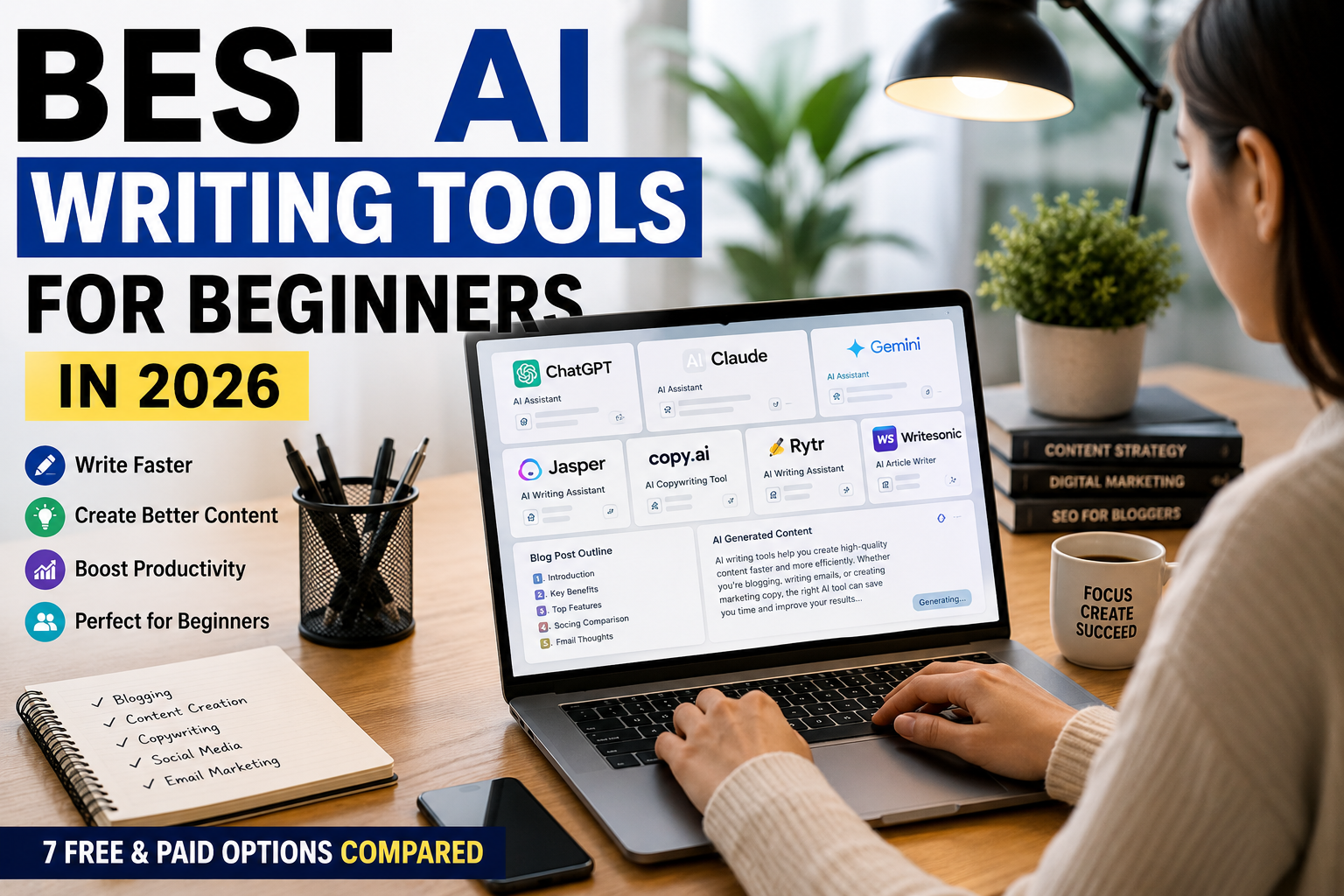
    Several AI writing tools can help with blogging, including ChatGPT, Claude, and Gemini. The best choice depends on your workflow, budget, and content goals. Regardless of the platform you use, success comes from combining the tool’s capabilities with strong research, thoughtful prompting, careful editing, and consistent publishing practices.

  • AI Writing Prompts for Bloggers in 2026: Complete Guide to Better Content

    AI Writing Prompts for Bloggers in 2026: Complete Guide to Better Content

    Creating high-quality blog content with AI isn’t just about choosing the right tool—it’s about knowing how to communicate with it effectively. Two people can use the same AI platform and receive completely different results simply because one provides clear, detailed instructions while the other relies on vague requests.

    If you’re a blogger, content creator, freelancer, or business owner, learning how to write effective AI prompts can dramatically improve the quality of your content, reduce editing time, and help you build a more efficient writing workflow. Mastering prompts is quickly becoming one of the most valuable skills in AI-assisted content creation.

    Direct Answer

    An AI writing prompt is a set of instructions that tells an artificial intelligence tool what content to create, who the audience is, what tone to use, and how the final output should be structured. In 2026, effective prompting is one of the most important skills for bloggers because detailed prompts consistently produce higher-quality, more accurate, and better-organized content than generic instructions.

    Before learning advanced prompting techniques, it’s helpful to understand the broader concepts covered in AI Content Writing in 2026: Complete Beginner-to-Pro Guide, which explains how AI-assisted writing fits into modern content creation.

    What Is an AI Writing Prompt?

    An AI writing prompt is the instruction or request you provide to an AI writing tool before it generates content.

    Rather than simply asking AI to “write an article,” an effective prompt supplies the context the AI needs to produce useful results. This includes information such as the topic, target audience, writing style, desired format, and specific goals.

    For example, consider these two requests:

    Basic Prompt

    Write an article about retirement planning.

    While this may produce usable content, the AI has very little guidance about the reader, tone, or depth.

    Now compare it with this:

    Improved Prompt

    Write a beginner-friendly article explaining retirement planning for young professionals in the United States. Use a conversational but professional tone, include practical examples, organize the article with clear H2 headings, and finish with actionable tips.

    The second prompt gives the AI significantly more context, resulting in content that is more relevant and easier to refine.

    The difference illustrates an important principle: AI performs best when it receives clear direction rather than vague instructions.

    Why AI Writing Prompts Matter

    Many new bloggers assume that AI writing quality depends mainly on the software they choose.

    In reality, the quality of the output often depends just as much on the quality of the prompt.

    A well-designed prompt can help AI:

    • Produce more relevant information.
    • Maintain a consistent tone throughout the article.
    • Organize ideas logically.
    • Reduce repetitive wording.
    • Save time during editing.
    • Better match reader search intent.

    For example, a finance blogger writing about emergency savings may receive a generic overview with a simple prompt. However, by specifying the audience, country, tone, and desired examples, the AI is more likely to produce content that closely matches the blogger’s goals.

    This is why experienced AI content creators spend time refining prompts before generating large amounts of text.

    The Anatomy of a High-Quality AI Prompt

    Successful prompts generally contain several essential components that work together to guide the AI.

    Define the Objective

    Begin by stating exactly what you want the AI to accomplish.

    Examples include:

    • Write a blog article.
    • Generate a content outline.
    • Rewrite a paragraph.
    • Create an email newsletter.
    • Suggest blog title ideas.

    A clear objective reduces ambiguity and gives the AI a strong starting point.

    Identify the Target Audience

    Content should always be written with a specific reader in mind.

    Instead of asking for “a budgeting article,” explain who will benefit from it.

    Examples include:

    • College students.
    • First-time homebuyers.
    • Small business owners.
    • Beginner investors.
    • Parents planning for education costs.

    Providing audience context allows AI to adjust explanations, vocabulary, and examples accordingly.

    Specify the Tone

    Tone shapes how readers experience your content.

    Depending on your goals, you might request:

    • Professional.
    • Conversational.
    • Educational.
    • Friendly.
    • Authoritative.
    • Encouraging.

    For FinanceProfitHub-style educational content, a professional yet approachable tone often produces the best results.

    Describe the Structure

    Explain how you want the content organized.

    For example:

    • Use H2 and H3 headings.
    • Include a short introduction.
    • Add practical examples.
    • End with a conclusion.
    • Write in list format where appropriate.

    If you want the content to sound more natural, tell the AI how you want it to read.

    For example, you can ask the AI to write in a conversational yet professional tone, vary sentence length, use smooth transitions, include practical examples and avoid repetitive or overly robotic phrasing. These instructions help produce content that feels more engaging while still requiring human editing and review before publication.

    Providing structural guidance often reduces editing time significantly.

    Include Constraints

    Helpful constraints improve consistency.

    Examples include:

    • Use American English.
    • Avoid jargon.
    • Write for beginners.
    • Keep paragraphs concise.
    • Avoid exaggerated claims.
    • Include practical examples.

    These details help the AI align the content with your publishing standards.

    Common Types of AI Writing Prompts Bloggers Use

    Bloggers rely on prompts throughout the content creation process rather than only when drafting full articles.

    Topic Ideation

    AI can generate blog ideas based on a niche or audience.

    Example prompt:

    Suggest 20 evergreen personal finance blog topics for beginner readers interested in saving money.

    Article Outlines

    A structured outline provides a roadmap before writing begins.

    Example prompt:

    Create an SEO-friendly outline for an article about building an emergency fund, including H2 and H3 headings.

    Writing Introductions

    Strong introductions capture attention quickly.

    Example prompt:

    Write an engaging introduction for a beginner’s guide to investing, using a professional but conversational tone.

    Expanding Sections

    Instead of writing entire articles at once, many bloggers expand one section at a time.

    This often improves quality and maintains better control over the final draft.

    Editing Existing Content

    AI can also assist with improving human-written drafts.

    Example prompt:

    Rewrite this paragraph to improve clarity while maintaining the original meaning.


    15 Ready-to-Use AI Writing Prompts for Bloggers

    Below are adaptable prompt templates that bloggers can customize for different projects.

    1. Generate 20 evergreen blog topic ideas for [niche].
    2. Create a detailed SEO-friendly article outline about [topic].
    3. Write a compelling introduction for [topic].
    4. Explain [concept] using beginner-friendly language.
    5. Expand this outline into a comprehensive article section.
    6. Rewrite this paragraph to improve readability.
    7. Suggest five alternative blog titles optimized for search intent.
    8. Create a concise meta description for this article.
    9. Generate five frequently asked questions about [topic].
    10. Suggest practical examples for this section.
    11. Summarize this article in three sentences.
    12. Write a conclusion encouraging readers to take action.
    13. Recommend natural internal linking opportunities.
    14. Update this article to reflect 2026 developments.
    15. Review this article for clarity, tone, and consistency.

    These templates can serve as a starting point and should be customized to suit the audience and publishing goals.

    Common Prompt Mistakes Bloggers Should Avoid

    Learning what not to do is just as important as learning best practices.

    Being Too Vague

    Short requests often produce generic results.

    Provide context whenever possible.

    Asking for Everything at Once

    Extremely long prompts requesting multiple unrelated tasks can confuse the AI.

    Breaking complex projects into smaller prompts often produces stronger outputs.

    Ignoring the Audience

    Content written without a clearly defined audience tends to feel unfocused.

    Always specify who the content is intended to help.

    Publishing Without Editing

    AI-generated content should always be reviewed for:

    • Accuracy.
    • Readability.
    • Originality.
    • Consistency.
    • Brand voice.

    Human oversight remains essential regardless of the AI platform used.

    Best Practices for Writing Better AI Prompts

    Experienced bloggers often follow a simple workflow:

    1. Define the content goal.
    2. Identify the audience.
    3. Explain the desired tone.
    4. Describe the structure.
    5. Add relevant constraints.
    6. Review the AI output.
    7. Refine the prompt if necessary.
    8. Edit the final draft carefully.

    Prompt writing is an iterative process. Small adjustments often lead to significant improvements in content quality.

    Do You Need Prompt Engineering to Be a Successful Blogger?

    The term “prompt engineering” may sound highly technical, but bloggers rarely need advanced programming knowledge to benefit from effective prompting.

    For most content creators, success comes from learning how to communicate clearly with AI rather than mastering complex technical concepts.

    As you gain experience, you’ll naturally discover which prompt styles produce the best results for your niche, audience, and editorial workflow.

    This skill also complements the guidance in Best AI Writing Tools for Beginners in 2026, since even the most capable AI platform performs better when paired with thoughtful instructions.

    Preparing for an AI-Assisted Blogging Workflow

    Effective prompting is only one part of successful AI-assisted blogging.

    Once you’ve learned how to create detailed prompts, the next step is understanding how to integrate them into a complete content production process—from topic selection and outlining to drafting, editing, optimization, and publication.

    That workflow will be explored in AI Blog Writing Step-by-Step, where you’ll see how prompt writing fits into every stage of creating a high-quality blog post.

    Final Thoughts

    AI writing prompts have become one of the most valuable skills for bloggers in 2026. While AI tools continue to evolve, the ability to provide clear, structured instructions remains a defining factor in the quality of the content they produce.

    Rather than viewing prompts as simple commands, think of them as conversations that guide AI toward a specific goal. The more context you provide about your audience, objectives, tone, and desired structure, the more useful the resulting content is likely to be.

    As you continue developing your AI writing skills, effective prompting will not only improve your productivity but also strengthen the quality, consistency, and long-term value of your blog. Combined with thoughtful editing and human expertise, it forms the foundation of a modern content creation workflow that can support sustainable growth well beyond 2026.


    Frequently Asked Question

    What makes a good AI writing prompt for bloggers?

    A good AI writing prompt provides clear instructions about the topic, target audience, tone, format, and desired outcome. The more context you give the AI, the more relevant and useful the generated content is likely to be. Effective prompts also reduce editing time by producing well-structured drafts that align with your blogging goals.

    Can AI writing prompts improve the quality of blog content?

    Yes. Well-written AI prompts can significantly improve the quality of blog content by helping AI generate more accurate, organized, and audience-focused responses. While prompts enhance the initial draft, human editing remains essential to verify facts, refine the writing style, and ensure the content reflects your expertise and brand voice.

    Do I need prompt engineering skills to use AI writing tools?

    No. Most bloggers do not need advanced prompt engineering skills. Learning how to write clear, specific, and detailed instructions is usually enough to produce high-quality results. As you gain experience, you can gradually refine your prompts to suit different types of content and writing objectives.

    Which AI writing tools work best with detailed prompts?

    Most modern AI writing tools respond well to detailed prompts, including ChatGPT, Claude, Gemini, Jasper, Writesonic, and Copy.ai. Regardless of the platform you choose, providing clear context, audience information, tone preferences, and content structure generally leads to better and more consistent results.

    Should I publish AI-generated content without editing?

    No. AI-generated content should always be reviewed before publication. Editing allows you to verify facts, improve clarity, remove repetitive wording, and add personal insights or examples that increase the content’s value. Human oversight helps ensure your articles are accurate, trustworthy, and genuinely useful to readers.

  • Best AI Writing Tools for Beginners in 2026

    Best AI Writing Tools for Beginners in 2026

    Choosing the right AI writing tool can dramatically shorten the learning curve for new content creators. While dozens of platforms now offer AI-powered writing assistance, not every tool is beginner-friendly. Some focus on simplicity and ease of use, while others prioritize advanced features that may overwhelm someone just getting started.

    The good news is that beginners no longer need expensive software or technical expertise to benefit from AI. Whether your goal is blogging, freelancing, content marketing, email writing, or building an online business, there are AI writing tools designed specifically to help you work faster and more efficiently.

    Direct Answer

    The best AI writing tools for beginners in 2026 include ChatGPT, Claude, Gemini, Jasper, Writesonic, Copy.ai, and Rytr. These platforms help users generate ideas, create outlines, draft content, improve readability, and increase productivity. For most beginners, ChatGPT remains one of the easiest starting points because of its versatility, ease of use, and wide range of writing applications.

    Before selecting a platform, it helps to understand the fundamentals of AI Content Writing in 2026: Complete Beginner-to-Pro Guide so you can choose a tool that aligns with your goals and workflow.

    Why Choosing the Right AI Writing Tool Matters

    Many beginners assume that all AI writing tools produce identical results.

    In reality, different platforms are designed for different purposes.

    Some excel at long-form blog content. Others focus on marketing copy, email campaigns, social media content, or workflow automation.

    For example, a blogger creating educational content may need stronger outlining and long-form drafting capabilities, while a freelance copywriter may prioritize ad copy and conversion-focused content generation.

    Selecting the right platform from the beginning can save time, reduce frustration, and help you develop better AI writing habits.

    What Beginners Should Look for in an AI Writing Tool

    Ease of Use

    The best beginner tools have intuitive interfaces that allow users to start creating content without extensive training.

    Complicated dashboards and excessive customization options can slow down new users.

    Content Quality

    A writing assistant should generate content that is coherent, readable, and relevant to the user’s instructions.

    Higher-quality outputs typically require less editing and refinement.

    Pricing

    Many beginners are experimenting with AI writing for the first time.

    Free plans or affordable entry-level subscriptions allow users to learn without significant financial risk.

    Versatility

    A strong beginner platform should support multiple content formats, including:

    • Blog posts
    • Email newsletters
    • Social media captions
    • Website content
    • Product descriptions
    • Marketing copy

    Learning Resources

    Tutorials, templates, and support documentation can help beginners become productive more quickly.

    1. ChatGPT

    Best For: Overall Beginner Experience

    ChatGPT remains one of the most popular AI writing tools available.

    Its flexibility allows users to generate blog content, brainstorm ideas, create outlines, rewrite text, summarize information, and improve existing content.

    Advantages

    • Easy to use
    • Strong conversational interface
    • Useful for multiple writing tasks
    • Extensive educational resources available online
    • Suitable for both beginners and advanced users

    Limitations

    • Output quality depends heavily on prompts
    • May occasionally generate inaccurate information
    • Requires human editing and fact-checking

    For many beginners, ChatGPT serves as an excellent introduction to AI-assisted content creation.

    2. Claude

    Best For: Natural Writing Quality

    Claude has gained popularity because of its ability to generate content that often feels more natural and conversational.

    Writers frequently use Claude for long-form articles, editing, and refining drafts.

    Advantages

    • Smooth writing style
    • Strong contextual understanding
    • Helpful for content refinement
    • Effective at handling longer documents

    Limitations

    • Some advanced features may vary by subscription level
    • Still requires human review for accuracy

    Beginners who prioritize readability often appreciate Claude’s writing style.

    3. Gemini

    Best For: Google Ecosystem Users

    Gemini integrates well with Google’s ecosystem and offers useful content-generation capabilities.

    Individuals already using Google products may find Gemini particularly convenient.

    Advantages

    • Strong integration with Google services
    • Easy access for many users
    • Useful for brainstorming and content development

    Limitations

    • Outputs may vary depending on topic complexity
    • Requires editing and verification

    Gemini can be a practical option for users already working within Google’s productivity environment.

    4. Jasper

    Best For: Marketing and Business Content

    Jasper remains popular among marketers and businesses.

    It offers templates and workflows designed for commercial content creation.

    Advantages

    • Marketing-focused features
    • Useful content templates
    • Workflow support for teams

    Limitations

    • Higher cost compared to some alternatives
    • May be more than beginners initially need

    Those interested in marketing or agency work may find Jasper particularly useful.

    5. Writesonic

    Best For: Content Marketing Workflows

    Writesonic provides tools for creating blog posts, website copy, and marketing content.

    It balances usability with a broad feature set.

    Advantages

    • Beginner-friendly interface
    • Supports multiple content types
    • Helpful content-generation tools

    Limitations

    • Some features may require paid plans
    • Content often benefits from additional editing

    6. Copy.ai

    Best For: Short-Form Content

    Copy.ai focuses heavily on marketing and promotional content.

    It is especially useful for users creating shorter content formats.

    Advantages

    • Strong marketing templates
    • Simple interface
    • Quick content generation

    Limitations

    • Less suited for extensive long-form content
    • May require additional editing for depth

    7. Rytr

    Best For: Budget-Conscious Beginners

    Rytr offers a relatively affordable entry point into AI writing.

    Its straightforward interface makes it accessible for users with limited experience.

    Advantages

    • Affordable pricing
    • Easy setup
    • Beginner-friendly design

    Limitations

    • Fewer advanced features
    • Long-form content may require additional refinement

    For beginners exploring AI writing on a limited budget, Rytr can be an attractive starting option.

    Free vs Paid AI Writing Tools

    One of the most common questions beginners ask is whether they should pay for AI writing software immediately.

    In many cases, the answer is no.

    Free plans often provide enough functionality to:

    • Learn prompting
    • Create basic content
    • Test workflows
    • Understand AI capabilities

    As your needs expand, upgrading to paid plans may provide:

    • Higher usage limits
    • Better performance
    • Additional tools
    • Advanced customization
    • Team collaboration features

    The best approach is often to begin with a free plan and upgrade only when clear business or productivity needs emerge.

    Which AI Writing Tool Is Best for Bloggers?

    Bloggers typically need tools capable of handling:

    • Topic research
    • Outline creation
    • Long-form drafting
    • Content expansion
    • Editing assistance

    For most beginners, ChatGPT and Claude offer the strongest combination of flexibility and content quality.

    Once you become comfortable with AI-assisted workflows, you can explore more specialized platforms depending on your goals.

    If your objective is creating blog content consistently, our upcoming guide on AI Blog Writing Step-by-Step will provide a complete workflow.

    Can You Become an AI Content Writer Using These Tools?

    Absolutely.

    However, tools alone do not create successful writers.

    The most effective AI content writers develop skills in:

    • Writing fundamentals
    • Editing
    • Research
    • SEO
    • Prompt creation
    • Audience understanding

    Learning how to use AI effectively is only one part of the process.

    If your goal is building a career around AI-assisted content creation, explore How to Become an AI Content Writer in 2026 for a complete roadmap.

    Common Mistakes Beginners Make When Choosing AI Tools

    Chasing Every New Platform

    New AI tools appear regularly.

    Constantly switching platforms often slows learning and productivity.

    Expecting Perfect Content

    No AI writing tool produces flawless content every time.

    Human editing remains essential.

    Ignoring Fact-Checking

    AI-generated information should always be verified before publication.

    Paying Too Much Too Early

    Many beginners purchase expensive subscriptions before understanding their actual needs.

    Starting with free or affordable plans often makes more sense.

    The Future of AI Writing Tools

    AI writing software continues to evolve rapidly.

    Future improvements will likely include:

    • Better personalization
    • Stronger contextual understanding
    • Improved workflow automation
    • More accurate outputs
    • Enhanced collaboration features

    Despite these advancements, human oversight will remain essential.

    Successful content creators will continue combining AI efficiency with creativity, expertise, and critical thinking.

    Final Thoughts

    The best AI writing tool for beginners is not necessarily the platform with the most features. It is the one that helps you create content consistently while supporting your learning process.

    For most new users, ChatGPT, Claude, and Gemini provide excellent starting points. Platforms such as Jasper, Writesonic, Copy.ai, and Rytr offer additional options depending on specific goals and budgets.

    The key is to start simple, learn how AI works, develop strong writing habits, and gradually build your skills.

    As AI technology continues to evolve, those who learn to use these tools responsibly and effectively will be better positioned to succeed in blogging, freelancing, marketing, and online business opportunities throughout 2026 and beyond.


    Frequently Asked Questions

    What is the best AI writing tool for beginners in 2026?

    For most beginners, ChatGPT is one of the best AI writing tools in 2026 because it is easy to use, versatile, and suitable for tasks such as blogging, content creation, email writing, brainstorming, and research assistance. However, Claude and Gemini are also strong alternatives depending on your writing style preferences and workflow needs.

    Are free AI writing tools good enough for beginners?

    Yes, many free AI writing tools provide enough functionality for beginners to learn prompt writing, generate content ideas, create outlines, and draft basic content. Free plans are often sufficient for learning the fundamentals before deciding whether a paid subscription is necessary.

    Can AI writing tools create complete blog posts?

    AI writing tools can generate complete blog post drafts, but they should not be published without human review. Editing, fact-checking, and adding personal insights help improve accuracy, originality, and overall content quality.

    Do AI writing tools replace human writers?

    No. AI writing tools are designed to assist writers rather than replace them. While AI can speed up research, outlining, and drafting, human creativity, critical thinking, experience, and editorial judgment remain essential for producing high-quality content.

    Which AI writing tool is best for blogging?

    ChatGPT and Claude are widely considered among the best AI writing tools for blogging because they can assist with topic generation, article outlines, long-form content drafting, and content refinement. The best choice ultimately depends on your budget, workflow, and content creation goals.

  • How to Become an AI Content Writer in 2026 (Beginner’s Step-by-Step Guide)

    How to Become an AI Content Writer in 2026 (Beginner’s Step-by-Step Guide)

    You don’t need an English degree, years of experience, or a background in technology to become an AI content writer in 2026.

    What you do need is a willingness to learn, practice consistently, and understand how to combine artificial intelligence with human judgment. Businesses are increasingly looking for writers who can create quality content efficiently, and AI has become part of that process.

    Whether your goal is freelancing, blogging, building an online business, or creating a new income stream, becoming an AI content writer can be an accessible skill with long-term potential.

    Direct Answer

    To become an AI content writer in 2026, learn the fundamentals of writing, understand how to use AI writing tools effectively, practice prompt creation, develop basic SEO knowledge, build a portfolio of writing samples, and begin applying for beginner opportunities. The most successful AI content writers use artificial intelligence to improve efficiency while relying on human creativity, editing, and critical thinking to deliver valuable content.

    What Does an AI Content Writer Actually Do?

    An AI content writer uses artificial intelligence tools to assist with the content creation process while maintaining responsibility for quality, accuracy, and strategy.

    If you’re new to this field, it helps to understand that AI content writing is not simply copying and pasting whatever a chatbot generates. The writer remains the decision-maker throughout the process.

    A typical workflow may include:

    • Researching topics
    • Generating ideas
    • Creating outlines
    • Drafting sections
    • Editing and refining content
    • Fact-checking information
    • Optimizing content for readers and search engines

    For a deeper understanding of the foundations behind this career path, you can explore our AI Content Writing Guide.

    Step 1: Learn the Fundamentals of Good Writing

    One of the biggest misconceptions about AI writing is that writing skills no longer matter.

    The reality is the opposite.

    The better your writing skills, the more effectively you can use AI tools.

    Strong writers understand how to communicate clearly and guide readers through information. They know how to structure articles, maintain flow, and answer questions effectively.

    Focus on developing these fundamentals:

    Clarity

    Write in a way that is easy to understand. Avoid unnecessary complexity.

    Structure

    Learn how introductions, headings, transitions, and conclusions work together.

    Reader Intent

    Ask yourself what the reader hopes to achieve when searching for a topic.

    Engagement

    Use examples, questions, and practical explanations to keep readers interested.

    For example, if someone searches for “how to start freelancing,” they want actionable guidance rather than theoretical definitions.

    Improving these basics creates a strong foundation that AI tools can enhance rather than replace.

    Step 2: Learn How to Use AI Writing Tools Effectively

    The next step is becoming comfortable with AI writing tools.

    You don’t need to master dozens of platforms immediately. Start with a few popular options and understand how they fit into your workflow.

    Examples include:

    • ChatGPT
    • Claude
    • Gemini

    Rather than asking AI to produce complete articles without supervision, use it strategically.

    You can use AI to:

    • Brainstorm article ideas
    • Create outlines
    • Rewrite awkward sentences
    • Generate headline variations
    • Expand explanations
    • Summarize research

    The goal is not dependency.

    The goal is efficiency.

    As you become more experienced, you’ll develop workflows that allow you to move from idea to publication more quickly while maintaining quality standards.

    For a detailed comparison of beginner-friendly platforms, consider linking to Best AI Writing Tools for Beginners.

    Step 3: Practice Prompt Writing Like a Professional

    The quality of your output often depends on the quality of your instructions.

    Prompt writing is the skill of communicating clearly with AI systems to achieve useful results.

    Consider these examples.

    Weak prompt:

    Write an article about budgeting.

    Better prompt:

    Write a beginner-friendly introduction explaining why budgeting matters for young professionals in the United States. Use a conversational but professional tone and include a practical example.

    The second prompt provides direction, audience context, and expectations.

    Practice creating prompts that specify:

    • Audience
    • Tone
    • Purpose
    • Desired format
    • Examples when appropriate

    Over time, you’ll notice that better prompts lead to stronger drafts and less editing.

    You can further improve this skill by exploring AI Writing Prompts for Bloggers.

    Step 4: Understand Basic SEO Principles

    You don’t need to become an SEO expert overnight, but understanding the basics will make you more valuable as a writer.

    SEO helps content appear in search results and reach the right audience.

    Learn concepts such as:

    Search Intent

    Understand why readers are searching for a particular topic.

    Keywords

    Use relevant phrases naturally throughout content.

    Headings

    Organize information using clear heading structures.

    Readability

    Write in a way that encourages readers to continue.

    Many businesses prefer writers who understand how content supports broader marketing goals.

    Even a basic understanding of SEO can distinguish you from other beginners.

    Step 5: Build Your First AI Writing Portfolio

    You don’t need paying clients before creating a portfolio.

    Many successful freelancers started by producing sample work.

    Consider creating:

    • Blog articles
    • Product descriptions
    • Email newsletters
    • Social media content
    • Informational guides

    Aim for quality rather than quantity.

    Three to five strong samples often create a better impression than dozens of average pieces.

    You can organize your work using:

    • Google Docs
    • PDF files
    • Personal websites
    • Portfolio platforms

    As you gain experience, replace older samples with stronger examples that reflect your growth.

    Step 6: Find Beginner Opportunities and Clients

    Once you have a portfolio, begin looking for opportunities.

    Popular starting points include:

    • Upwork
    • Fiverr
    • LinkedIn
    • Facebook groups
    • Direct outreach to businesses

    Many beginners hesitate because they believe they need years of experience.

    In reality, clients often prioritize reliability, communication, and quality work.

    Start small.

    Apply consistently.

    Treat each project as an opportunity to build credibility and collect testimonials.

    The experience you gain from early projects can open doors to higher-paying opportunities later.

    Step 7: Set Realistic Income Expectations

    Many people enter AI content writing expecting immediate success.

    Building a sustainable income takes time.

    Beginners may start with modest rates while developing confidence and social proof.

    As your portfolio expands and your skills improve, your rates can increase.

    Factors influencing income include:

    • Experience level
    • Industry specialization
    • SEO knowledge
    • Editing ability
    • Client relationships
    • Efficiency

    Consistency often matters more than speed.

    Those who continue learning and improving tend to see stronger results over time.

    Common Mistakes New AI Content Writers Make

    Avoiding common mistakes can accelerate your progress.

    These include:

    Relying Entirely on AI

    Publishing unedited outputs can damage credibility.

    Ignoring Fact-Checking

    Always verify information before publication.

    Applying Without Samples

    A simple portfolio strengthens your applications.

    Underpricing Forever

    Competitive rates can help you get started, but don’t undervalue yourself indefinitely.

    Neglecting SEO

    Understanding search intent and content optimization increases your value.

    For additional guidance, consider referencing AI Content Writing Mistakes to Avoid.

    Is Becoming an AI Content Writer Worth It in 2026?

    For many people, the answer is yes.

    Businesses continue investing in content because they need to educate audiences, attract customers, and build trust.

    At the same time, AI has changed expectations around efficiency.

    The writers most likely to succeed are not necessarily those with the strongest technical backgrounds.

    Instead, they are individuals who combine adaptability, critical thinking, strong communication, and a willingness to embrace new tools responsibly.

    AI is unlikely to eliminate the need for quality writing.

    Instead, it is reshaping how writers work.

    Those who learn to collaborate with technology rather than compete against it may find meaningful opportunities in the evolving digital economy.

    Final Thoughts

    Becoming an AI content writer in 2026 is more achievable than many people realize.

    You don’t need perfect credentials or years of experience to get started. You simply need to begin.

    Develop your writing skills. Learn how to use AI responsibly. Practice consistently. Build a portfolio. Seek opportunities. Continue improving.

    The people succeeding with AI writing aren’t always the most experienced.

    They’re often the ones who took action, stayed curious, and committed to growth.

    If you’re willing to put in the effort, AI content writing can become more than just a useful skill. It can become a pathway to freelancing opportunities, online income, and long-term professional development.

    As you continue your journey, resources such as How to Make Money with AI Writing can help you take the next step from learning the skill to turning it into real earning potential.


    Frequently Asked Questions

    Do I need professional writing experience to become an AI content writer?

    No. Many AI content writers begin without professional experience. What matters most is learning the basics of writing, practicing regularly, building a portfolio of sample work, and understanding how to use AI tools effectively.

    What AI tools should beginners learn first?

    Beginners can start with popular tools such as ChatGPT, Claude, and Gemini. Instead of trying to master every platform, focus on learning how one or two tools can help you brainstorm ideas, create outlines, refine drafts, and improve productivity.

    Can I make money as an AI content writer?

    Yes. AI content writers can earn income through freelancing, blogging, agency work, copywriting, and content consulting. However, building a steady income usually requires time, continuous learning, and the ability to consistently deliver quality work.

    Is AI going to replace content writers?

    AI is transforming the content creation process, but it has not eliminated the need for skilled writers. Businesses still value creativity, critical thinking, research abilities, editing skills, and the human touch that connects with readers. Writers who learn to work alongside AI are likely to remain in demand.

    How long does it take to become an AI content writer?

    The timeline varies for each person. Some beginners gain enough confidence to pursue opportunities within a few months of focused practice, while others need more time to develop their skills and build a portfolio. Consistency and hands-on experience often matter more than speed.

  • AI Content Writing in 2026: Complete Beginner-to-Pro Guide

    AI Content Writing in 2026: Complete Beginner-to-Pro Guide

    AI content writing has evolved from a niche productivity tool into a major part of modern content creation. Businesses, bloggers, marketers, freelancers, and entrepreneurs now use Artificial Intelligence ( AI )to research ideas, generate drafts, improve productivity, and scale content production faster than ever before.

    Yet despite the growing popularity of AI writing tools, many people still misunderstand what AI content writing actually is, how it works, and how to use it effectively without sacrificing quality, originality, or search engine performance.

    Whether you’re a complete beginner exploring AI for the first time or someone looking to build a career around AI-assisted content creation, understanding the fundamentals is essential.

    Direct Answer

    AI content writing is the process of using artificial intelligence tools to help create written content such as blog posts, emails, social media captions, product descriptions, marketing copy, and website content. In 2026, the most successful content creators use AI as a productivity assistant rather than a replacement for human expertise, creativity, and editorial judgment.

    The key to success is learning how to combine AI efficiency with human oversight to produce valuable, accurate, and engaging content.

    Before understanding AI content writing, it helps to understand what Artificial Intelligence (AI) actually is.

    Artificial intelligence refers to computer systems that can perform tasks that normally require human intelligence, such as analyzing information, recognizing patterns, solving problems, learning from data, and generating responses.

    Many people already interact with AI every day through tools such as ChatGPT, Gemini, Claude, virtual assistants, recommendation systems, navigation apps, and search engines. AI content writing is simply one application of this broader technology, focused specifically on creating and improving written content.

    What Is AI Content Writing?

    AI content writing refers to the use of artificial intelligence software to generate, improve, edit, or assist with written content creation.

    These systems analyze vast amounts of language data and predict the most appropriate words, sentences, and structures based on user instructions.

    In practical terms, AI writing tools can help users:

    • Generate content ideas
    • Create article outlines
    • Draft blog posts
    • Write marketing copy
    • Produce email campaigns
    • Create social media content
    • Rewrite existing content
    • Improve readability
    • Generate product descriptions
    • Assist with research

    However, AI does not truly understand topics in the same way humans do. Instead, it identifies patterns within language and generates text based on those patterns.

    This distinction is important because effective AI content writing always requires human review and refinement.

    How AI Content Writing Works

    At its core, AI writing relies on advanced language models trained on enormous collections of text.

    When a user provides a prompt, the AI analyzes the request and predicts the most likely sequence of words that should follow.

    A Simple Example

    Suppose a blogger enters the prompt:

    “Write an introduction about building an emergency fund.”

    The AI examines the instruction, identifies the topic, and generates content that matches the expected context.

    The quality of the output depends heavily on the quality of the prompt.

    For example:

    Weak Prompt:

    Write about emergency funds.

    Better Prompt:

    Write a beginner-friendly introduction explaining why emergency funds are important, using practical examples and a professional but conversational tone.

    The second prompt provides more context, resulting in a stronger output.

    This is one reason prompt-writing has become a valuable skill in the AI era.

    AI Writing Prompts for Bloggers

    Why AI Content Writing Has Become So Popular

    The rapid adoption of AI content writing isn’t simply a trend. It addresses several real challenges faced by content creators.

    Increased Productivity

    One of the biggest advantages is speed.

    Tasks that previously required several hours can often be completed significantly faster with AI assistance.

    For example, AI can quickly:

    • Generate outlines
    • Suggest headlines
    • Create draft sections
    • Produce content ideas

    This allows writers to spend more time refining and improving content rather than starting from a blank page.

    Reduced Writer’s Block

    Many creators struggle with generating fresh ideas consistently.

    AI tools can provide inspiration, alternative angles, and topic suggestions that help maintain publishing momentum.

    Content Scaling

    Businesses that publish large volumes of content often use AI to streamline workflows.

    Rather than replacing writers, AI helps teams produce content more efficiently while maintaining editorial standards.

    Accessibility for Beginners

    People with limited writing experience can use AI tools to structure ideas and improve communication.

    This lowers the barrier to entry for blogging, content marketing, and online publishing.

    Common Types of AI Content Writing

    AI writing extends far beyond blog articles.

    Blog Content

    Blogging remains one of the most common applications.

    AI can assist with:

    • Topic generation
    • Keyword-based outlines
    • Draft creation
    • Content expansion
    • Content updates

    AI Blog Writing Step-by-Step

    Marketing Copy

    Businesses frequently use AI to create:

    • Landing page copy
    • Ad copy
    • Product descriptions
    • Sales emails
    • Promotional campaigns

    Social Media Content

    AI tools can help generate:

    • Captions
    • Post ideas
    • Content calendars
    • Engagement questions

    Email Marketing

    Email campaigns often require large volumes of content.

    AI can assist with:

    • Subject lines
    • Email sequences
    • Newsletters
    • Promotional messages

    Website Content

    Many companies use AI to help draft:

    • Homepage copy
    • Service pages
    • FAQs
    • About pages

    Benefits of AI Content Writing

    AI content writing offers numerous advantages when used correctly.

    Faster Content Creation

    AI dramatically reduces the time required to create first drafts.

    This allows creators to focus on quality improvements and strategic decisions.

    Improved Efficiency

    Routine writing tasks become easier to manage.

    For example, creating multiple headline variations or rewriting sections can often be completed in minutes.

    Cost Savings

    Organizations may reduce production costs by increasing workflow efficiency.

    This is especially valuable for small businesses and solo creators.

    Idea Generation

    AI can suggest perspectives, examples, and content structures that writers may not initially consider.

    Workflow Support

    Rather than replacing writers, AI often functions as a collaborative assistant throughout the writing process.

    Limitations of AI Content Writing

    Despite its strengths, AI has important limitations.

    Understanding these limitations helps users avoid common mistakes.

    Accuracy Issues

    AI systems can occasionally generate incorrect information.

    Writers must verify facts before publication.

    Lack of Real Experience

    AI cannot provide genuine personal experiences.

    Human insights remain essential for creating trustworthy content.

    Generic Output

    Without strong prompts and editing, AI-generated content can feel repetitive or generic.

    Context Challenges

    AI may misunderstand highly specialized industries, technical topics, or nuanced situations.

    Dependence Risks

    Relying entirely on AI can reduce originality and weaken content quality over time.

    AI Content Writing Mistakes to Avoid

    Best Practices for AI Content Writing

    Successful AI writers follow a structured approach.

    Start With Clear Goals

    Before using AI, determine:

    • Target audience
    • Search intent
    • Desired outcome
    • Content format

    Clear objectives produce better results.

    Use Detailed Prompts

    Specific instructions generate stronger outputs.

    Include details about:

    • Audience
    • Tone
    • Purpose
    • Structure
    • Examples

    Edit Aggressively

    Never publish AI-generated drafts without review.

    Strong editing improves:

    • Accuracy
    • Readability
    • Originality
    • Trustworthiness

    Add Human Expertise

    The most effective content combines AI efficiency with human knowledge.

    Personal insights, case studies, examples, and expert opinions add significant value.

    Fact-Check Everything

    Always verify:

    • Statistics
    • Claims
    • Research findings
    • Financial information
    • Industry data

    Accuracy remains a critical responsibility.

    Can You Make Money With AI Content Writing?

    Yes, many individuals now earn income through AI-assisted content creation.

    However, success depends on skill, strategy, and quality rather than simply using AI tools.

    Common opportunities include:

    Freelance Content Writing

    Businesses increasingly seek writers who understand both content creation and AI-assisted workflows.

    Blogging

    Content creators can use AI to increase publishing efficiency while maintaining quality standards.

    Agency Services

    Marketing agencies often incorporate AI into content production systems.

    Copywriting

    AI-assisted copywriters can provide faster turnaround times while maintaining quality.

    Content Consulting

    Some professionals help businesses implement AI content workflows and best practices.

    How to Make Money with AI Writing

    How to Become an AI Content Writer

    Building a career in AI content writing requires more than learning a tool.

    The strongest professionals develop expertise in:

    Writing Fundamentals

    Strong grammar, structure, clarity, and storytelling remain essential.

    SEO Knowledge

    Understanding search intent and content optimization improves content performance.

    Prompt Engineering

    Learning how to communicate effectively with AI systems significantly improves output quality.

    Editing Skills

    Editors often create greater value than the AI itself.

    Research Skills

    Fact-checking and source validation remain critical responsibilities.

    How to Become an AI Content Writer

    The Future of AI Content Writing

    AI content writing will likely continue expanding throughout the coming years.

    However, the future belongs to creators who combine technology with human expertise.

    Businesses increasingly value:

    • Accuracy
    • Originality
    • Trustworthiness
    • Experience-based insights
    • High-quality editing

    As AI tools become more powerful, human judgment becomes even more important.

    Rather than replacing skilled writers, AI is reshaping how content is planned, created, and refined.

    Those who learn to work alongside AI effectively will likely have significant advantages in the evolving digital economy.

    Final Thoughts

    AI content writing is no longer an emerging trend—it is a fundamental part of modern content creation.

    For beginners, AI offers a faster and more accessible path into content production. For experienced creators, it provides powerful opportunities to increase efficiency and scale operations.

    The most successful approach is not choosing between AI and human writing. Instead, it is combining the strengths of both.

    By understanding how AI works, recognizing its limitations, and applying strong editorial standards, content creators can produce valuable content that serves readers while supporting long-term growth.

    As the AI landscape continues to evolve, mastering AI content writing today can become a valuable skill for blogging, freelancing, marketing, and online business success in 2026 and beyond.


    Frequently Asked Questions

    What is AI content writing?

    AI content writing is the process of using artificial intelligence tools to help create written content such as blog posts, website copy, emails, product descriptions, and social media posts. These tools generate text based on prompts provided by users, helping writers work more efficiently while still requiring human review and editing.

    Can AI content writing replace human writers?

    No, AI content writing cannot fully replace human writers. While AI can generate drafts and assist with content creation, human writers are still needed for creativity, critical thinking, fact-checking, personal experiences, and ensuring content is accurate, engaging, and trustworthy.

    How do beginners start with AI content writing?

    Beginners can start by learning how AI writing tools work, practicing prompt writing, and using AI to assist with simple tasks such as generating outlines, brainstorming ideas, or creating first drafts. Developing strong writing and editing skills remains important for producing high-quality content.

    Can you make money with AI content writing?

    Yes, many people earn money through AI-assisted content writing by offering freelance writing services, creating blog content, managing content marketing projects, writing copy for businesses, or building websites that generate revenue through advertising and affiliate marketing.

    What are the biggest mistakes to avoid when using AI for content writing?

    Common mistakes include publishing AI-generated content without editing, failing to fact-check information, using weak prompts, creating generic content, and relying entirely on AI without adding human expertise. The best results come from combining AI efficiency with careful human oversight.

  • How to Stop Living Paycheck to Paycheck (Practical Beginner Guide for 2026)

    How to Stop Living Paycheck to Paycheck (Practical Beginner Guide for 2026)

    If it feels like your money disappears the moment it arrives, you’re not alone. Millions of people earn steady incomes but still struggle to get ahead because expenses quietly expand to match income.

    The good news? You don’t need a higher salary to break the paycheck‑to‑paycheck cycle. What you need is a smarter system — one designed for real life in 2026.

    This practical beginner guide walks you through simple, realistic steps to help you stop living paycheck to paycheck and start building financial breathing room.

    Direct Answer: How to Stop Living Paycheck to Paycheck

    To stop living paycheck to paycheck, you need to reduce income‑expense pressure and create a financial buffer. This typically involves tracking spending, cutting unnecessary expenses, building a small emergency fund, automating savings, and increasing income where possible.

    The key is not doing everything at once — but building momentum through small, consistent changes.

    Definition: Living paycheck to paycheck means relying on your next salary to cover current expenses, leaving little or no savings for emergencies, investments, or long‑term goals.


    Living paycheck to paycheck is more common than most people think. Even individuals earning decent salaries often struggle due to rising costs and lifestyle pressures.

    Why So Many People Are Living Paycheck to Paycheck in 2026

    Common reasons include:

    • Rising housing and rent costs
    • Inflation affecting groceries and utilities
    • Subscription creep (multiple small monthly payments)
    • Lack of budgeting system
    • Unexpected expenses
    • Lifestyle inflation after salary increases

    When these factors combine, even a small emergency can create financial stress.

    This is why building financial breathing room matters — it gives you flexibility and control.


    Step 1: Understand Where Your Money Is Going

    Before you can fix the problem, you need clarity.

    Most people underestimate how much they spend each month. Tracking your expenses for just 30 days can reveal hidden spending patterns.

    Start by reviewing:

    • Bank statements
    • Credit card bills
    • Subscription services
    • Cash withdrawals

    Group your spending into categories:

    • Housing
    • Transportation
    • Food
    • Utilities
    • Subscriptions
    • Entertainment
    • Debt payments

    This process often reveals quick savings opportunities.

    For example:

    You may discover:

    • Multiple streaming subscriptions
    • Frequent takeout meals
    • Unused memberships

    These small costs add up over time.

    If you’re new to budgeting, consider reading Beginner Budgeting Guide for 2026 to create your first realistic budget.


    Step 2: Build a Starter Emergency Fund First

    One of the biggest reasons people stay stuck in the paycheck‑to‑paycheck cycle is unexpected expenses.

    Car repairs, medical bills, or home expenses can quickly derail finances.

    Start with a small, achievable goal:

    • First goal: $500
    • Next goal: $1,000

    This small emergency fund creates breathing room and prevents reliance on credit cards.

    Example:

    Without emergency savings:

    • Car repair: $400
    • Use credit card
    • Pay interest for months

    With emergency savings:

    • Pay cash
    • No debt added
    • Financial stress reduced

    This is why emergency funds are foundational.

    You can also explore How to Build an Emergency Fund Fast for step‑by‑step strategies.


    Step 3: Cut Expenses Without Feeling Deprived

    Cutting expenses doesn’t mean eliminating everything you enjoy. Instead, focus on reducing low‑value spending.

    Practical ideas:

    • Cancel unused subscriptions
    • Reduce dining out frequency
    • Negotiate bills (internet, phone, insurance)
    • Switch to cheaper alternatives
    • Review recurring payments

    Example:

    • Streaming services: $40 monthly
    • Coffee purchases: $60 monthly
    • Subscription apps: $30 monthly

    Total potential savings: $130 monthly

    That’s $1,560 per year.

    Small adjustments can create meaningful financial progress.


    Step 4: Automate Your Savings

    Automation removes the temptation to spend.

    Set up automatic transfers:

    • Savings account
    • Emergency fund
    • Investment account

    Even small amounts work:

    • $25 per week
    • $50 per paycheck

    Consistency matters more than size.

    Automation builds momentum and reduces decision fatigue.

    You may also find Best Saving Strategies for Beginners helpful for building consistency.


    Step 5: Pay Down High‑Interest Debt Strategically

    High‑interest debt keeps many people trapped in the paycheck‑to‑paycheck cycle.

    Focus on:

    • Credit cards
    • Personal loans
    • Payday loans

    Two common strategies:

    Debt Snowball

    • Pay smallest debt first
    • Gain motivation

    Debt Avalanche

    • Pay highest interest first
    • Save more money long‑term

    Choose the strategy that fits your personality.

    Reducing debt frees up future income.


    Step 6: Increase Your Income (Even Slightly)

    Cutting expenses helps, but increasing income accelerates progress.

    Ideas include:

    • Freelancing
    • Part‑time work
    • Selling unused items
    • Asking for a raise
    • Starting a side hustle

    Even an extra $200 per month can change your financial trajectory.

    You can explore 10 Best Side Hustles for Beginners in 2026

    for ideas.


    Step 7: Create a Simple Paycheck Plan

    Instead of wondering where money goes, assign every paycheck a purpose.

    Example Paycheck Plan:

    • Bills: 50%
    • Savings: 15%
    • Food: 15%
    • Transportation: 10%
    • Personal spending: 10%

    This is flexible — adjust to your situation.

    A paycheck plan ensures money works intentionally.


    Step 8: Build Financial Breathing Room Gradually

    Your goal is to create margin between income and expenses.

    Start with:

    • One week buffer
    • Two week buffer
    • One month buffer

    Eventually, you’ll stop depending on each paycheck.

    This is when financial stress begins to reduce.


    Common Mistakes to Avoid

    Avoid these common pitfalls:

    • Trying to change everything at once
    • Setting unrealistic savings goals
    • Ignoring small expenses
    • Not tracking spending
    • Relying only on income increases

    Progress is built gradually.


    Signs You’re No Longer Living Paycheck to Paycheck

    You’ll know you’re making progress when:

    • You have emergency savings
    • Bills are paid without stress
    • You stop relying on credit cards
    • You can save consistently
    • Unexpected expenses don’t cause panic

    These signs indicate growing financial stability.


    Quick Action Plan (Beginner Checklist)

    Start today:

    1. Track spending for 30 days
    2. Build $500 emergency fund
    3. Cancel one unnecessary subscription
    4. Automate small savings
    5. Pay extra toward one debt

    Small steps lead to big changes.


    Final Thoughts

    Stopping the paycheck‑to‑paycheck cycle doesn’t happen overnight. But with consistent actions, you can gradually build financial stability.

    Focus on:

    • Awareness
    • Savings
    • Debt reduction
    • Income growth

    These four pillars create long‑term financial security.

    Start small, stay consistent, and over time you’ll build the financial freedom you’re working toward.

    Your future self will thank you.


    Frequently Asked Question

    What does it mean to live paycheck to paycheck?

    Living paycheck to paycheck means relying on your next salary to cover current expenses, leaving little or no savings for emergencies, investments, or long-term goals.

    How can I start building an emergency fund on a tight budget?

    Begin with a small, achievable goal — for example, $500. Automate weekly or biweekly transfers to a separate account and gradually increase the amount as your financial breathing room grows.

    What are some simple ways to cut expenses without feeling deprived?

    Cancel unused subscriptions, reduce dining out, negotiate bills, switch to cheaper alternatives, and review recurring payments. Small changes can add up to significant savings.

    Should I focus on paying off debt or saving first?

    Both matter, but high-interest debt should be prioritized to free up future income. Simultaneously, building a small emergency fund prevents new debt from emergencies.

    Can increasing my income really help me stop living paycheck to paycheck?

    Yes. Even a small additional income from freelancing, side hustles, or part-time work can accelerate savings, debt repayment, and overall financial stability.

  • 10 Best Side Hustles for Beginners in 2026 (Start With Little or No Money)

    10 Best Side Hustles for Beginners in 2026 (Start With Little or No Money)

    Making extra money in 2026 doesn’t require experience, a big budget, or quitting your job. The real challenge is choosing a side hustle that actually works — not just one that sounds good.

    Direct Answer

    The best side hustles for beginners in 2026 combine flexibility, low startup costs, and fast earning potential. Popular choices include freelance work, delivery services, online tutoring, and small local gigs. By choosing the right mix of online and offline options, beginners can start earning extra income without quitting their main job

    A side hustle is any part‑time or supplemental work that allows you to earn extra income outside your main job, often requiring minimal experience and low startup costs.

    Why Side Hustles Are Essential in 2026

    Side hustles are no longer just optional income sources. In 2026, they are becoming a practical necessity for many households. Rising living costs, inflation, and economic uncertainty are pushing more people to find additional ways to earn money.

    Many beginners also see side hustles as a safer way to explore new income streams without risking their primary job. This approach reduces financial stress while creating opportunities for long‑term growth.

    Another major advantage is flexibility. Unlike traditional part‑time jobs, many side hustles allow you to work when it suits your schedule. This makes them ideal for students, professionals, parents, and anyone looking to improve their financial situation.

    Side hustles can also help you:

    • Build new skills
    • Pay off debt faster
    • Save for emergencies
    • Increase investment contributions
    • Reduce financial stress

    If you’re currently struggling financially, you may also benefit from reading How to Stop Living Paycheck to Paycheck to create a stronger financial foundation while building additional income streams.

    Top Online Side Hustles for Beginners

    Online side hustles remain one of the easiest ways to start earning extra income in 2026. Most require little startup cost and can be started from home.

    Freelance Services

    Freelancing is one of the most beginner‑friendly side hustles available today. Many businesses need help with small tasks, and beginners can start with basic skills.

    Popular freelance services include:

    • Writing and editing
    • Social media management
    • Graphic design
    • Virtual assistant services
    • Data entry

    Even if you don’t have experience, you can start small and build your skills over time. Freelancing platforms allow beginners to find their first clients and grow gradually.

    To better understand how online income works, consider reading How Blogging Makes Money to see how freelance writing and content services can turn into long‑term income opportunities.

    Online Tutoring

    Online tutoring continues to grow in 2026. Many platforms allow beginners to teach subjects they already understand, including:

    • English language tutoring
    • Math support
    • Basic academic tutoring
    • Skill‑based teaching (music, coding, etc.)

    This side hustle is flexible and can provide consistent income once you build a client base.

    Affiliate Marketing

    Affiliate marketing is another popular beginner side hustle. You earn commissions by recommending products or services.

    This option requires patience but offers long‑term potential. Many beginners combine affiliate marketing with blogging or social media content.

    If you’re interested in learning more, check out How to Make Money Online for Beginners for a deeper understanding of affiliate income opportunities.

    Selling Digital Products

    Digital products are becoming increasingly popular because they can generate passive income. Beginners can create:

    • Simple guides
    • Templates
    • Checklists
    • Printable planners

    Once created, these products can be sold repeatedly with minimal ongoing effort.

    Top Offline Side Hustles for Beginners

    Offline side hustles are often overlooked, but they can provide faster earnings for beginners.

    Delivery and Rideshare Services

    Delivery and rideshare opportunities continue to grow in 2026. Many beginners start with:

    • Food delivery
    • Grocery delivery
    • Parcel delivery

    These options allow flexible hours and quick income.

    Local Service Gigs

    Local service gigs require minimal experience and can be started quickly. Examples include:

    • Yard work
    • Cleaning services
    • Moving assistance
    • Basic home organization

    These services are always in demand and can generate reliable side income.

    Pet Sitting and House Sitting

    Pet sitting and house sitting are beginner‑friendly and flexible. Many people prefer trusted individuals for these services, creating opportunities for new side hustlers.

    These gigs typically require little investment and can grow through word‑of‑mouth referrals.

    Event Assistance

    Event assistance is another practical option. Many events need temporary help with:

    • Setup and cleanup
    • Guest assistance
    • Ticket handling
    • Coordination support

    This type of side hustle is ideal for beginners looking for occasional income.

    How to Choose the Right Side Hustle

    Choosing the right side hustle is important for long‑term success. Beginners should consider:

    Your Available Time

    Some side hustles require daily commitment, while others offer flexible scheduling. Choose one that fits your current lifestyle.

    Startup Costs

    Many beginner side hustles require little or no money to start. Focus on options that minimize financial risk.

    Income Potential

    Consider whether the side hustle offers long‑term growth or just short‑term income. Ideally, choose something that can expand over time.

    If you’re unsure where to begin, reading Step‑by‑Step Guide to Starting a Profitable Blog may help you explore scalable income opportunities.

    Tips to Maximize Side Hustle Earnings

    Starting a side hustle is only the first step. Maximizing your earnings requires smart strategies.

    Start With One Side Hustle

    Many beginners try too many options at once. Instead, focus on one side hustle and build momentum.

    Set Income Goals

    Setting realistic income targets helps you stay motivated and track progress.

    Improve Skills Gradually

    The more skilled you become, the more you can charge for your services.

    You may also want to avoid common beginner mistakes by reviewing Common Blogging Mistakes Beginners Should Avoid if you plan to build online income streams.

    Tracking Progress and Staying Motivated

    Tracking your progress helps you stay focused and motivated.

    Consider tracking:

    • Monthly earnings
    • Time invested
    • Growth opportunities
    • Client feedback

    Monitoring these factors helps you improve performance and increase earnings over time.

    Building multiple income streams can also strengthen your financial security. You can learn more in Beginner Guide to Blog Traffic That Actually Works if you plan to grow online opportunities.

    Quick Start Action Plan for Beginners

    If you’re ready to start, follow this simple action plan:

    1. Choose one beginner‑friendly side hustle
    2. Set a realistic weekly schedule
    3. Start with small goals
    4. Track your progress
    5. Gradually expand income opportunities

    Consistency is more important than perfection. Even small side hustles can grow into meaningful income over time.

    Final Thoughts

    The best side hustles for beginners in 2026 are flexible, low‑risk, and accessible to almost anyone. Whether you choose online freelancing, local services, or passive income opportunities, the key is starting small and staying consistent.

    Over time, side hustles can help you build financial stability, reduce stress, and create new income opportunities. By choosing the right option and staying committed, beginners can successfully boost their income and improve their financial future.


    Frequently Asked Questions

    What is the best side hustle for beginners in 2026?

    The best side hustles for beginners in 2026 include freelance services, online tutoring, affiliate marketing, delivery services, and local gigs like cleaning or pet sitting. These options require little experience, flexible schedules, and minimal startup costs, making them ideal for beginners.

    Can I start a side hustle with no money?

    Yes, many side hustles require little or no money to start. Freelancing, virtual assistance, online tutoring, and local service gigs are beginner-friendly options that only require basic skills and time investment.

    How much can beginners make from side hustles?

    Beginners can typically earn between $100 and $1,000 per month depending on time, consistency, and the type of side hustle. Some scalable options like blogging, affiliate marketing, and freelancing can grow into full-time income over time.

    Are online side hustles better than offline side hustles?

    Both online and offline side hustles have advantages. Online side hustles offer flexibility and scalability, while offline side hustles often provide faster income. Many beginners benefit from combining both to maximize earnings.

    How do I choose the right side hustle for me?

    Choose a side hustle based on your available time, skills, startup cost, and income goals. Beginners should start with one simple option, gain experience, and expand into additional income streams gradually.

  • Common Tax Mistakes Beginners Make (2026 Guide)

    Common Tax Mistakes Beginners Make (2026 Guide)

    Affiliate Disclaimer: This article may contain affiliate links. If you purchase through these links, we may earn a small commission at no extra cost to you.

    For many beginners, tax filing is less about numbers and more about uncertainty. The rules feel opaque, the language feels foreign, and the consequences of getting it wrong feel disproportionate. In 2026, as tax systems across the United States, Canada, the United Kingdom, Europe, and Australia continue to rely heavily on digital reporting and automated cross-checking, small misunderstandings can quietly turn into costly mistakes.

    What makes tax mistakes especially frustrating is that most of them are avoidable. They are not caused by dishonesty or carelessness, but by assumptions beginners do not realize they are making. Filing taxes for the first time—or filing without fully understanding the process—creates blind spots that only become visible after penalties, missed refunds, or stressful letters from tax authorities.

    This guide breaks down the most common tax mistakes beginners make in 2026, why they happen, and how understanding them early can protect your money and your peace of mind. If you are new to tax filing or still feel unsure each year, this article will help you spot problems before they cost you.


    Assuming You Don’t Need to File

    One of the most damaging beginner mistakes is assuming that tax filing is optional. Many first-time earners believe that if taxes were already deducted from their paycheck, there is nothing left to do. Others assume students, part-time workers, or side hustlers fall below the radar.

    In reality, filing is often required even when no additional tax is owed. More importantly, filing is the only way to claim refunds, credits, and benefits you may already qualify for. In the U.S. and Canada, beginners frequently leave money unclaimed simply because they never filed. In the UK and parts of the EU, individuals with multiple income sources may assume payroll deductions cover everything, only to discover gaps later.

    If you earned income in 2026—whether through employment, freelancing, investments, or digital platforms—filing is almost always the safer choice. This is especially true as tax authorities increasingly receive third-party income reports automatically.

    Understanding how different income streams affect your obligations is essential, and beginners often benefit from reviewing Understanding Different Types of Income before filing.


    Confusing Gross Income With Take-Home Pay

    Another common mistake is misunderstanding what income actually means for tax purposes. Beginners often think in terms of take-home pay, not gross income. Taxes, however, are calculated based on what you earned before deductions.

    This confusion leads some beginners to under-report income, especially when juggling multiple jobs or freelance work. Others assume small payments are irrelevant and leave them off entirely. In 2026, this assumption is increasingly risky. Digital platforms, banks, and employers routinely report income directly to tax authorities, making mismatches easier to detect.

    The mistake is not malicious—it is conceptual. Beginners think income only counts if it feels substantial. Tax systems do not operate on feelings. They operate on records.


    Ignoring Small or “Side” Income

    Side income is one of the fastest-growing sources of beginner tax mistakes. Freelance projects, online sales, consulting work, tutoring, and digital content earnings often feel informal. Beginners may treat them as hobbies rather than taxable income.

    In 2026, governments across major economies actively track platform-based income. Even modest earnings can trigger reporting requirements. Ignoring side income does not make it disappear; it simply delays the moment it becomes a problem.

    This mistake is especially common among beginners who are otherwise employed and assume side income is too small to matter. Over time, these omissions compound and can lead to penalties or audits that feel sudden and unfair.


    Filing Late Because You’re Afraid

    Fear-based delay is one of the most expensive mistakes beginners make. Many people postpone filing because they are unsure, overwhelmed, or afraid of making a mistake. Ironically, filing late is almost always worse than filing imperfectly.

    Tax authorities generally allow corrections, amendments, and clarifications. What they penalize is silence. Missed deadlines can trigger late fees, interest charges, or delayed refunds—even when no tax is owed.

    In 2026, digital systems make deadlines easier to track, but they also make enforcement faster. Filing on time, even if your return is not perfect, protects you far more than waiting until everything feels certain.

    This is why building a tax deadline mindset alongside routines like Budgeting Basics for Beginners can prevent unnecessary stress.


    Choosing the Wrong Filing Status

    Filing status shapes how much tax you owe and what benefits you qualify for, yet beginners often select one without fully understanding it. In the U.S. and Canada, filing status affects tax brackets and credits. In the UK and EU systems, marital status and household structure influence allowances and reliefs.

    Beginners may choose a status based on habit, assumption, or outdated information. Others rely entirely on software defaults without reviewing the implications. While tax software is helpful, it cannot correct a misunderstanding you do not recognize.

    The result is often overpayment or missed benefits, not immediate penalties—making the mistake harder to detect.


    Missing Deductions and Credits

    Few beginner mistakes cost more money quietly than failing to claim deductions and credits. Many first-time filers focus solely on reporting income and overlook what they are entitled to reduce their tax burden.

    Education costs, retirement contributions, charitable donations, medical expenses, and work-related costs may all be relevant depending on your country and circumstances. Credits, in particular, directly reduce the tax owed and can significantly increase refunds.

    Beginners often assume these benefits apply only to high earners or experienced filers. In reality, many are designed specifically to support low-to-moderate income households, students, and new workers.

    Understanding that tax filing is not just about paying but also about claiming is a mindset shift that separates confident filers from frustrated ones.


    Poor Record-Keeping Throughout the Year

    Tax season feels overwhelming when it becomes a scavenger hunt. Beginners frequently rely on memory rather than records, especially when tracking expenses, donations, or side income.

    In 2026, tax authorities may already have partial records of your income, but they do not track your deductions for you. Without documentation, you may either skip legitimate claims or hesitate to include them out of fear.

    Good record-keeping does not require perfection. It requires consistency. Keeping digital copies of statements and receipts throughout the year transforms filing from a crisis into a review.

    This habit aligns naturally with broader financial discipline, as discussed in Smart Money Habits for Beginners.


    Misunderstanding Self-Employment Taxes

    Beginners who earn self-employed income often underestimate how different their tax responsibilities are. Unlike employees, freelancers and independent contractors typically do not have taxes withheld automatically.

    This leads to two common mistakes: failing to set aside money for taxes and being surprised by the amount owed. In some cases, beginners do not realize they must make estimated or advance payments during the year.

    In 2026, increased visibility into digital earnings makes underreporting self-employment income particularly risky. Learning the basics early protects both cash flow and confidence.


    Relying Blindly on Tax Software

    Tax software has made filing more accessible than ever, but beginners sometimes treat it as a substitute for understanding. Software asks questions and calculates outcomes, but it cannot detect missing information you never enter.

    Common errors include skipping income sources, misclassifying expenses, or accepting defaults without review. When mistakes happen, beginners often blame the software rather than the assumptions behind their answers.

    The most effective approach is using software as a tool, not an authority. Understanding the basics allows you to recognize when something looks off.


    Overlooking International or Cross-Border Income

    As work becomes more global, beginners increasingly earn income across borders—remote work, foreign investments, or overseas clients. Many assume that income earned abroad is invisible or exempt.

    In reality, international income often carries additional reporting requirements, even when tax treaties reduce or eliminate double taxation. Ignoring these obligations can lead to serious compliance issues later.

    This mistake is less common but far more serious when it occurs, especially for beginners unaware of the complexity.


    Treating Taxes as a Once-a-Year Problem

    Perhaps the most foundational mistake beginners make is treating taxes as an annual inconvenience rather than an ongoing financial process. Taxes reflect your income, spending, saving, and planning decisions throughout the year.

    When viewed only as a filing task, taxes feel punitive. When viewed as feedback, they become informative. Filing accurately helps you understand your true after-tax income, evaluate financial decisions, and plan more effectively.

    This broader perspective connects naturally with long-term stability, including building an Emergency Fund Strategy and avoiding reactive financial choices.


    Learning From Mistakes Without Letting Them Define You

    Every experienced taxpayer was once a beginner. Mistakes are not a sign of failure; they are a sign of learning. What matters is recognizing common pitfalls early and adjusting your approach.

    In 2026, tax systems reward preparation more than perfection. Accuracy improves with understanding, and confidence grows with repetition.

    By avoiding these common mistakes, beginners move from fear to fluency. Tax filing stops being something that happens to you and becomes something you manage.


    Final Thoughts: Turning Awareness Into Confidence

    Tax mistakes rarely come from laziness. They come from assumptions, uncertainty, and lack of context. By understanding where beginners most often go wrong, you gain clarity before problems arise.

    Filing taxes is not just a legal requirement. It is a financial skill—one that influences how you budget, save, and plan. Each year you file with greater understanding strengthens that skill.

    If you are early in your tax journey, awareness is your greatest advantage. Learn the patterns, respect the deadlines, and treat taxes as part of your financial foundation rather than a seasonal burden.

    Confidence does not come from never making mistakes. It comes from knowing how to avoid the ones that matter most.

    Many beginners make tax mistakes simply because they don’t fully understand deductions, deadlines, and filing rules. A beginner-friendly guide like Taxes For Dummies (2026 Edition) can help you avoid costly errors and understand your taxes with confidence before filing.


    Frequently Asked Questions

    What is the most common tax mistake beginners make?

    The most common mistake is assuming they don’t need to file at all. Many beginners think that having taxes withheld means filing is optional, but filing is often required—and it’s the only way to claim refunds, credits, or benefits you may be entitled to.

    Can I get in trouble for forgetting to report small or side income?

    Yes. Even small amounts of side income are often reported to tax authorities by employers, platforms, or banks. Leaving them out can create mismatches that lead to penalties or follow-up notices, especially in 2026’s increasingly automated tax systems.

    Is it worse to file late or to make a mistake on my tax return?

    Filing late is usually worse. Most tax agencies allow corrections and amendments, but missing deadlines can trigger penalties and interest. Filing on time—even if you need to fix something later—is almost always the safer choice.

    Do beginners really miss deductions and credits, or is that exaggerated?

    It’s very real. Many beginners overpay simply because they don’t know what they can claim. Education costs, retirement contributions, and income-based credits are commonly missed, even though many are designed specifically for first-time or lower-income filers.

    Should beginners use tax software or hire a professional?

    Most beginners with simple income can use reputable tax software successfully. However, if you have self-employment income, multiple income sources, or cross-border earnings, professional guidance can prevent costly mistakes. The right choice depends on complexity, not experience level.