Category: Make Money Online

This Make Money Online category provides beginner-friendly guides, tips, and strategies to help individuals earn income online through various methods and platforms.

  • How to Start an Email List for Beginners (Build and Grow Your First List Step‑by‑Step)

    How to Start an Email List for Beginners (Build and Grow Your First List Step‑by‑Step)

    Starting a blog, website, or online business is exciting — but many beginners quickly discover a frustrating reality: traffic comes and goes. One day you have visitors, the next day you don’t. That’s where email lists become powerful.

    An email list gives you direct access to your audience — without depending on search engines or social media algorithms. It allows you to build relationships, grow trust, and eventually turn readers into loyal followers and customers.

    If you’re new to email marketing, don’t worry. This beginner-friendly guide will walk you through exactly how to start an email list step‑by‑step, even if you’re starting from zero.

    Direct Answer: How Do You Start an Email List?

    To start an email list, you need to choose an email marketing platform, create a signup form, offer something valuable to encourage subscriptions, place signup forms on your website, and begin sending helpful emails consistently. Over time, your email list grows as more people join and engage with your content.

    In simple terms, an email list is a collection of people who voluntarily give you permission to send them emails.

    This permission-based relationship is what makes email marketing one of the most powerful long‑term strategies for bloggers, online businesses, and content creators.

    What Is an Email List (Beginner Explanation)

    An email list is a group of people who subscribe to receive updates, tips, offers, or content directly from you via email.

    Unlike social media followers, your email list is something you own. No algorithm controls who sees your messages. When you send an email, it goes directly to your subscribers’ inbox.

    This makes email marketing extremely valuable for:

    • Bloggers
    • Affiliate marketers
    • Online business owners
    • Content creators
    • Side hustle beginners

    Many successful websites start building email lists early because it helps them grow faster and monetize more effectively.

    If you’re still working on your website setup, you may find this helpful: Step‑by‑Step Guide to Starting a Profitable Blog

    Why Building an Email List Is Important for Beginners

    Many beginners focus only on website traffic. While traffic is important, it’s not always reliable. Search engine rankings can change, and social media reach can fluctuate.

    Email lists solve this problem.

    Here’s why building an email list is important:

    1. You Own Your Audience

    Social media platforms can change their algorithms anytime. But your email list belongs to you.

    This gives you long‑term stability and control over your audience.

    2. Better Engagement

    Email subscribers are usually more engaged because they willingly signed up to hear from you.

    This often leads to:

    • Higher trust
    • Better engagement
    • More conversions

    3. Easier Monetization

    Email lists help you promote:

    • Affiliate products
    • Digital products
    • Blog content
    • Services

    This makes email lists a key part of How Blogging Makes Money.

    4. Long‑Term Traffic Source

    Each time you publish a new article, you can send it to your subscribers and get instant traffic.

    This supports your overall strategy from Beginner Guide to Blog Traffic That Actually Works.

    Step‑by‑Step: How to Start an Email List for Beginners

    Let’s break this down into simple steps.

    Step 1: Choose an Email Marketing Platform

    The first step is selecting an email marketing service. This platform helps you collect emails, manage subscribers, and send emails.

    Beginner-friendly features to look for:

    • Free plan
    • Easy setup
    • Automation features
    • Good deliverability
    • Simple interface

    Many beginners start with free plans and upgrade later as their list grows.

    Choosing the right tool makes the entire process easier and faster.

    Step 2: Create Your Email Signup Form

    Once you choose your platform, the next step is creating a signup form.

    This is where visitors enter their email address to join your list.

    Common signup form types include:

    • Sidebar forms
    • Popups
    • Inline forms
    • Landing pages
    • Footer signup forms

    You don’t need all of them at once. Start simple and expand gradually.

    Beginner tip: Place signup forms where visitors can easily see them.

    Step 3: Offer Something Valuable (Lead Magnet)

    People are more likely to subscribe when they receive something valuable in return.

    This is called a lead magnet.

    Examples of beginner-friendly lead magnets:

    • Free guide
    • Checklist
    • Budget template
    • Email course
    • Resource list

    For example, if your site focuses on personal finance, you might offer:

    • Budget planner
    • Savings checklist
    • Debt payoff tracker

    Lead magnets help increase signup rates significantly.

    Step 4: Add Signup Forms to Your Website

    Now it’s time to place your signup forms on your website.

    Best locations include:

    • Homepage
    • Blog posts
    • Sidebar
    • Footer
    • About page

    You can also include signup opportunities inside helpful content.

    This approach works well when combined with strategies from How to Choose a Blog Niche That Makes Money.

    Step 5: Start Sending Helpful Emails

    Once you get your first subscribers, begin sending helpful emails.

    Focus on:

    • Tips
    • Guides
    • New blog posts
    • Helpful resources

    Avoid sending too many promotional emails at the beginning. Build trust first.

    This helps create long‑term engagement and loyalty.

    What to Send Your First Emails (Beginner Ideas)

    If you’re unsure what to send, start with:

    • Welcome email
    • Introduction email
    • Helpful guide
    • Resource email
    • Weekly tips

    Consistency is more important than frequency. Even one email per week is a great start.

    How Fast Can You Grow an Email List?

    Email list growth depends on several factors:

    • Website traffic
    • Content quality
    • Lead magnet value
    • Signup placement

    Beginners often see slow growth at first. This is completely normal.

    With consistency, your list grows steadily over time.

    Many successful bloggers start with zero subscribers and gradually grow to hundreds and thousands.

    Common Email List Mistakes Beginners Should Avoid

    Avoid these common mistakes:

    1. Waiting Too Long to Start

    Many beginners delay building an email list. Starting early gives you more growth opportunities.

    2. Not Offering Value

    People subscribe when they see clear value.

    Focus on helpful content instead of only promotions.

    3. Sending Too Many Emails

    Too many emails can lead to unsubscribes.

    Start slow and increase gradually.

    4. Ignoring Consistency

    Consistency builds trust and engagement.

    Even simple emails can be effective.

    These principles also align with Common Blogging Mistakes Beginners Should Avoid.

    When Should You Start Building an Email List?

    The best time to start building an email list is as early as possible.

    Even if you have:

    • Low traffic
    • New website
    • Small audience

    Starting early helps you build momentum.

    This approach supports long‑term growth and monetization.

    How Email Lists Help You Make Money

    Email lists help generate income by:

    • Promoting affiliate products
    • Selling digital products
    • Driving blog traffic
    • Promoting services

    Because subscribers trust you, they are more likely to engage with recommendations.

    This is why email marketing is considered a long‑term income strategy.

    Email List Growth Tips for Beginners

    Here are simple tips to grow faster:

    • Create helpful content
    • Offer lead magnets
    • Place signup forms strategically
    • Send consistent emails
    • Build trust over time

    Small improvements can lead to steady growth.

    Final Thoughts

    Starting an email list may seem complicated at first, but it’s actually simple when broken down into steps.

    Start small, stay consistent, and focus on providing value.

    Over time, your email list becomes one of your most valuable online assets.

    Many successful bloggers credit email marketing as a major part of their long‑term growth.

    If you’re serious about building a profitable blog or online business, starting an email list early is one of the smartest decisions you can make.

    Your future audience — and income potential — will thank you for it.


    Frequently Asked Questions

    What is the easiest way to start an email list as a beginner?

    The easiest way is to choose a beginner-friendly email marketing platform, create a simple signup form, and offer something valuable like a free guide or checklist to encourage people to subscribe. You can start with free tools and upgrade later as your list grows.

    Do I need a website to start an email list?

    No, you don’t necessarily need a website. You can start building an email list using landing pages provided by email marketing tools. However, having a blog or website helps you grow faster by attracting organic traffic.

    What is a lead magnet and why do I need one?

    A lead magnet is a free resource you offer in exchange for someone’s email address. It could be a checklist, guide, or template. It increases sign-ups because people are more likely to subscribe when they receive immediate value.

    Which email marketing tools are best for beginners?

    Popular beginner-friendly tools include Mailchimp, MailerLite, and ConvertKit. These platforms offer free plans, easy setup, and simple automation features for new users.

    How often should I send emails to my subscribers?

    For beginners, sending one email per week is a good starting point. The key is consistency rather than frequency. Focus on providing helpful content instead of overwhelming your subscribers with too many emails.

  • How Blogging Makes Money for Beginners (Simple 2026 Guide)

    How Blogging Makes Money for Beginners (Simple 2026 Guide)

    Many beginners hear that blogging can make money, but the process often feels unclear or even unrealistic. You might wonder whether bloggers truly earn income or if it’s just another online myth.

    The truth is simple: blogging makes money by attracting readers and turning that attention into income through ads, affiliate links, products, and services. Once you understand how the process works, blogging becomes less confusing and more achievable.

    In this beginner-friendly guide, you’ll learn exactly how blogging makes money, how long it takes, and the realistic ways beginners start earning in 2026.

    Direct Answer: How Blogging Makes Money

    Blogging makes money by creating helpful content that attracts readers from search engines, social media, or email lists. Once readers visit your blog, you earn income through advertisements, affiliate marketing, sponsored content, digital products, or services.

    The more helpful content you publish, the more traffic you build. As your traffic grows, your income opportunities increase.

    In simple terms:

    Traffic → Trust → Monetization → Income

    This is the basic blogging income formula used by most successful bloggers.

    What Does It Mean to Make Money From Blogging?

    Making money from blogging means earning income from the content you publish on your website. Instead of getting paid per hour, bloggers earn based on how valuable their content is and how many people read it.

    For example, a blog post about budgeting can:

    • Show advertisements
    • Recommend financial tools
    • Promote a budgeting template
    • Offer coaching services

    Each of these creates an income opportunity from one single article.

    This is why blogging is often considered a long-term income strategy rather than a quick money method.

    How Blogging Actually Makes Money (Step‑by‑Step)

    Understanding the process helps beginners see how blogging becomes profitable over time.

    Step 1: Choose a Topic (Niche)

    Every successful blog starts with a clear topic. This helps attract a specific audience.

    Examples include:

    • Personal finance
    • Saving money
    • Making money online
    • Budgeting for beginners
    • Investing basics

    Choosing a focused topic helps you build authority faster.

    If you’re unsure how to choose, read How to Choose a Blog Niche That Makes Money.

    Step 2: Create Helpful Content

    Bloggers make money by solving problems. The more helpful your content, the more readers you attract.

    Examples of helpful blog content:

    • How‑to guides
    • Beginner tutorials
    • Comparison articles
    • Lists and resources
    • Step‑by‑step instructions

    For example, a blog post like How to Start a Blog and Make Money can attract beginners looking to start blogging.

    Over time, more content means more traffic.

    Step 3: Get Traffic to Your Blog

    Traffic means people visiting your blog. Without traffic, blogging cannot generate income.

    Common traffic sources include:

    • Search engines (Google)
    • Pinterest
    • Email newsletters
    • Social media

    Most beginners focus on search engine traffic because it provides long‑term results.

    You can learn more in Beginner Guide to Blog Traffic That Actually Works.

    Step 4: Monetize Your Blog

    Once your blog receives visitors, you can start earning money.

    Bloggers usually start monetizing when they see consistent traffic.

    Let’s explore the main ways bloggers make money.

    7 Most Common Ways Blogging Makes Money

    1. Display Advertising

    Display ads are one of the easiest ways beginners start earning.

    When visitors view your blog, advertisements appear on your pages. You earn money when people view or click those ads.

    Popular ad networks include:

    • Google AdSense
    • Mediavine
    • Ezoic

    Beginners usually start with AdSense and upgrade later as traffic grows.

    This method becomes more profitable as your traffic increases.

    2. Affiliate Marketing

    Affiliate marketing means recommending products or services and earning a commission when someone makes a purchase.

    For example:

    • Budgeting apps
    • Financial tools
    • Online courses
    • Books

    You place a link in your blog post. When readers click and buy, you earn a commission.

    Affiliate marketing is one of the most popular blogging income methods.

    Learn more in Affiliate Marketing for Beginners: How It Works.

    3. Sponsored Posts

    Sponsored posts happen when companies pay you to write about their products or services.

    This usually happens after your blog gains traffic and authority.

    For example, a budgeting app company may pay you to review their product.

    This income grows as your audience increases.

    4. Selling Digital Products

    Many bloggers create and sell digital products, including:

    • Budget templates
    • E‑books
    • Checklists
    • Courses

    Digital products can become a major income source because you create them once and sell repeatedly.

    For example, you might create a budgeting template to complement Beginner Budgeting Guide.

    5. Offering Services

    Some bloggers offer services such as:

    • Coaching
    • Freelancing
    • Consulting
    • Writing services

    This method works especially well for beginners who want to earn sooner.

    Services help turn your blog into a professional platform.

    6. Email Marketing Income

    Email lists help bloggers build long‑term income.

    You collect emails from readers and recommend products, guides, or services.

    Over time, email subscribers become loyal readers and customers.

    This is why many bloggers focus on building email lists early.

    Learn more in How to Start an Email List for Beginners.

    7. Selling Physical Products

    Some bloggers sell physical items such as:

    • Books
    • Merchandise
    • Financial planners

    Although less common for beginners, this can become profitable as your audience grows.

    How Much Money Can Beginners Make From Blogging?

    Beginner blogging income varies depending on:

    • Niche
    • Traffic
    • Monetization strategy
    • Consistency

    Typical beginner timeline:

    First 3 Months:

    • Learning and building content
    • Little or no income

    3–6 Months:

    • Small traffic growth
    • First affiliate commissions

    6–12 Months:

    • Consistent traffic
    • Growing income opportunities

    12+ Months:

    • Stable and scalable income potential

    Some bloggers earn a few dollars at first, while others grow to hundreds or thousands per month.

    Blogging rewards patience and consistency.

    Why Blogging Is Still a Good Way to Make Money in 2026

    Despite new platforms, blogging remains powerful because:

    • Search traffic is long‑term
    • Content works 24/7
    • Income scales over time
    • Low startup cost

    Unlike social media posts, blog content can generate income for years.

    This makes blogging attractive for beginners building long‑term income.

    Common Beginner Mistakes That Delay Blogging Income

    Many beginners delay their blogging income by:

    • Choosing too many topics
    • Posting inconsistently
    • Not learning SEO
    • Ignoring monetization
    • Expecting fast results

    Avoiding these mistakes helps speed up your results.

    You may also find Common Blogging Mistakes Beginners Should Avoid helpful.

    How Beginners Can Start Making Money From Blogging Faster

    To improve your chances of earning sooner:

    • Choose a focused niche
    • Publish consistently
    • Learn basic SEO
    • Add affiliate links early
    • Build an email list

    These strategies help beginners build income faster.

    Is Blogging Passive Income?

    Blogging can become passive income, but it usually starts as active work.

    At first, you create content and build traffic. Later, your articles continue generating income without additional effort.

    This is why blogging is often described as semi‑passive income.

    Over time, older articles continue earning while you create new content.

    Final Thoughts: How Blogging Makes Money for Beginners

    Blogging makes money by turning helpful content into long‑term income opportunities. While it doesn’t usually produce instant results, it can become a reliable income stream over time.

    The key is consistency, patience, and focusing on helping readers.

    If you start today, your blog can begin building traffic, authority, and income gradually.

    For beginners, blogging remains one of the most accessible ways to start earning online.

    If you’re ready to begin, you may find Step‑by‑Step Guide to Starting a Profitable Blog helpful.

    Blogging income doesn’t happen overnight — but with the right approach, it can become one of the most rewarding long‑term income strategies available today.


    Frequently Asked Questions

    How long does it take to start making money from a blog?

    Most beginners start seeing small income within 3–6 months, but consistent traffic and content creation typically lead to meaningful earnings around 12 months. Patience and consistency are key.

    Can I make money blogging without ads?

    Yes. Many beginners start with affiliate marketing, selling digital products, or offering services instead of display ads. Ads are just one of several income streams.

    Do I need a large audience to earn from blogging?

    Not necessarily. Even small, targeted audiences can generate income if the content is valuable and monetization is strategic, such as niche affiliate products or digital services.

    Is blogging passive income?

    Blogging can become semi-passive income. Early stages require active work—content creation, SEO, and promotion—but over time, older posts continue earning with minimal effort.

    What’s the easiest way for beginners to monetize a blog?

    Affiliate marketing is often the easiest starting point. Beginners can recommend products they use, adding links to blog posts and earning commissions when readers make purchases.

  • Step‑by‑Step Guide to Starting a Profitable Blog in 2026 (Beginner‑Friendly Blueprint)

    Step‑by‑Step Guide to Starting a Profitable Blog in 2026 (Beginner‑Friendly Blueprint)

    Starting a blog in 2026 is still one of the most realistic ways to build long‑term online income. But here’s the truth many beginners don’t hear early enough — most blogs fail not because blogging doesn’t work, but because people start without a clear profitability strategy.

    If you want to build a blog that actually makes money, you need more than just writing skills. You need a clear niche, a smart setup, a content strategy, and a monetization plan from the beginning.

    This step‑by‑step guide will walk you through exactly how to start a profitable blog from scratch — even if you’re a complete beginner.

    Direct Answer: How Do You Start a Profitable Blog?

    To start a profitable blog, choose a money‑making niche, set up your blog professionally, create helpful content consistently, build traffic, and monetize using methods like affiliate marketing, ads, and digital products. The key is focusing on value first and monetization second, while planning both from the beginning.

    A profitable blog is not built overnight, but with the right strategy, it can become a reliable income source over time.


    Step 1: Choose a Profitable Blog Niche

    Your blog niche is the foundation of your success. A niche is simply the main topic your blog focuses on.

    A profitable niche usually has three things:

    • People actively searching for solutions
    • Opportunities to make money
    • Long‑term content potential

    Some beginner‑friendly profitable blog niches include:

    • Personal finance
    • Make money online
    • Blogging and digital marketing
    • Career development
    • Productivity
    • Side hustles

    For example, instead of starting a general blog about “money,” you could narrow it down to budgeting for beginners or side hustles for beginners.

    This makes your blog more focused and easier to grow.

    If you’re unsure how to pick the right niche, this guide explains it in detail: How to Choose a Blog Niche That Makes Money

    Choosing the right niche from the beginning increases your chances of building a profitable blog significantly.


    Step 2: Choose a Blog Name and Domain

    Your blog name represents your brand. It should be:

    • Easy to remember
    • Easy to spell
    • Related to your niche
    • Flexible for future growth

    Examples:

    • SmartMoneySteps.com
    • BeginnerFinanceGuide.com
    • SideHustleBlueprint.com

    Try to avoid:

    • Long names
    • Difficult spellings
    • Too narrow names

    Once you choose your blog name, you need to register your domain name and choose hosting.

    This is where your blog officially becomes live on the internet.


    Step 3: Set Up Your Blog (Professional Setup Matters)

    To start a profitable blog, you should use WordPress.com with reliable hosting. This gives you full control, flexibility, and monetization options.

    Basic setup includes:

    • Buying domain name
    • Purchasing hosting
    • Installing WordPress
    • Choosing a clean theme
    • Setting up essential pages

    Essential pages every blog needs:

    • About Page
    • Contact Page
    • Privacy Policy
    • Disclaimer
    • Affiliate Disclosure

    Having these pages helps your blog look professional and trustworthy.

    A professional setup also improves your chances of getting approved for:

    • Affiliate programs
    • Ad networks
    • Partnerships

    Step 4: Create a Content Strategy for Profitability

    This is where many beginners make mistakes. They start blogging without a content plan.

    A profitable blog needs three types of content:

    1. Traffic Content

    This content attracts visitors from search engines.

    Examples:

    • How‑to guides
    • Beginner tutorials
    • List articles
    • Problem‑solving posts

    Example:

    • How to Start Budgeting for Beginners

    2. Trust‑Building Content

    This content builds authority and credibility.

    Examples:

    • Beginner guides
    • In‑depth tutorials
    • Educational content

    Example:

    • How Blogging Makes Money (Beginner Explanation)

    3. Monetization Content

    This content is designed to generate income.

    Examples:

    • Product comparisons
    • Reviews
    • Best tools lists

    Example:

    • Best Blogging Tools for Beginners

    When you combine these three content types, your blog becomes easier to monetize.


    Step 5: Write Your First 10–15 Blog Posts

    Before focusing heavily on promotion, aim to publish your first 10–15 quality posts.

    This helps you:

    • Build credibility
    • Improve SEO
    • Increase internal linking
    • Create a strong foundation

    Your first posts could include:

    • Beginner guides
    • How‑to tutorials
    • Common mistakes
    • Comparison articles

    For example:

    • Common Blogging Mistakes Beginners Should Avoid
    • Beginner Guide to Blog Traffic That Actually Works

    These types of posts help attract readers early.

    Consistency matters more than perfection when starting.


    Step 6: Start Driving Traffic to Your Blog

    Traffic is essential for profitability. No traffic means no income.

    The most effective traffic sources for beginners include:

    Search Engine Traffic (SEO)

    Publishing helpful content optimized for search engines helps you get long‑term traffic.

    SEO traffic is valuable because:

    • It is free
    • It is consistent
    • It grows over time

    Pinterest Traffic

    Pinterest is especially effective for beginners.

    You can:

    • Create pins
    • Drive blog traffic
    • Grow faster

    Email List Traffic

    Building an email list helps you:

    • Build audience
    • Promote content
    • Increase conversions

    Learn how to start here:

    How to Start an Email List for Beginners

    Using multiple traffic sources improves long‑term blog growth.


    Step 7: Monetize Your Blog (Multiple Income Streams)

    A profitable blog usually has multiple income streams.

    Common blog monetization methods include:

    Affiliate Marketing

    You earn commissions by recommending helpful products.

    This is one of the easiest ways to monetize a new blog.

    Display Ads

    Ad networks pay you when visitors view or click ads.

    Examples:

    • Google AdSense
    • Mediavine
    • Ezoic

    Digital Products

    You can sell:

    • Ebooks
    • Templates
    • Courses
    • Guides

    Digital products often provide higher income potential.

    Sponsored Posts

    Brands may pay you to feature their products.

    This usually becomes available as your traffic grows.

    Using multiple monetization methods increases blog income stability.


    Step 8: Focus on Consistency and Long‑Term Growth

    Most profitable blogs succeed because of consistency.

    Instead of publishing many posts quickly and stopping, aim for:

    • 1–2 quality posts per week
    • Regular updates
    • Content improvement

    Over time, your blog builds:

    • Traffic
    • Authority
    • Income

    Blogging is a long‑term strategy, not a quick‑money method.

    But those who stay consistent often see strong results.


    Common Mistakes to Avoid When Starting a Profitable Blog

    Avoid these beginner mistakes:

    • Choosing a niche without monetization potential
    • Publishing inconsistent content
    • Ignoring SEO
    • Not building an email list
    • Expecting fast income

    Avoiding these mistakes improves your chances of success.


    How Long Does It Take to Start Making Money From Blogging?

    Most beginners start seeing results within:

    • 3–6 months (early signs)
    • 6–12 months (steady growth)
    • 12+ months (strong income potential)

    Your results depend on:

    • Consistency
    • Content quality
    • Traffic strategy

    The earlier you start, the faster your blog can grow.


    Final Thoughts: Starting a Profitable Blog in 2026

    Starting a profitable blog in 2026 is still one of the best ways to build long‑term income online.

    The key steps include:

    • Choose a profitable niche
    • Set up your blog professionally
    • Create helpful content
    • Drive traffic
    • Monetize strategically
    • Stay consistent

    When you follow this step‑by‑step blueprint, you build a blog designed for long‑term profitability.

    Blogging takes time, but with the right approach, it can become a powerful source of income.

    The best time to start a profitable blog is now — and the sooner you begin, the sooner you can start building long‑term online income.


    Frequently Asked Questions

    How do I start a profitable blog in 2026?

    To start a profitable blog in 2026, choose a niche with monetization potential, set up your blog using WordPress, publish helpful content consistently, drive traffic through SEO and Pinterest, and monetize using affiliate marketing, ads, or digital products.

    How much does it cost to start a blog?

    Starting a blog typically costs between $50–$150 per year for a domain and hosting. Additional costs may include premium themes, plugins, or tools, but beginners can start with a minimal budget.

    How long does it take for a blog to become profitable?

    Most blogs take 3–6 months to show early traffic, and 6–12 months to start generating consistent income. Full profitability depends on consistency, content quality, and traffic strategy.

    What is the best niche for a profitable blog?

    Profitable blog niches include personal finance, making money online, blogging, digital marketing, health, productivity, and side hustles. The best niche is one that balances interest, audience demand, and monetization opportunities.

    How do blogs make money for beginners?

    Blogs make money through affiliate marketing, display ads, sponsored posts, and digital products like ebooks or courses. Beginners usually start with affiliate marketing and ads as the easiest entry points.

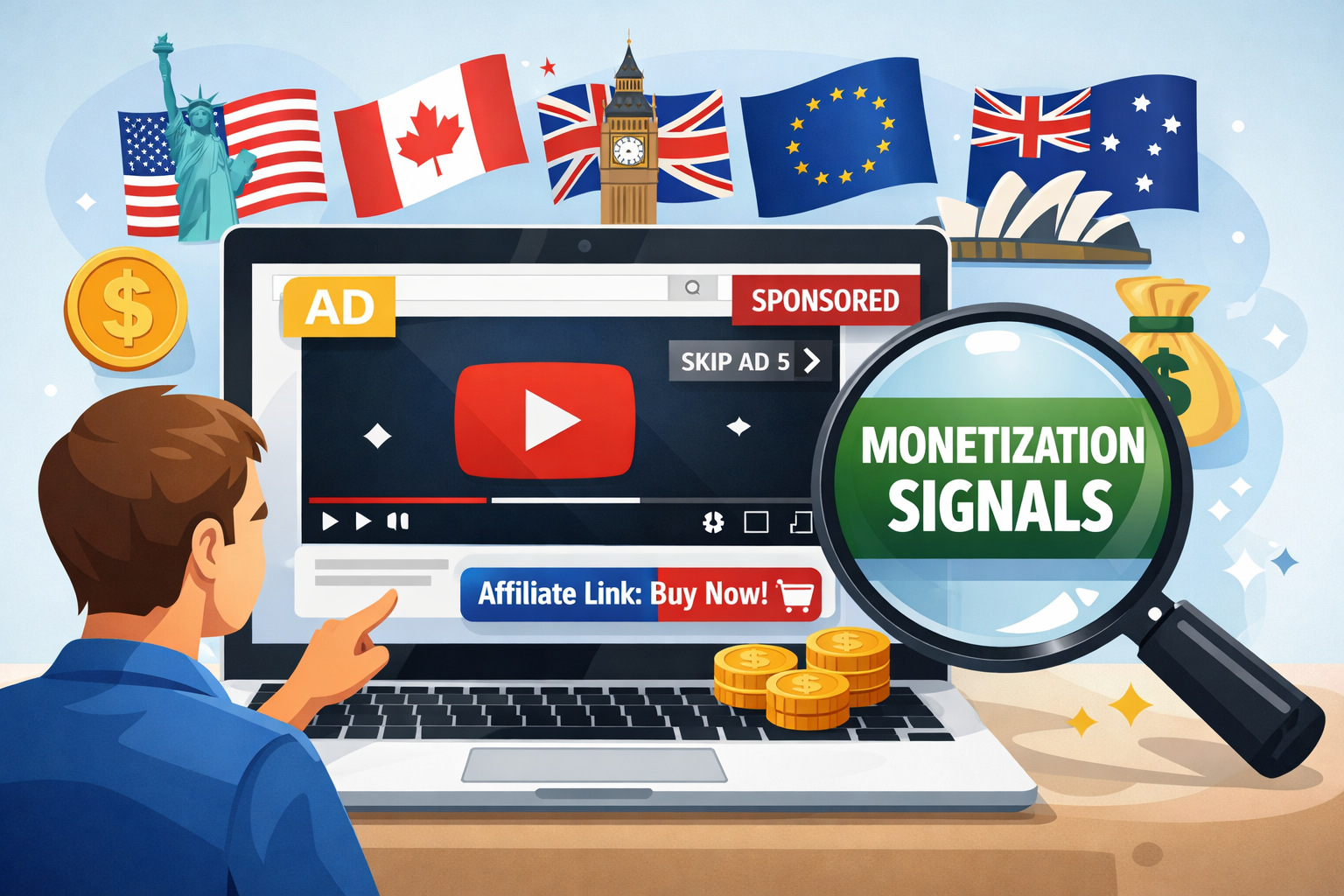
  • How to Check If a YouTube Video Is Monetized Without Any Tool

    How to Check If a YouTube Video Is Monetized Without Any Tool

    If you’ve ever watched a YouTube video and wondered, “Is this creator actually making money from this video?” — you’re not alone.

    New YouTubers, content researchers, affiliate marketers, and even bloggers often want to know whether a video is monetized, but without relying on questionable browser extensions or third‑party tools.

    The truth is simple: YouTube does not publicly display monetization status — but there are clear human signals that strongly indicate when a video is monetized.

    In this guide, you’ll learn how to check if a YouTube video is monetized without any tool, using only logic, observation, and how YouTube itself works.


    Important Truth First: Can You Know for Sure?

    Before we begin, let’s clear a major myth.

    There is no 100 percent guaranteed way to confirm monetization unless: You own the channel or the creator tells you directly.

    However, YouTube follows very consistent monetization rules, and creators behave in predictable ways when money is involved.

    By combining multiple signals below, you can reach a high‑confidence conclusion in most cases.


    Signal 1: Ads Appear Before or During the Video

    This is the most obvious sign. If you see: Skippable ads or Non‑skippable ads and/or Mid‑roll ads during the video the video is very likely monetized.

    Why this matters

    YouTube only serves ads on videos from channels that are accepted into the YouTube Partner Program (YPP) or are being monetized directly by YouTube (rare, legacy cases).

    Important note

    Sometimes YouTube shows ads on non‑monetized channels, but in those cases: the creator earns nothing and the ads are usually inconsistent.

    If ads appear consistently across multiple videos, monetization is almost certain.


    Signal 2: Presence of Mid‑Roll Ads (Strong Indicator)

    Mid‑roll ads (ads that appear inside the video) are a power signal.

    Why? Only creators who are monetized and actively managing revenue can manually place mid‑roll ads, especially on videos 8 minutes or longer.

    Example: A 12‑minute finance tutorial from a UK creator includes an ad at the start, one or two more mid‑video. This is almost certainly a monetized video.


    Signal 3: Video Length Is 8 Minutes or Longer

    Video length alone doesn’t guarantee monetization — but it reveals creator intent.

    Why 8 minutes matters: Creators aiming for ad revenue often target 8–15 minutes videos, optimize content for mid‑roll placement

    If a channel consistently uploads: 10‑minutes explainers, 15‑minutes tutorials, Long‑form reviews; they are very likely monetized.

    This pattern is common across creators in the US, Canada, Australia, and Europe.


    Signal 4: Affiliate Links in the Description

    Scroll to the video description and if you see: Amazon affiliate links,“Get started here” links, Software trials or promo links; the creator is monetizing outside ads.

    Why this matters

    Creators who use affiliate marketing usually are monetized already and understand YouTube income strategies.

    Many creators combine Ad revenue, Affiliate commissions and Sponsorships. You can learn more about this strategy in how to make money on YouTube


    Signal 5: Sponsored Mentions or Brand Call outs

    Listen carefully during the video if you hear phrases like: “This video is sponsored by…” or “Thanks to our partner…” or “Use my code for 20% off”. This is known as a direct monetization.

    Important insight

    Brands usually only sponsor channels that: Are monetized, Have consistent views and Meet YouTube’s advertiser‑friendly standards

    This applies equally to creators in the US, UK, EU, and Australia.


    Signal 6: Pinned Comments With Links

    Check the pinned comment if it includes: Affiliate links, Course links or Product recommendations.The creator is monetizing intentionally.

    Creators who pin monetized links typically are experienced and have passed YouTube monetization review. This is especially common in finance, tech, and education niches.


    Signal 7: Channel Has Community Tab Access

    YouTube channel has likely met eligibility threshold if the channel has a Community tab, Posts polls, images, or updates.

    While Community access alone doesn’t guarantee monetization, it strongly correlates with channel maturity and monetization readiness.


    Signal 8: Consistent Upload Schedule

    Monetized creators treat YouTube like a business. Look for Weekly uploads, Fixed posting days and Consistent formats.

    Channels posting randomly over years are less likely to be monetized compared to channels with a clear structure.

    This pattern is universal across monetized creators in North America, Europe, and Australia.


    Signal 9: Professional Thumbnails and Branding

    Monetized channels invest in high‑quality thumbnails, brand colors and readable text overlays. Although this doesn’t guarantee monetization — but it reflects commercial intent. Creators earning money usually reinvest into presentation.


    Signal 10: The Channel Meets Monetization Requirements

    YouTube’s monetization rules require: 1,000+ subscribers, 4,000 public watch hours or 10 million Shorts views (within 90 days).

    If a channel clearly exceeds this large subscriber count, Strong engagement; Monetization is highly likely. You can learn more in YouTube monetization requirements explained.


    Real‑World Scenarios (Very Important)

    Scenario 1: Small Channel, Monetized Video

    A Canadian creator with 2,500 subscribers runs ads, Uses affiliate links and Uploads weekly; Monetized, despite small size.

    Scenario 2: Large Channel, Not Monetized

    A viral EU Shorts channel with millions of views but no ads on long videos, may not be monetized yet.

    Scenario 3: Old Video vs New Video

    An Australian creator with new uploads don’t yet monetization, may be paused or under review.


    Can a Video Be Monetized Without Ads?

    Yes. Creators may earn from affiliate marketing, sponsorships, Courses or products. Even if you don’t see ads, the video may still generate income. This is common in educational and finance niches.


    Why You Should Avoid “Guaranteed Monetization Checker” Tools

    Most tools guess based on ads, Use outdated data, Can’t access YouTube’s internal systems.

    Human analysis is often more accurate than automated guesses. For a breakdown of tools versus logic, see best YouTube monetization checker tools.


    Final Verdict: Can You Check Monetization Without Any Tool?

    Yes — with high confidence. While you can’t be 100 percent certain, combining: Ads,Video length, Affiliate behavior, Sponsorships, Channel maturity.

    Gives you a clear, reliable answer in most cases if your goal is to research competitors, Learn monetization patterns, Build a profitable YouTube strategy. This knowledge puts you ahead of most beginners.


    Next Step

    If you want to monetize your own channel, explore legit ways to earn money on YouTube and start building with intention.


    Frequently Asked Questions

    How can I tell if a YouTube video is monetized without using a tool?

    Look for ads, mid-roll placements, affiliate links, sponsorship mentions, and consistent channel uploads — these human signals strongly indicate monetization.

    Can a YouTube video be monetized even if I don’t see ads?

    Yes. Videos can earn income through affiliate links, sponsorships, and product promotions even without visible ads.

    Why do some large YouTube channels not show ads on their videos?

    Channels may not be part of the YouTube Partner Program yet, could be under review, or might have monetization paused on specific videos.

    Does video length affect whether a YouTube video is monetized?

    Videos 8 minutes or longer are more likely to have mid-roll ads, which is a strong signal of monetization. Shorter videos can still be monetized through other methods.

    Are monetization checker tools reliable for confirming if a video earns money?

    Most tools only guess based on ads and outdated data. Human analysis using the signals mentioned in this guide is usually more accurate.

  • Best YouTube Monetization Checker Tools (Free & Paid Compared)

    Best YouTube Monetization Checker Tools (Free & Paid Compared)

    YouTube monetization is one of the most common goals for new and growing creators. Reaching the YouTube Partner Program (YPP) requirements — 1,000 subscribers and 4,000 valid public watch hours in the last 12 months (or 10 million Shorts views in 90 days) — can feel confusing without the right data.

    This is where YouTube monetization checker tools come in.

    These tools help you track your progress, estimate how close you are to monetization, analyze growth trends, and identify what content strategies can get you there faster. Some tools are completely free, while others offer advanced analytics through paid plans.

    In this guide, you’ll discover the best YouTube monetization checker tools, how they work, their strengths and weaknesses, and which option is best depending on your creator level.


    What Is a YouTube Monetization Checker Tool?

    A YouTube monetization checker tool is a platform or software that analyzes a YouTube channel to determine:

    • Whether the channel meets YouTube Partner Program eligibility
    • Subscriber and watch-time growth trends
    • Estimated revenue potential (for monetized channels)
    • Performance metrics like engagement, views, and audience behavior

    While YouTube Studio remains the official source of truth, third-party tools provide additional insights, forecasting, competitor benchmarking, and SEO optimization features that YouTube Studio does not offer.

    If you’re serious about monetizing your channel, combining official data with third-party analytics is often the smartest approach.


    Why Monetization Checker Tools Matter for Creators

    Many creators fail to monetize not because of poor content, but because they lack data-driven direction. Monetization checker tools help you:

    • Track real progress instead of guessing
    • Understand which videos drive watch time
    • Identify growth bottlenecks early
    • Set realistic monetization timelines
    • Optimize content for faster results

    If you’re building YouTube as an income stream, these tools are essential — just like budgeting tools are for personal finance (see personal finance basics).


    Best Free YouTube Monetization Checker Tools

    Free tools are ideal for beginners and creators who want reliable insights without upfront costs.


    1. YouTube Studio (Official & Free)

    Best for: All creators

    YouTube Studio is the official analytics dashboard provided by YouTube, and it should be the first monetization checker every creator uses.

    Key Monetization Features

    • Live subscriber count
    • Watch hours tracked over the last 365 days
    • Monetization eligibility status
    • Audience retention and engagement data
    • Revenue tab (once monetized)

    YouTube Studio provides the most accurate and real-time data since it pulls directly from YouTube’s internal systems.

    Pros

    • 100% free and official
    • Highly accurate data
    • Required for monetization approval

    Cons

    • No growth forecasting
    • No competitor comparison tools

    Best Use Case: Tracking official eligibility and monitoring daily channel performance.


    2. Social Blade (Free Version)

    Best for: Quick monetization progress checks and competitor analysis

    Social Blade is one of the most popular YouTube analytics platforms and is widely used to estimate channel growth and performance trends.

    Key Features

    • Subscriber and view growth charts
    • Channel ranking by category
    • Estimated daily, monthly, and yearly growth
    • Public channel comparisons

    While Social Blade does not show official watch hours, it gives a strong macro-level overview of channel momentum.

    Pros

    • Free and easy to use
    • Useful for competitor benchmarking
    • Growth trend visualization

    Cons

    • Revenue and growth estimates are not exact
    • Limited personalization

    Best Use Case: Understanding whether your channel is growing fast enough to reach monetization soon.


    3. NoxInfluencer (Free Tier)

    Best for: Monetization estimates and influencer-style analytics

    NoxInfluencer focuses on performance scoring, estimated earnings, and audience metrics.

    Key Features

    • Channel performance score
    • Estimated income ranges (for monetized channels)
    • Subscriber and view growth analysis
    • Influencer-style analytics

    Pros

    • Clean interface
    • Useful for revenue potential insights
    • Free basic access

    Cons

    • Estimates are not official
    • Less detailed watch-time data

    Best Use Case: Visualizing earning potential once monetized and comparing similar channels.


    Best Paid YouTube Monetization Checker Tools

    Paid tools offer advanced insights, SEO optimization, and forecasting that free tools lack. These are best for creators serious about long-term growth.


    4. VidIQ (Free + Paid)

    Best for: SEO optimization and monetization acceleration

    VidIQ is a powerful YouTube growth and analytics tool that helps creators optimize content to reach monetization faster.

    Key Monetization Features

    • Watch-time and subscriber trend tracking
    • Video performance scorecards
    • Keyword research and search volume data
    • Content recommendations based on trends

    VidIQ doesn’t just track progress — it actively helps creators increase views and watch time, which are critical for monetization.

    Pros

    • Strong SEO tools
    • Real-time analytics
    • Beginner-friendly dashboard

    Cons

    • Advanced features require a paid plan

    Best Use Case: Growing faster through data-driven content optimization.


    5. TubeBuddy (Free + Paid)

    Best for: Channel audits and performance optimization

    TubeBuddy is a YouTube-certified browser extension designed to improve channel efficiency and performance.

    Key Monetization Features

    • Channel health audits
    • Watch-time and engagement tracking
    • A/B testing for thumbnails and titles
    • Keyword research and competitor analysis

    TubeBuddy excels at identifying what’s holding your channel back and fixing it systematically.

    Pros

    • Deep optimization tools
    • Useful for scaling channels
    • Trusted by large creators

    Cons

    • Interface can feel overwhelming
    • Best features locked behind higher plans

    Best Use Case: Improving underperforming videos to boost watch hours.


    6. Social Blade Pro

    Best for: Growth forecasting and advanced analytics

    Social Blade Pro unlocks deeper insights compared to the free version.

    Key Features

    • Advanced growth projections
    • Exportable reports
    • Historical performance tracking
    • Ad-free experience

    Pros

    • Better forecasting accuracy
    • Useful for planning monetization timelines

    Cons

    • Paid subscription required

    Best Use Case: Planning long-term monetization strategies and milestones.


    7. HypeAuditor

    Best for: Professional creators and brand-focused channels

    HypeAuditor is more commonly used by influencers and brands but offers powerful analytics for serious creators.

    Key Features

    • Audience authenticity checks
    • Engagement quality analysis
    • Growth pattern detection
    • Brand collaboration insights

    Pros

    • High-level analytics
    • Excellent for sponsorship readiness

    Cons

    • Expensive for beginners
    • Overkill for small channels

    Best Use Case: Creators planning brand deals alongside ad monetization.


    Free vs Paid Monetization Checker Tools Compared

    FeatureFree ToolsPaid Tools
    Monetization eligibility trackingYesYes
    Growth forecastingLimitedAdvanced
    SEO optimizationMinimalStrong
    Competitor benchmarkingBasicIn-depth
    Revenue estimationLimitedMore detailed

    Recommendation: Start with free tools and upgrade once your channel gains traction.


    How to Use Monetization Checker Tools Effectively

    Simply installing tools isn’t enough. Here’s how to use them strategically:

    1. Track progress weekly, not daily
      Focus on trends instead of short-term fluctuations.
    2. Optimize high-performing videos
      Update thumbnails, titles, and descriptions using insights from VidIQ or TubeBuddy.
    3. Prioritize watch time over views
      Longer sessions matter more than viral spikes.
    4. Study competitors ahead of you
      Analyze channels that recently got monetized.
    5. Combine tools
      Use YouTube Studio for accuracy and third-party tools for strategy.

    These habits mirror smart income-building principles discussed in Blogging vs YouTube which makes more money.


    Common Mistakes Creators Make When Tracking Monetization

    • Relying on revenue estimates instead of official data
    • Obsessing over daily numbers
    • Ignoring audience retention metrics
    • Using too many tools without a clear strategy

    Remember, tools are guides — not guarantees.


    Final Thoughts

    YouTube monetization checker tools can significantly shorten your path to earning revenue if used correctly. Free tools like YouTube Studio and Social Blade are perfect for beginners, while paid tools like VidIQ, TubeBuddy, and Social Blade Pro offer the advanced insights needed to scale faster.

    The key is not just checking if you’re eligible, but understanding what actions move you closer to monetization every week.

    With the right tools and consistent effort, YouTube monetization becomes a measurable goal — not a mystery.


    Frequently Asked Questions

    What is a YouTube monetization checker tool?

    A YouTube monetization checker tool helps creators track their progress toward YouTube Partner Program eligibility by analyzing subscribers, watch hours, views, and channel growth trends.

    Can I check YouTube monetization eligibility for free?

    Yes. YouTube Studio is the official free tool that shows your subscriber count, watch hours, and monetization status. Free versions of tools like Social Blade, VidIQ, and TubeBuddy can also help track progress.

    Are YouTube monetization checker tools accurate?

    YouTube Studio provides the most accurate data because it comes directly from YouTube. Third-party tools use estimates and projections, which are helpful for trends and planning but should not replace official metrics.

    Which YouTube monetization checker tool is best for beginners?

    YouTube Studio is best for beginners because it’s free, accurate, and required for monetization approval. Social Blade is also useful for simple growth tracking and competitor comparison.

    Do paid YouTube monetization tools help you get monetized faster?

    Paid tools don’t guarantee monetization, but they can help you grow faster by offering SEO optimization, content suggestions, and performance audits that improve watch time and engagement.

  • Blogging vs YouTube: Which Makes More Money? A Realistic, Data‑Driven Comparison

    Blogging vs YouTube: Which Makes More Money? A Realistic, Data‑Driven Comparison

    Short answer: Both blogging and YouTube can make serious money—but they pay differently, grow on different timelines, and reward different skills. This guide breaks it all down honestly, without hype.

    Introduction: Blogging vs YouTube—Why This Debate Matters

    If you are trying to make money online, chances are you have asked this exact question:

    Should I start a blog or a YouTube channel?

    Both platforms promise freedom, passive income, and long‑term growth. Both also come with myths, unrealistic income screenshots, and mentors who skip the hard parts.

    This article gives you the real comparison—not guesses, not shortcuts, and not hype. You will learn:

    • How blogging and YouTube actually make money
    • Realistic earning timelines
    • Pros, cons, and hidden costs
    • Which platform earns more per visitor
    • Which one is better for beginners

    By the end, you will know exactly which path fits your goals, skills, and patience level.


    What Is Blogging? (In Simple Terms)

    Blogging is the act of publishing written content on a website you own—usually optimized for search engines like Google.

    A blog post can earn money for years after publication through:

    • Display ads
    • Affiliate marketing
    • Digital products
    • Email marketing
    • Sponsored content

    The key advantage of blogging is ownership. You control the platform, the content, and the monetization.

    How Blogs Make Money

    1. Display Ads Networks like Google AdSense, Ezoic, and Mediavine pay per impression or click.
    2. Affiliate Marketing You earn commissions by recommending tools, courses, or services.
    3. Digital Products E‑books, templates, courses, and memberships.
    4. Sponsored Posts Brands pay for exposure on established blogs.

    Blogging income compounds over time. One good article can pay you monthly for years.

    If this is your first time dealing with this topic, it may help to review a more detailed breakdown of how it works in practice. Consider reading Step‑by‑Step Guide to Starting a Profitable Blog in 2026 (Beginner‑Friendly Blueprint)for more detailed explanation.


    What Is YouTube? (And How It Pays)

    YouTube is a video‑based content platform owned by Google. Creators earn money mainly through views and audience engagement.

    How YouTube Makes Money

    1. Ad Revenue (YouTube Partner Program) You earn money when ads show on your videos.
    2. Affiliate Links in Descriptions Similar to blogging but driven by video trust.
    3. Brand Sponsorships Brands pay per video or campaign.
    4. Channel Memberships & Super Chats Fans pay for exclusive access.
    5. Selling Products or Courses YouTube acts as traffic, not the final sale point.

    Unlike blogs, YouTube income depends heavily on consistent views and algorithm favor.


    Blogging vs YouTube: Income Potential Compared

    1. Earnings Per 1,000 Views

    Platform
    Average RPM
    Blogging$15–$50+
    YouTube$2–$10

    Blogs earn more per visitor.

    Why? Because blog visitors come with search intent—they are actively looking for answers or solutions.

    2.Traffic Longevity

    • Blog posts: Can rank on Google for 2–5+ years
    • YouTube videos: Often spike, then decline

    A blog post published today can still generate income in 2029.

    3.Monetization Speed

    • YouTube: Faster initial monetization once accepted into YPP
    • Blogging: Slower start but stronger long‑term stability

    Blogging rewards patience. YouTube rewards consistency.


    Startup Costs: Blogging vs YouTube

    Blogging CostsYouTube Costs
    Domain & hosting: $50–$120/yearCamera or smartphone
    Optional tools (SEO, email): $0–$50/monthMicrophone
    You can start blogging with under $100.Lighting
    Editing software
    YouTube can be free—but quality production increases costs.

    Skill Requirements Compared

    Blogging SkillsYouTube Skills
    WritingOn‑camera confidence
    SEO (Search Engine Optimization)Video editing
    ResearchStorytelling
    Basic WordPress managementAudio and lighting control

    If you prefer writing and working quietly, blogging fits better. If you enjoy speaking and performing, YouTube wins.


    Blogging vs YouTube: Time Investment

    TaskBloggingYouTube
    Content creationMediumHigh
    EditingLowHigh
    PublishingFastSlow
    Long‑term maintenanceLowMedium

    A single YouTube video can take 5–10x more time than a blog post.


    Search Engine Optimation (SEO) vs Algorithm Dependence

    Blogging = SEO‑Driven

    • You optimize for Google
    • Traffic is predictable
    • Updates improve rankings

    YouTube = Algorithm‑Driven

    • Views depend on recommendations
    • Small changes can kill reach
    • Less control over traffic

    Blogging offers more stability.


    Which One Makes More Money Long‑Term?

    Blogging wins long‑term for most creators.

    Reasons:

    • Higher RPM
    • Multiple income streams
    • Content ownership
    • Less burnout
    • Better scalability

    Many bloggers quietly earn $3,000–$20,000/month with under 100 posts.


    When YouTube Makes More Sense

    Choose YouTube if:

    • You enjoy video creation
    • You want faster audience connection
    • Your niche performs well visually
    • You plan to sell personal brands or coaching

    Top YouTubers can earn six figures—but the competition is intense.


    The Smartest Strategy: Blogging + YouTube

    The most profitable creators combine both.

    • Use YouTube for trust and visibility
    • Use blogging for SEO and conversions
    • Funnel traffic into email lists

    This hybrid approach builds authority faster and multiplies income.


    Beginner Recommendation

    If you are starting today with limited funds

    Start with blogging

    Then later:

    Add YouTube for growth and brand power

    This reduces risk and increases control.


    Additional Income Streams Most Creators Miss

    Before comparing long-term earnings, it is important to understand that both blogging and YouTube offer secondary income streams that many beginners overlook. These income layers often separate average creators from high earners.


    Blogging Side Income Opportunities

    Beyond display ads and affiliate marketing, blogs can generate revenue through:

    • Email newsletters with paid sponsorships
    • Premium tools, calculators, or templates embedded inside articles
    • Content licensing, where other platforms pay to republish your work
    • Lead generation for freelancers, agencies, or service-based businesses
    • Paid guest posts once authority is established

    These monetization methods often produce more stable and predictable income than ads alone, especially in finance, tech, and online business niches.


    YouTube Side Income Opportunities

    YouTube creators can increase earnings by adding:

    • Merchandise sales linked directly below videos
    • Fan-supported memberships on external platforms
    • Paid private communities or Discord groups
    • Speaking engagements, consulting, or coaching
    • Course launches promoted through video content

    While these can be very profitable, most require a strong personal brand and consistent audience interaction.


    Audience Trust and Buying Intent

    Another key difference between blogging and YouTube income lies in user intent.

    • Blog readers usually arrive through Google searches because they are actively looking for solutions
    • YouTube viewers often discover content through recommendations or entertainment-driven browsing

    Because of this:

    • Blog traffic tends to convert better for affiliate offers, financial tools, and software
    • YouTube excels at building emotional trust and brand loyalty

    In practice, many successful creators use YouTube to build trust and blogs to close sales.


    Burnout and Sustainability Factor

    One often ignored factor when comparing blogging vs YouTube income is burnout.

    • Blogging allows creators to work privately, batch content, and update old posts
    • YouTube requires regular filming, editing, and on-camera presence

    Many YouTubers eventually slow down due to production fatigue, while bloggers often scale more comfortably by outsourcing writing or SEO tasks.

    Sustainability plays a major role in long-term earning potential.


    Frequently Asked Questions

    Which makes more money: blogging or YouTube?

    Both can make serious income, but blogging often earns more per visitor long‑term due to higher RPMs and multiple monetization options, while YouTube can scale faster with viral content.

    How long before I start earning on each platform?

    YouTube can monetize once you hit 1,000 subscribers and 4,000 watch hours, often in 12–18+ months, while blogging usually takes consistent SEO and content before earning steadily.

    Do blogging and YouTube require the same skills?

    No — blogging focuses on writing and SEO, while YouTube demands video creation, editing, and on‑camera presence.

    Which platform is better for passive income?

    Blogs tend to earn passive income longer from search traffic and affiliate links, whereas YouTube income often spikes with views but can decline over time.

    Can I do both blogging and YouTube?

    Yes — combining both boosts visibility, trust, and earnings, using YouTube for engagement and blogs for conversions and SEO.

  • How Americans Can Make Money Online (Legit & Tested)

    How Americans Can Make Money Online (Legit & Tested)

    The digital world is expanding faster than ever. Making money online has evolved into a possible and often lucrative choice for millions. You may want to supplement your income.

    Alternatively, you might aim to create a full-time online career. There are multiple ways to generate revenue from the comfort of your home.

    If you’re new to online income and want a broader foundation before focusing on US-specific strategies, start with this beginner guide on how to make money online for beginners.

    In this guide, we’ll explore tested and legitimate ways for Americans to earn online. We will highlight practical strategies, tools, and insights to help you succeed.


    1. Introduction: Why Online Income Matters

    Introduction: Why Online Income matters – There will always be new opportunities and challenges in the online economy. Inflation and rising living costs have increased pressure on individuals. Changing employment patterns mean that earning money online has become essential, not just a hobby, for many people.

    The internet offers Americans unprecedented access to platforms and tools that allow anyone to monetize skills, knowledge, and creativity. Online income offers flexibility, independence, and scalability.

    Your goal might be to earn an extra $500 a month. Alternatively, you might want to build a six-figure online business. This guide’s strategies are designed for you. They offer actionable steps you can implement right away.


    2. Freelancing: Turning Your Skills into Dollars

    Freelancing remains one of the most accessible ways to earn money online. The demand for freelance skills continues to grow across industries.

    Popular Freelance Opportunities

    Writing & Content Creation: Blog posts, SEO content, copywriting

    Graphic Design & Multimedia: Logos, social media graphics, video editing

    Programming & Web Development: Websites, apps, software solutions

    Marketing & Social Media Management: Strategy, campaigns, analytics

    Top Platforms for US Freelancers

    Upwork – A trusted platform connecting clients with freelancers in multiple fields.

    Fiverr – Offers microservices and project-based work with global reach.

    Toptal – Premium platform for highly skilled professionals seeking top-paying clients.


    Tips for Success

    1. Build a professional portfolio highlighting your best work.

    2. Set competitive rates initially to attract clients, then increase over time.

    3. Communicate clearly and meet deadlines to build a strong reputation.

    Freelancing lets you earn instantly. It also helps you build a long-term personal brand. This makes it an ideal starting point for Americans looking to monetize their skills online.


    3. Affiliate Marketing: Earn Commission by Promoting Products

    Affiliate marketing has proven to be one of the highest-paying online ventures for bloggers, influencers, and content creators. With the US consumer online market booming, affiliate marketing remains a goldmine for those willing to learn and implement strategically.

    How It Works.

    You promote a product or service online through a unique affiliate link. When someone purchases via your link, you earn a commission.

    Top High-Paying Affiliate Programs for US Users

    • Amazon Associates – While rates are modest, the massive product choice ensures opportunities.
    • ClickBank – Digital products with high commissions (40–75%).
    • eToro / Coinbase – Finance and crypto affiliates pay generous commissions per referred user.
    • Bluehost / Hostinger – Web hosting platforms offer $50–$150 per signups.

    Tips for Affiliate Marketing Success

    1. Focus on high-value products relevant to your audience.

    2. Build trust first; only promote products you genuinely believe in.

    3. Create content that solves problems — for example, “Best Investment Platforms for US Beginners”.

    With patience and strategic promotion, affiliate marketing can offer a steady stream of passive income over time.


    4. Online Courses and Digital Products: Monetize Your Knowledge

    One of the most lucrative ways to make money online is by creating your own digital products or courses. Knowledge-based products allow you to leverage your skill and sell repeatedly with minimal overhead.

    Popular Digital Products

    • Ebooks and Guides: “Beginner’s Guide to Investing in the US”
    • Online Courses: Finance, crypto, business, or software skills
    • Templates and Tools: Budget planners, Excel sheets, or design templates

    Platforms to Sell Digital Products

    Teachable – Perfect for online courses with integrated payment processing.

    Gumroad – Ideal for ebooks, templates, and smaller digital products.

    Kajabi – Comprehensive solution for digital products, memberships, and courses.


    Tips for Maximizing Earnings

    1. Focus on topics in demand in the US/EU markets.

    2. Package your product professionally with clear instructions and visuals.

    3. Promote through your blog, social media, and email list.

    Selling your own digital products can generate high-profit margins and build you as an authority in your niche.


    5. Blogging and Content Creation: Building Long-Term Wealth

    Blogging remains a powerful avenue for online income. Blogs in finance, tech, and lifestyle niches continue to do exceptionally well.

    How to Monetize Your Blog

    • Affiliate Marketing – Insert affiliate links naturally within blog content.
    • Sponsored Posts – Partner with brands targeting your audience.
    • Show Ads – Google AdSense, Mediavine, or AdThrive. US traffic generates higher CPMs ($15–$40 per 1,000 views).
    • Email Marketing & Lead Magnets – Build an email list to sell products or services directly.

    Tips for Blog Success

    1. Focus on SEO-optimized, US-focused content.

    2. Update old posts annually.

    3. Engage your audience with valuable insights, step-by-step guides, and trustworthy advice.

    A blog not only provides passive income. It also serves as a platform to promote digital products and affiliate offers. This amplifies your overall earnings.


    6. Investing Online: Stocks, ETFs, and Crypto

    Investing online is no longer reserved for experts. Americans can access user-friendly platforms to invest in stocks, ETFs, and cryptocurrencies.

    Recommended US Platforms

    Robinhood / Webull – Beginner-friendly stock and ETF trading.

    eToro / Coinbase – For US crypto investors.

    Vanguard / Fidelity – For long-term, low-cost investments.


    Tips for Safe Investing

    1. Diversify your portfolio across stocks, ETFs, and crypto.

    2. Avoid high-risk speculation unless fully informed.

    3. Use tools and apps to track investments and performance.

    Investing is a high-potential income stream, though it carries risk. Always start small and increase exposure as your knowledge grows.


    7. Remote Jobs: Full-Time Online Opportunities

    Remote work remains a reliable way to earn a consistent income online. The US companies continue to offer remote positions, especially in tech, marketing, and customer service.

    Popular Remote Roles

    Customer Support Specialist

    Virtual Assistant

    Content Writer / Editor

    Social Media Manager

    Web Developer


    Tips for Securing Remote Jobs

    1. Use reputable job boards: We Work Remotely, Remote.co, FlexJobs.

    2. Tailor your resume and portfolio for online roles.

    3. Show communication skills and reliability — crucial for remote work.

    Remote jobs can offer stable income while you build other online revenue streams.


    8. Side Hustles That Pay: Quick Online Wins

    For those seeking immediate cash flow, certain online side hustles are ideal.

    Freelance Gigs: TaskRabbit, Fiverr, Upwork

    Micro-Tasks: Amazon Mechanical Turk, Swagbucks

    Tutoring / Coaching: VIPKid, Chegg Tutors

    Selling Designs / Prints: Etsy, Redbubble

    While these may not generate six-figure income instantly, they supplement your primary online ventures effectively.


    9. Tools, Platforms, and Resources for US/EU Users

    Using the right tools increases efficiency and earnings potential.

    Must-Have Tools

    • Grammarly – Guarantee error-free, professional writing.
    • Canva / Figma – Design eye-catching graphics.
    • Google Analytics – Track website traffic and audience behavior.
    • Ahrefs / SEMrush – Keyword research for US/EU SEO improvement.
    • Mailchimp / ConvertKit – Build and manage an email list.

    Leveraging these platforms ensures your online ventures are professional, trustworthy, and profitable.


    10. Conclusion: Choosing the Right Path for You

    Making money online is entirely achievable, but success requires strategy, consistency, and focus. Americans have access to multiple high-paying avenues: freelancing, affiliate marketing, blogging, online courses, investing, and remote jobs.

    Key Takeaways:

    1. Start with your strengths – focus on areas where you have skills or interest.

    2. Target US/EU audiences for higher earnings potential.

    3. Combine multiple streams of income – affiliate + blog + digital products works best.

    4. Invest in yourself – learning and improving your skills pays off in the long term.

    By implementing the strategies outlined in this guide, you can create sustainable online income. You can achieve financial freedom. You can also build a digital business that grows year after year. Explore our guide on Legit ways to earn Passive Income suitable for a beginner.


    Frequently Asked Questions

    Is it really possible for Americans to make money online legitimately?

    Yes — there are many tested, legitimate online income methods such as freelancing, affiliate marketing, selling digital products, remote jobs, and side hustles that can generate real income with effort and consistency.

    What’s the easiest way for beginners to start earning online?

    Freelancing and micro‑tasks (like writing, design, tutoring, or micro‑jobs) are often the most accessible ways to earn online because they require minimal upfront costs and let you start earning quickly.

    Do I need money upfront to make money online?

    Not necessarily — many options like freelancing, blogging with affiliate marketing, or micro‑tasks can begin with little to no upfront investment, though some methods like digital products or courses may benefit from basic tools or software.

    How long does it take to earn meaningful income online?

    It varies by method: micro‑tasks and freelancing can generate income quickly, while passive methods like blogging or creating digital products often take several months of consistent effort before significant earnings.

    Are remote jobs a legitimate way to earn money online?

    Absolutely — remote jobs with US companies in fields like tech, customer service, writing, and marketing are considered real online income sources that many Americans use as stable work or side income.

  • How to Make Money Online for Beginners – Step-by-Step Guide

    How to Make Money Online for Beginners – Step-by-Step Guide

    Finding a legitimate way to make money online can feel confusing when you’re just starting out. Between exaggerated income claims, recycled advice, and polished sales pages, it’s easy to assume the entire space is either too technical or too risky for beginners.

    Making money online is no longer a mystery or a luxury reserved for tech experts. Thousands of beginners are earning real online income using proven methods that require little to no startup capital. The challenge isn’t whether online income works — it’s knowing where to start, what to avoid, and how to stay consistent.

    The truth is simpler and more grounded. Making money online is not about shortcuts or overnight success. It’s about choosing realistic paths, understanding how online income actually works, and building consistency over time.

    This guide walks you through beginner‑friendly, proven ways to make money online, what to expect from each option, and how to avoid the mistakes that cause most people to quit early.

    Understand What “Making Money Online” Really Means

    Before choosing a method, it’s important to reset expectations. Making money online does not mean instant payouts for minimal effort. A legit online business opportunity is one that offers real value, transparency, and a clear path to earning money online. These opportunities are built on genuine skills, services, products, or content—not hype, guarantees, or vague promises. If an offer relies on fast income claims without requiring effort, audience, or consistency, it is usually designed to sell hope rather than build sustainable income.”

    A legitimate online business opportunity is built on a clear exchange of value, realistic timelines, and effort-based results—not guarantees. If an offer promises fast income without skills, audience, or consistent work, it is usually designed to sell hope rather than create sustainable income.

    In most cases, you are either:

    • Trading time for money (freelance work, virtual assistance)
    • Building an asset (blogs, YouTube channels, digital products)
    • Leveraging platforms to reach customers (marketplaces, gig platforms)
    • Freelancing
    • Affiliate marketing
    • Blogging and content creation
    • Remote jobs
    • Selling digital products
    • Microtasks and online surveys (supplemental income only)

    Each approach works differently, pays differently, and grows at a different pace. Beginners who understand this upfront are far more likely to stick with one path long enough to see results.

    Freelancing: The Fastest Entry Point for Beginners

    Freelancing is often the easiest way to earn your first online income because you’re offering a clear service in exchange for payment.

    Common beginner‑friendly freelance skills include writing, data entry, graphic design, customer support, social media assistance, and basic video editing. You don’t need to be an expert. You need to be reliable, communicative, and willing to improve.

    Platforms like Upwork, Fiverr, and Freelancer connect freelancers with clients actively looking for help. While competition exists, beginners who focus on one skill and create a simple, honest profile often stand out faster than expected.

    The key is to avoid chasing every opportunity. Pick one service, learn what clients actually want, and deliver consistently.

    Online Gigs and Microtasks

    Online gigs and microtask platforms pay for small tasks such as surveys, website testing, transcription, or simple research.

    This is not a long‑term income solution, but it can help beginners earn small amounts while learning how online platforms work. It also builds confidence by showing that online income is real, even if modest at first.

    Reliable platforms usually pay per task and clearly explain requirements. Any platform promising unusually high earnings for very little work should be treated with caution.

    Starting a Blog as a Long‑Term Income Asset

    Blogging remains one of the most sustainable ways to make money online, especially for beginners willing to think long‑term.

    A blog allows you to build content that attracts readers over time. Once traffic grows, income can come from ads, affiliate marketing, sponsored content, or digital products.

    The biggest mistake beginners make is expecting immediate income. Blogging is slow at the start, but it compounds. Articles written today can continue generating traffic and income months or even years later.

    If you’re serious about this path, learning how to build content around real search intent is essential. Many beginners benefit from understanding how affiliate marketing works before monetizing their blog.

    This concept is explained more clearly when you look at it in a broader context, especially for beginners. Our guide post Step‑by‑Step Guide to Starting a Profitable Blog in 2026 (Beginner‑Friendly Blueprint) will give you a clearer view on this topic.

    Affiliate Marketing Without a Blog

    Affiliate marketing does not require owning a website, although having one helps long‑term.

    Beginners can promote affiliate products through social media, email newsletters, or content platforms like Medium. The key is trust. Audiences respond better to honest recommendations backed by personal experience or clear explanations.

    Rather than promoting dozens of products, beginners see better results by focusing on one niche and a small number of relevant offers.

    Understanding the fundamentals of affiliate disclosure rules is also important to stay compliant and maintain credibility.

    Selling Digital Products

    Digital products such as ebooks, templates, printables, and simple courses allow you to create something once and sell it repeatedly.

    You don’t need advanced design skills to get started. Many successful digital products solve narrow problems, such as budgeting templates, planners, or step‑by‑step guides.

    Beginners often underestimate how valuable their existing knowledge can be. If you’ve solved a problem others are still struggling with, there’s likely demand for a simple, well‑explained solution.

    YouTube and Video Content Creation

    Video platforms offer another path for beginners who prefer speaking or demonstrating rather than writing.

    YouTube monetization takes time, but videos can generate income through ads, affiliate links, sponsorships, and product sales. Short‑form video platforms can also be used to build an audience that later converts to income streams.

    Consistency matters more than production quality at the beginning. Clear audio, helpful content, and realistic expectations are enough to start.

    Online Tutoring and Teaching

    If you have knowledge in subjects like language learning, math, coding, or music, online tutoring can be a practical way to earn money.

    Many platforms handle student acquisition and payments, allowing beginners to focus on teaching. Rates vary by subject and experience, but this option offers predictable income once students are secured.

    Avoid Common Beginner Traps

    Many beginners lose money not because opportunities don’t exist, but because scams rely on urgency, vague income promises, and emotional pressure. Offers that push “act now,” avoid clear explanations, or frame doubt as fear are usually designed to rush decisions rather than reward effort.

    Many beginners fail not because online income doesn’t work, but because they fall into avoidable traps:

    • Jumping between methods too quickly
    • Believing income screenshots without context
    • Paying for expensive courses before understanding the basics
    • Ignoring foundational skills like communication and consistency

    Learning how to identify online scams early can save time, money, and motivation.

    How to Choose the Right Path for You

    Beginners fail when they jump between methods instead of committing long enough to see results.

    The best online income method is the one you can sustain. Consider your available time, current skills, learning style, and financial goals.

    If you need faster income, freelancing or tutoring may be more suitable. If you’re willing to build long‑term assets, blogging, digital products, or video content may be better options.

    There is no single correct answer. What matters is choosing one path, committing to it, and allowing enough time for progress to compound.

    Skills compound over time, and systems matter far more than shortcuts. Beginners who focus on learning transferable skills and building repeatable processes are the ones who create sustainable online income instead of chasing quick wins.

    Final Thoughts

    Making money online as a beginner is achievable, but it requires realistic expectations and patience. The internet rewards consistency, not shortcuts.

    Start small, focus on one method, and build skills as you go. Over time, what feels slow in the beginning can become a reliable and scalable source of income.


    Frequently Asked Questions

    Can a beginner really make money online?

    Yes — with consistency and the right method, beginners can earn real income online using freelancing, blogging, affiliate marketing, or other legit paths.

    Do I need money to start?

    Most methods (like freelancing, affiliate marketing, or social content creation) require little to no money to start; only some like e‑commerce may need a small setup budget

    How long before I earn money?

    It varies: freelancing can pay in weeks, while blogs or YouTube typically take 3–6 months of consistent effort before steady income

    Is SEO important for making money online?

    Yes — SEO helps people find your content organically and is crucial for long‑term success in blogs, affiliate marketing, and other content‑based income paths

    What’s the easiest way for beginners to make money online?

    The easiest depends on your skills and time, but freelancing and remote online tasks usually offer the fastest results, while blogging and affiliate marketing build better long‑term income.