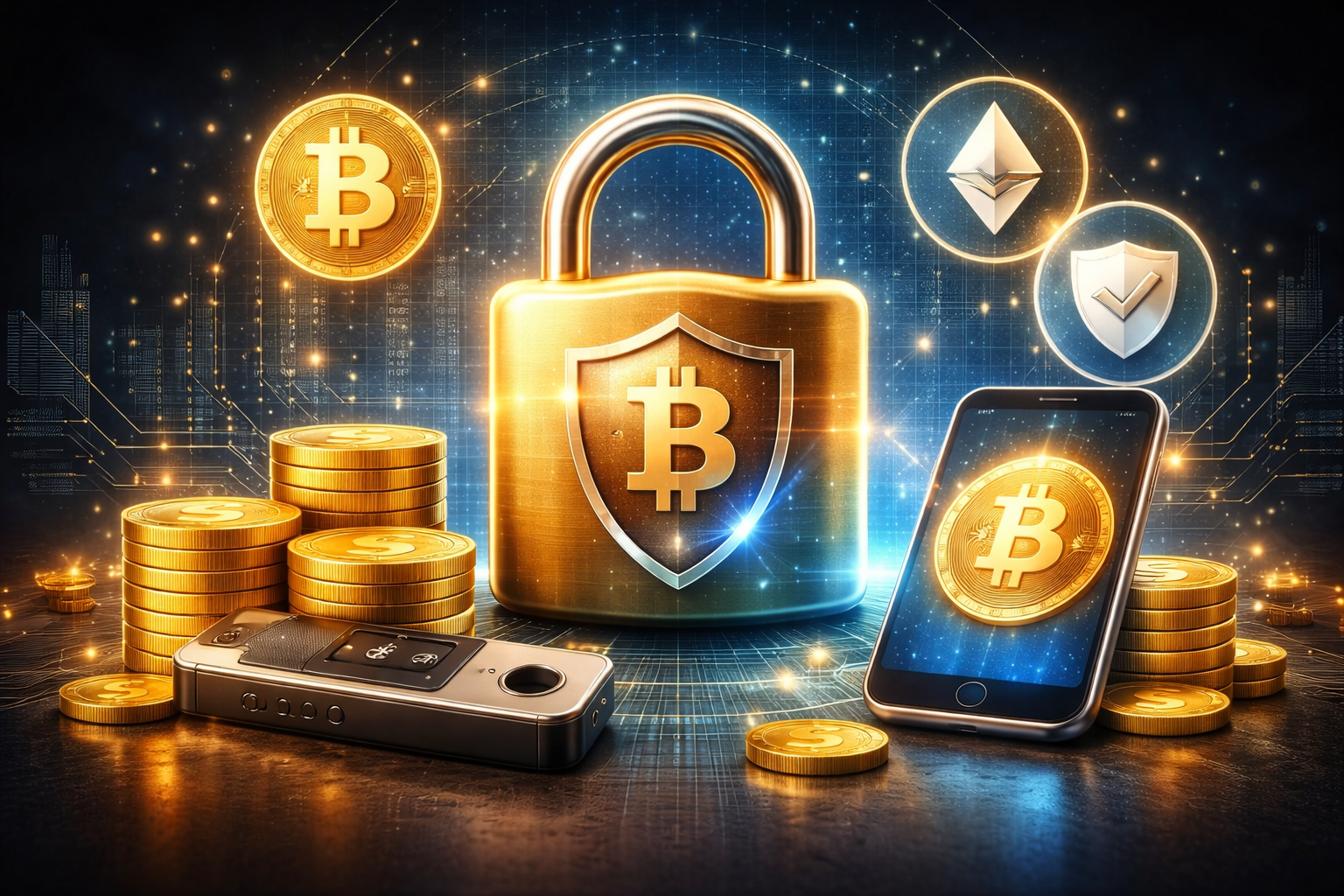
Tag: beginner crypto guide

  • Bitcoin Wallets Explained: A Beginner’s Guide to Safely Storing Crypto

    Bitcoin Wallets Explained: A Beginner’s Guide to Safely Storing Crypto

    Introduction: Why Bitcoin Wallets Matter More Than You Think

    If you’re new to Bitcoin or cryptocurrency in general, one of the most important things you must understand early is how to store your Bitcoin safely.

    Unlike traditional money stored in banks, Bitcoin is decentralized. There is no bank branch you can walk into, no customer service desk to recover lost funds, and no “forgot password” button if something goes wrong. This is both Bitcoin’s greatest strength and its biggest responsibility.

    Bitcoin is stored and accessed through something called a Bitcoin wallet.

    In this beginner-friendly guide, you’ll learn:

    • What a Bitcoin wallet really is (in simple terms)
    • How Bitcoin wallets work behind the scenes
    • The different types of Bitcoin wallets available
    • Hot wallets vs cold wallets explained clearly
    • How to choose the right wallet for your needs
    • Common mistakes beginners make (and how to avoid them)

    By the end of this guide, you’ll have the confidence to store, send, and protect your Bitcoin safely — even if you’re starting from zero.


    What Is a Bitcoin Wallet?

    Bitcoin wallet is a digital tool that allows you to store, send, receive, and manage Bitcoin.

    However, here’s a crucial point many beginners misunderstand: “A Bitcoin wallet does not store actual Bitcoin”.

    Instead, it stores something called private keys.

    What Are Private Keys?

    Private keys are cryptographic codes that prove ownership of your Bitcoin on the blockchain. Whoever controls the private keys controls the Bitcoin.

    A helpful analogy:

    • Think of Bitcoin as valuables stored in a vault
    • The blockchain is the vault system
    • Your wallet is the key
    • The private key is the only key that opens your vault

    If you lose that key, there is no recovery service. Your Bitcoin is permanently inaccessible.

    This is why choosing the right wallet — and using it properly — is one of the most important decisions you’ll make in your crypto journey.


    Why Bitcoin Wallets Are So Important

    Using a Bitcoin wallet gives you true ownership and control over your money.

    Without a wallet (or with the wrong type of wallet), you are relying on third parties to hold your funds — which defeats the core purpose of Bitcoin.

    Bitcoin wallets are important because they:

    • Protect your Bitcoin from theft and unauthorized access
    • Give you full ownership and financial independence
    • Allow fast, global transactions without banks
    • Reduce reliance on intermediaries and institutions
    • Enable you to participate in the crypto economy safely

    In short, no wallet = no real control.


    How Bitcoin Wallets Work (Beginner Explanation)

    When someone sends Bitcoin to you, the transaction is recorded on the Bitcoin blockchain.

    Your wallet:

    • Generates a public address (similar to an account number)
    • Holds your private key, which authorizes spending
    • Signs transactions when you send Bitcoin
    • Displays your balance by reading blockchain data

    Your Bitcoin never leaves the blockchain — your wallet simply gives you access to it.


    Types of Bitcoin Wallets (With Pros & Cons)

    1. Software Wallets

    Software wallets are applications you install on your phone, computer, or browser.

    Types of Software Wallets

    • Mobile wallets (smartphones)
    • Desktop wallets (PC or laptop)
    • Web-based wallets (browser access)

    Best For

    • Beginners
    • Daily transactions
    • Daily transactions

    Advantages

    • Easy to use
    • Quick access
    • Often free
    • Beginner-friendly interfaces

    Risks

    • Vulnerable to hacking if your device is compromised
    • Vulnerable to hacking if your device is compromised
    • Device loss without proper backup

    2. Hardware Wallets

    Hardware wallets are physical devices built specifically to store Bitcoin offline.

    They are considered one of the safest ways to store cryptocurrency.

    Best For

    • Long-term investors
    • Large Bitcoin holdings
    • Maximum security

    Advantages

    • Offline storage (very secure)
    • Immune to online hacking
    • Strong encryption

    Risks

    • Cost money to buy
    • Must be stored safely
    • Loss without backup phrase can be catastrophic

    3. Custodial Wallets

    Custodial wallets are provided by crypto exchanges and platforms.

    In this case, the platform controls your private keys.

    Best For

    • Absolute beginners
    • People who value convenience over control

    Advantages

    • Very easy to use
    • Password recovery options
    • No need to manage keys manually

    Risks

    • You don’t truly own your Bitcoin
    • Platform hacks or shutdowns
    • Account freezes or restrictions

    Popular saying in crypto: “Not your keys, not your coins.”

    4. Non-Custodial Wallets

    Non-custodial wallets give you full control over your private keys.

    No third party can access your funds.

    Best For

    • Users who value independence
    • Long-term Bitcoin users
    • Security-conscious investors

    Advantages

    • Full ownership
    • No reliance on third parties
    • Greater privacy

    Risks

    • Full responsibility
    • Losing recovery phrase means permanent loss
    • No customer support to rescue mistakes

    Hot Wallets vs Cold Wallets Explained

    This distinction is important for security.

    Hot Wallets

    • Connected to the internet
    • Easy to access
    • Faster transactions

    Examples: Mobile wallets, desktop wallets, web wallets

    Best for: Daily use, small amounts


    Cold Wallets

    • Offline storage
    • Much harder to hack
    • Slower access

    Examples: Hardware wallets, paper wallets

    Best for: Long-term storage, large amounts

    Most experienced users use both:

    • Hot wallet for spending
    • Cold wallet for savings

    How to Choose the Right Bitcoin Wallet

    There is no single “best” wallet for everyone.

    The right wallet depends on your personal situation.

    Ask yourself:

    • Are you a beginner or advanced user?
    • How often will you send Bitcoin?
    • How often will you send Bitcoin?
    • Do you prioritize convenience or security?
    • Are you comfortable managing private keys?

    General Recommendation for Beginners

    • Start with a reputable software wallet
    • Learn how backups work
    • Learn how backups work

    Essential Security Features to Look For

    When choosing any Bitcoin wallet, ensure it offers:

    • Backup and recovery phrase
    • Strong encryption
    • Two-factor authentication (if available)
    • Open-source code (transparency)
    • Regular updates and active development

    Security is not optional in crypto — it is mandatory.


    Common Mistakes Beginners Should Avoid

    Many beginners lose Bitcoin not because of price drops, but due to avoidable mistakes.

    Avoid these at all costs:

    • Storing private keys in screenshots or emails
    • Ignoring wallet backups
    • Falling for fake wallet apps
    • Downloading wallets from unofficial websites
    • Using weak or reused passwords
    • Sending Bitcoin to the wrong address
    • Sharing recovery phrases with anyone

    Remember: Bitcoin transactions are irreversible.


    Best Practices for Safely Storing Bitcoin

    • Best Practices for Safely Storing Bitcoin
    • Store backups in multiple secure locations
    • Use cold storage for large amounts
    • Verify addresses before sending
    • Keep your software updated
    • Never rush transactions

    The Role of Bitcoin Wallets in Making Money Online

    Bitcoin wallets are not just for holding crypto — they are tools for:

    • Online payments
    • Freelancing
    • Affiliate commissions
    • International transfers
    • Long-term investing
    • Decentralized finance participation

    For anyone serious about making money online, understanding wallets is foundational knowledge.


    Final Thoughts: Take Control of Your Bitcoin

    Bitcoin wallets are a critical pillar of the cryptocurrency ecosystem.

    Understanding how they work empowers you to:

    • Protect your money
    • Avoid costly mistakes
    • Participate confidently in crypto
    • Build long-term digital wealth

    As you continue learning about Bitcoin, crypto trading, and online income opportunities, choosing the right wallet will remain one of the smartest decisions you’ll ever make.


    Frequently Asked Questions

    What is a Bitcoin wallet?

    A Bitcoin wallet is a digital tool that stores your private keys, allowing you to send, receive, and manage Bitcoin securely on the blockchain.

    How does a Bitcoin wallet work?

    It holds your private keys that authorize transactions on the blockchain — your actual Bitcoin stays on the blockchain, while the wallet gives you access.

    What is the difference between hot and cold wallets?

    Hot wallets are internet‑connected and easy to use but less secure, while cold wallets are offline and offer stronger security for long‑term storage.

    Which Bitcoin wallet is best for beginners?

    Beginner‑friendly wallets are reputable mobile or desktop software wallets; hardware wallets are better for larger amounts and long‑term storage due to higher security.

    Can I lose my Bitcoin if I lose my wallet?

    Yes — if you lose both your wallet and its recovery phrase, you will permanently lose access to your Bitcoin, so always back up your recovery phrase securely.

  • What Is Bitcoin? A Beginner-Friendly Explanation Without the Hype

    What Is Bitcoin? A Beginner-Friendly Explanation Without the Hype

    Bitcoin is one of the most discussed financial innovations of the modern era. Some see it as the future of money, while others view it as complex, volatile, or speculative. This guide explains what Bitcoin is, how it works, and what beginners should understand before getting involved.

    At Finance Profit Hub, the goal is clarity. This article focuses on explaining Bitcoin in practical, straightforward terms so readers can form their own informed opinions.

    What Exactly Is Bitcoin?

    Bitcoin is a digital form of money that exists entirely online. It is not issued by a government and is not controlled by banks or financial institutions. Instead, Bitcoin operates on a decentralized network of computers.

    This structure means there is no central authority managing Bitcoin, no single company owning it, and no government directly controlling its supply or movement.

    Bitcoin allows people to send and receive value directly across the internet without relying on intermediaries. It is fully digital and not backed by physical cash.

    Why Was Bitcoin Created?

    Bitcoin was introduced in 2009 by an individual or group using the name Satoshi Nakamoto. The true identity behind the name has never been confirmed.

    Its creation followed the 2008 global financial crisis, a period that exposed serious weaknesses in traditional banking systems. Bitcoin was designed as an alternative system that could operate independently of banks and centralized authorities.

    The core idea was simple: give individuals more control over their money and reduce reliance on institutions that can fail, restrict access, or change the rules.

    How Does Bitcoin Work?

    Bitcoin runs on a technology known as blockchain. This is a public digital ledger that records every Bitcoin transaction in chronological order.

    Once a transaction is confirmed and added to the blockchain, it cannot be changed. This creates a transparent and tamper‑resistant system that anyone can verify.

    Transactions are validated by a global network of computers rather than a central organization. These computers work together to maintain the integrity and security of the network.

    What Makes Bitcoin Different From Traditional Money?

    Traditional currencies rely on trust in governments and financial institutions. Bitcoin removes much of that reliance by replacing it with open rules and public verification.

    Unlike national currencies, Bitcoin has a fixed supply and operates without a central authority. Ownership is controlled by the user, not by a bank or third party.

    Is Bitcoin Real Money?

    Bitcoin is not recognized as legal tender in every country, but it functions as money in several important ways. It can store value, be transferred globally, and be used for payments where accepted.

    Many people compare Bitcoin to digital gold. Rather than being used for everyday purchases, it is often viewed as a long‑term store of value.

    Why Is Bitcoin Valuable?

    Bitcoin’s value is driven by a combination of scarcity, security, and demand.

    Only a limited number of bitcoins will ever exist, which sets it apart from traditional currencies that can be printed indefinitely. The decentralized structure reduces reliance on any single authority, and the underlying technology has proven resilient over time.

    As adoption grows among individuals and institutions, demand increases while supply remains fixed. This dynamic plays a significant role in how Bitcoin is valued.

    Is Bitcoin Safe for Beginners?

    The Bitcoin network itself has proven secure, but safety depends heavily on how individuals use it. Beginners face risks related to price volatility, scams, and user error rather than flaws in the technology.

    Understanding how Bitcoin works and how to store it securely is essential before committing money.

    Common Bitcoin Scams Beginners Should Avoid

    Scams are common in the cryptocurrency space, particularly those targeting newcomers. These often include promises of guaranteed returns, fake investment platforms, impersonation accounts, and deceptive giveaways.

    A consistent warning sign is urgency or unrealistic profit claims. Caution and patience are critical.

    Bitcoin vs Other Cryptocurrencies

    Bitcoin was the first cryptocurrency and remains the most established. While many other digital assets exist, Bitcoin is generally viewed as more stable and more widely trusted than newer alternatives.

    Other cryptocurrencies may offer different features, but they often carry higher risk and less proven security.

    Bitcoin Holding vs Crypto Trading

    Holding Bitcoin and trading cryptocurrencies are very different approaches.

    Holding typically involves buying Bitcoin and keeping it for the long term, focusing on adoption and long‑term value. Trading involves frequent buying and selling based on short‑term price movements and requires experience and emotional discipline.

    For beginners, holding and learning tends to be a more practical entry point.

    Do You Need a Bitcoin Wallet?

    A Bitcoin wallet is required to store and manage Bitcoin. Wallets can be mobile, desktop‑based, or physical hardware devices.

    Choosing the right wallet depends on how frequently Bitcoin is used and the level of security required.

    Can Beginners Make Money With Bitcoin?

    Bitcoin is not a guaranteed path to profit. Some people benefit from long‑term holding, while others experience losses due to volatility or poor decisions.

    Anyone considering Bitcoin should understand that price swings are normal and that losses are possible.

    Should Beginners Invest in Bitcoin?

    Before investing, beginners should take time to understand how Bitcoin works, how to protect their assets, and how market volatility can affect outcomes.

    Starting small or observing the market before investing can help reduce costly mistakes.

    Bitcoin and the Future of Money

    Bitcoin has already changed how people think about digital ownership, cross‑border payments, and financial independence.

    Regardless of its long‑term role, Bitcoin has permanently influenced global conversations about money and financial systems.

    Final Thoughts

    Bitcoin does not rely on hype to be significant. It represents a shift toward decentralized, transparent financial systems.

    Understanding the fundamentals helps remove confusion and allows individuals to engage with Bitcoin from a position of knowledge rather than speculation.


    Frequently Asked Questions

    What is Bitcoin?

    Bitcoin is a decentralized digital currency that allows people to send money online without banks or governments.

    How does Bitcoin work?

    Bitcoin operates on a blockchain network where computers verify and record transactions securely without a central authority.

    Is Bitcoin safe for beginners?

    Bitcoin itself is secure, but beginners should protect their wallets, avoid scams, and understand that prices are volatile.

    Do I need a Bitcoin wallet?

    Yes — a Bitcoin wallet lets you store, send, and receive Bitcoin safely.

    Can beginners make money with Bitcoin?

    Bitcoin isn’t a get‑rich‑quick scheme; beginners benefit most by learning, thinking long‑term, and being aware of price risk.