Tag: blockchain explained

  • Blockchain Explained Clearly: Common Confusions, Real Uses, and Safety Truths for Beginners

    Blockchain Explained Clearly: Common Confusions, Real Uses, and Safety Truths for Beginners

    Blockchain is one of the most talked-about technologies of the last decade, yet it remains one of the most misunderstood—especially among beginners. Many people hear about Bitcoin, crypto scams, or overnight millionaires and assume they fully understand blockchain. In reality, most beginners are confused not because blockchain is impossible to grasp, but because it is often explained poorly.

    This article exists to clear the confusion, not to repeat technical explanations you may have already read elsewhere. Instead of diving into how blocks are created or how networks reach consensus, this guide focuses on what beginners usually get wrong, how blockchain is actually used in the real world, and whether it is safe to engage with as a beginner.

    If you want a deeper, step-by-step explanation of how blockchain technology works at a technical level, you should first read How Blockchain Works: A Simple Beginner Guide. This article is designed to support and clarify, not replace that foundation.


    Why Beginners Get Confused About Blockchain

    Blockchain confusion usually starts with headlines. News stories, social media posts, and online ads often mix blockchain, cryptocurrency, investing, and scams into one blurry concept. As a result, beginners assume that understanding blockchain means understanding crypto trading—or worse, that blockchain is a guaranteed way to make money.

    Another reason for confusion is that many articles jump straight into technical jargon. Terms like “hashing,” “nodes,” and “consensus mechanisms” are introduced too early, overwhelming readers who are simply trying to understand what blockchain is used for.

    This guide takes a different approach. Instead of focusing on how blockchain works internally, it focuses on:

    • The difference between blockchain and cryptocurrency
    • Real-world uses beyond Bitcoin
    • Safety, risks, and common myths beginners should know

    Blockchain vs Cryptocurrency: What Beginners Always Mix Up

    One of the most common mistakes beginners make is using the words blockchain and cryptocurrency interchangeably. While they are related, they are not the same thing.

    Blockchain Is a Technology, Cryptocurrency Is One Application

    Blockchain is a technology—a type of digital record-keeping system. It allows information to be stored in a way that is transparent, difficult to alter, and shared across multiple participants.

    Cryptocurrency, such as Bitcoin or Ethereum, is just one application built on blockchain technology. It uses blockchain as its underlying system to record transactions and ownership.

    In other words, blockchain can exist without cryptocurrency, but cryptocurrency cannot exist without blockchain.

    A Simple Analogy Beginners Understand

    Think of blockchain as a digital accounting book that anyone with permission can verify. Cryptocurrency is simply one type of asset recorded inside that book.

    Just as accounting software can track salaries, invoices, and expenses—not just cash—blockchain can support many use cases beyond digital money.

    Why Bitcoin Gets All the Attention

    Bitcoin was the first successful and widely adopted use of blockchain technology. Because it was revolutionary and financially disruptive, it became the face of blockchain in the media.

    However, focusing only on Bitcoin creates the false impression that blockchain’s sole purpose is cryptocurrency speculation. In reality, Bitcoin is only the beginning of what blockchain can support.


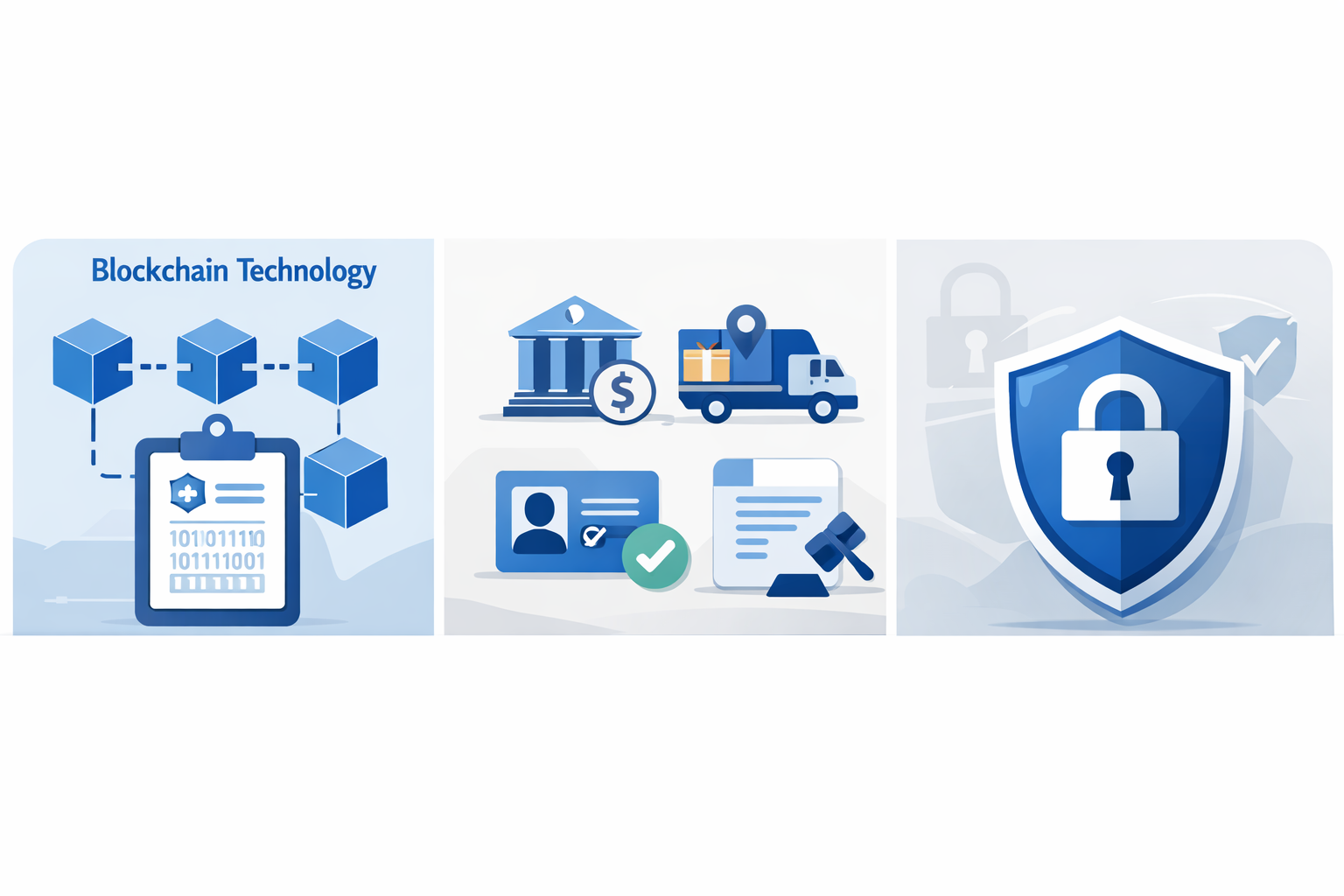
    Real-World Uses of Blockchain Beyond Bitcoin

    Blockchain’s real value becomes clearer when you look beyond cryptocurrency. Across the United States, Canada, the United Kingdom, Europe, and Australia, blockchain is already being explored and used in practical ways.

    Financial Services and Cross-Border Payments

    Traditional international payments can take days to settle and involve high fees. Blockchain-based systems can reduce settlement times and increase transparency.

    Banks and financial institutions are experimenting with blockchain to improve:

    • Cross-border money transfers
    • Transaction reconciliation
    • Payment settlement speed

    These systems do not always involve public cryptocurrencies and are often designed for internal or institutional use.

    Supply Chain and Product Tracking

    Blockchain is increasingly used to track products as they move through supply chains. This is especially valuable in industries where authenticity and safety matter.

    Examples include:

    • Tracking food from farm to supermarket
    • Verifying pharmaceutical supply chains
    • Authenticating luxury goods

    By recording each step on a shared ledger, companies can reduce fraud and improve accountability.

    Digital Identity and Record Verification

    Verifying identity and credentials is another promising blockchain use case. Educational institutions and employers can use blockchain-based records to confirm certificates, licenses, and qualifications.

    Instead of relying on paper documents or third-party verification services, blockchain can provide a tamper-resistant way to prove authenticity while still protecting personal data.

    Smart Contracts in Everyday Business

    Smart contracts are self-executing agreements stored on a blockchain. When predefined conditions are met, actions happen automatically.

    In practical terms, smart contracts are being explored for:

    • Insurance claim payouts
    • Real estate escrow agreements
    • Business-to-business contracts

    They reduce manual processing and help eliminate disputes caused by unclear contract execution.


    Is Blockchain Safe for Beginners?

    Safety is one of the biggest concerns beginners have—and rightly so. The answer, however, depends on what aspect of blockchain you are interacting with.

    Blockchain Technology vs Investment Risk

    Blockchain technology itself is designed to be secure and tamper-resistant. The risks beginners usually face do not come from the technology, but from:

    • Unregulated investment platforms
    • Fraudulent crypto schemes
    • Poor financial decisions driven by hype

    It is important to separate blockchain as a technology from speculative investing built on top of it.

    Common Myths Beginners Believe

    Many misconceptions lead beginners into trouble. Some of the most common myths include:

    • “Blockchain guarantees profits.” Blockchain does not guarantee income or investment returns.
    • “Blockchain is completely anonymous.” Many blockchains are transparent and traceable.
    • “All blockchain projects are decentralized.” Some projects are controlled by companies or institutions.

    Understanding these myths helps beginners avoid unrealistic expectations.

    What Beginners Should Avoid

    If you are new to blockchain, you should be cautious of:

    • Platforms promising guaranteed or fixed returns
    • Projects that rely heavily on hype but lack real-world use
    • Influencers promoting “secret” blockchain opportunities

    A legitimate blockchain project focuses on solving a real problem—not rushing users into quick profits.


    What Beginners Should Understand Before Trusting Any Blockchain Project

    Before engaging with any blockchain-based platform or service, beginners should ask a few critical questions:

    • Does this project clearly explain what problem it solves?
    • Is the team or organization transparent?
    • Is it compliant with regulations in major markets like the US, UK, or EU?
    • Does it rely on education and utility rather than hype?

    Taking time to evaluate these factors can help beginners avoid unnecessary risks.


    Final Thoughts: Blockchain Is Bigger Than Bitcoin, But It Is Not Magic

    Blockchain is a powerful technology with real-world applications that extend far beyond cryptocurrency. At the same time, it is not a shortcut to wealth or a risk-free opportunity.

    For beginners, the smartest approach is education first. Understand the difference between blockchain and cryptocurrency, recognize where blockchain is actually being used, and remain cautious of exaggerated promises.

    If you want to build a solid foundation, start with How Blockchain Works: A Simple Beginner Guide, then use this article as a reality check to separate facts from hype. With the right mindset, blockchain becomes far less confusing—and far more useful.


    Frequently Asked Questions

    Is blockchain the same thing as cryptocurrency?

    No, blockchain and cryptocurrency are not the same. Blockchain is a technology used to store and verify data securely, while cryptocurrency is just one application built on blockchain. Many blockchain systems operate without using cryptocurrencies at all.

    Why do people confuse blockchain with Bitcoin?

    People confuse blockchain with Bitcoin because Bitcoin was the first widely known use of blockchain technology. Media coverage and online discussions often focus on Bitcoin, making it seem like blockchain only exists for cryptocurrency, even though blockchain has many other uses.

    Can blockchain be used without cryptocurrency?

    Yes, blockchain can be used without cryptocurrency. Many companies and institutions use private or permissioned blockchains for record-keeping, supply chain tracking, identity verification, and contract management without involving digital coins.

    Is blockchain technology safe for beginners?

    Blockchain technology itself is considered secure, but beginners may face risks when dealing with unregulated platforms, scams, or speculative investments. The biggest risks usually come from how blockchain is used, not from the technology itself.

    How can beginners avoid blockchain scams?

    Beginners can avoid blockchain scams by avoiding guaranteed returns, researching projects thoroughly, verifying transparency, and staying away from platforms that rely heavily on hype rather than real-world use cases.
  • Blockchain for Beginners: Simple Explanation With Real-World Examples

    Blockchain for Beginners: Simple Explanation With Real-World Examples

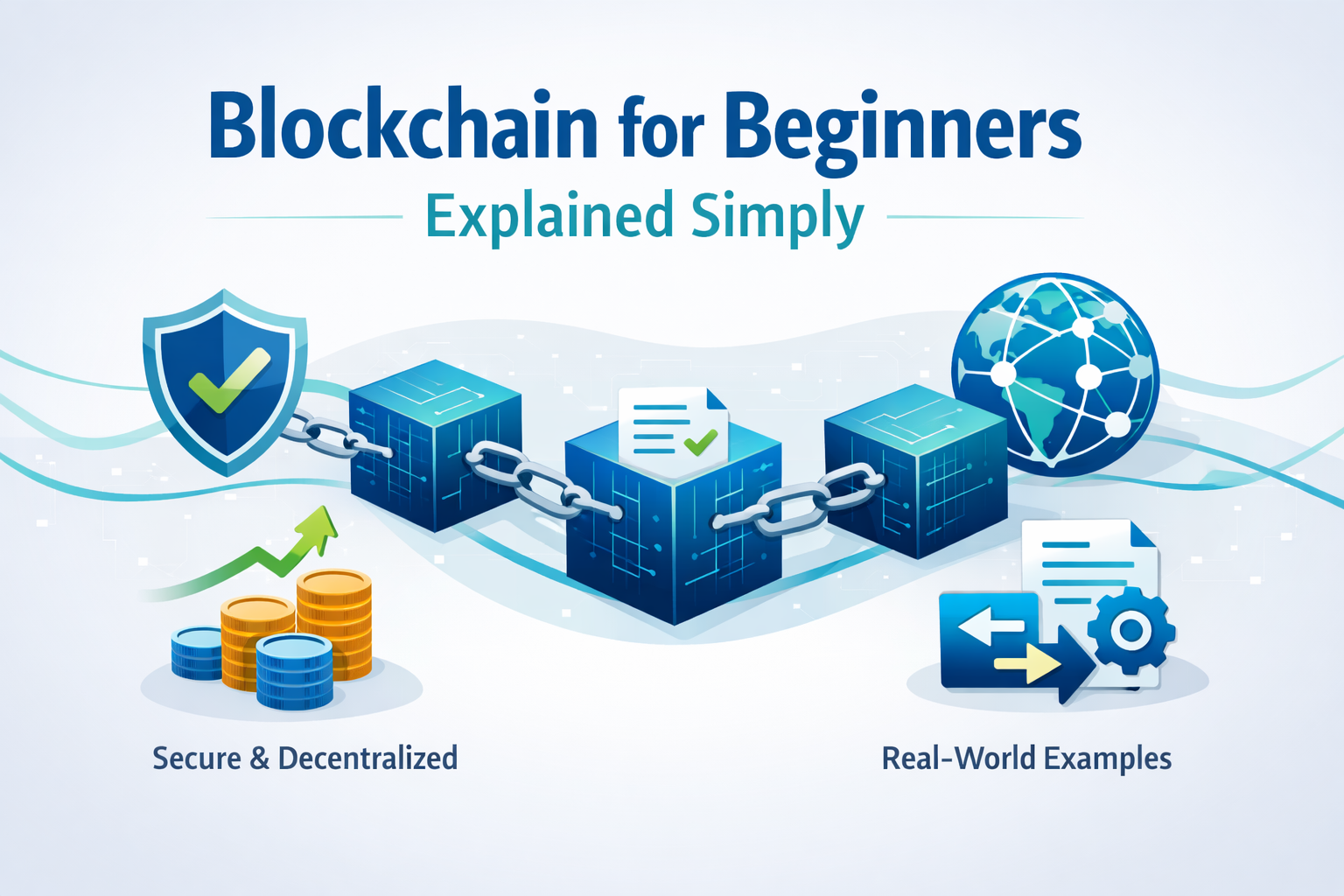
    Blockchain sounds complicated to many people. You may have heard it mentioned alongside Bitcoin, crypto, or NFTs and wondered whether it’s only for tech experts. The truth is much simpler. Blockchain is just a new way of recording and sharing information that removes the need for middlemen and builds trust directly into the system.

    This beginner-friendly guide explains blockchain in plain English. By the end, you’ll understand what blockchain is, why it was created, how it’s used today, and whether it’s something beginners should care about in 2026 and beyond.


    What Is Blockchain? (Beginner-Friendly Definition)

    At its core, blockchain is a shared digital record book.

    Instead of one company or bank owning the records, many computers around the world keep the same copy. Every time new information is added, everyone updates their copy at the same time.

    Think of blockchain like:

    • A shared Google Sheet that thousands of people can view
    • Once a row is added, it cannot be deleted or secretly changed
    • Everyone can verify that the information is correct

    That shared, tamper-resistant record is what makes blockchain powerful.

    What blockchain is not:

    • It is not just cryptocurrency
    • It is not illegal or hidden
    • It is not only for programmers

    Blockchain is simply a technology for recording trust.


    Why Was Blockchain Created?

    To understand blockchain, you need to understand the problem it was built to solve: trust.

    In traditional systems:

    • Banks verify payments
    • Companies store customer data
    • Governments manage records

    These systems are centralized, meaning one authority controls everything. If that authority makes a mistake, changes data, or gets hacked, users have little control.

    Blockchain was created to:

    • Remove the need for a single trusted middleman
    • Let users verify information themselves
    • Make records transparent and difficult to manipulate

    In short, blockchain replaces institutional trust with mathematical and network-based trust.


    How Blockchain Works (Simple Overview)

    While blockchain technology can be technical, the basic idea is easy to grasp.

    Here’s the simple version:

    1. Information (like a transaction) is created
    2. That information is grouped into a “block”
    3. The block is verified by many computers (called nodes)
    4. Once verified, the block is added to a chain of previous blocks
    5. The record becomes permanent and visible to all

    If you want a deeper, step-by-step breakdown of the technical process, read our full guide on how blockchain works.

    This article focuses on what blockchain means for beginners, not the technical mechanics.


    Real-World Blockchain Examples (This Is Where It Clicks)

    Blockchain becomes much easier to understand when you see how it’s used in real life.

    Cryptocurrency (Bitcoin & Ethereum)

    The most famous use of blockchain is cryptocurrency.

    • Bitcoin uses blockchain to record payments without banks
    • Ethereum allows programmable transactions using smart contracts

    Instead of trusting a bank ledger, users trust the blockchain ledger.

    Money Transfers & Payments

    Traditional international transfers can take days and involve high fees.

    Blockchain-based payments:

    • Settle faster
    • Reduce intermediaries
    • Increase transparency

    This is why many companies explore blockchain for global payments.

    Supply Chain Tracking

    Blockchain can track products from origin to consumer.

    Examples:

    • Food supply chains verifying freshness
    • Luxury brands preventing counterfeit goods
    • Pharmaceutical companies tracking medicine authenticity

    Every step is recorded and verifiable.

    Digital Ownership (NFTs Explained Simply)

    NFTs use blockchain to prove ownership of digital items.

    Blockchain ensures:

    • Only one true owner exists
    • Ownership history is transparent
    • Digital assets cannot be duplicated fraudulently

    Even if you don’t like NFTs, the ownership concept is important.

    Smart Contracts

    Smart contracts are programs stored on a blockchain that execute automatically when conditions are met.

    For example:

    • A payment releases only after a service is completed
    • No middleman is needed to approve the transaction

    This reduces costs and increases efficiency.


    What Is Blockchain Used For Today?

    Blockchain is already being tested and used across many industries.

    Finance

    • Digital payments
    • Decentralized finance (DeFi)
    • Faster settlements

    Business

    • Transparent record-keeping
    • Fraud prevention
    • Contract automation

    Digital Security

    • Identity verification
    • Data protection
    • Tamper-resistant records

    Content & Digital Assets

    • Creator royalties
    • Ownership tracking
    • Licensing transparency

    Blockchain’s real value lies in trust without intermediaries.


    Is Blockchain Safe and Legit?

    Yes, blockchain technology itself is considered secure.

    Why blockchain is hard to hack:

    • Data is distributed across many computers
    • Altering records requires controlling the majority of the network
    • Cryptography protects data integrity

    However, not everything built on blockchain is risk-free.

    Risks come from:

    • Poorly designed applications
    • Scams pretending to be “blockchain projects”
    • User errors, not the technology itself

    Understanding the difference is essential for beginners.


    Common Blockchain Myths (Beginner Confusion)

    “Blockchain Is the Same as Bitcoin”

    Bitcoin uses blockchain, but blockchain is bigger than Bitcoin.

    “Blockchain Is Illegal”

    Blockchain technology itself is legal. Regulations vary by country, but the technology is widely used by corporations and governments.

    “Only Tech Experts Can Use Blockchain”

    Modern blockchain applications are increasingly user-friendly and require no coding knowledge.


    Blockchain vs Traditional Systems (Simple Comparison)

    FeatureBlockchainTraditional Systems
    ControlDecentralizedCentralized
    TransparencyHighLimited
    Data ChangesExtremely difficultEasy for owners
    Trust ModelNetwork-basedInstitution-based

    This comparison explains why blockchain is often described as a trust revolution.


    Should Beginners Learn Blockchain in 2026?

    You don’t need to become a blockchain developer to benefit from understanding it.

    Blockchain knowledge is useful if you:

    • Want to understand digital finance
    • Are interested in future technology trends
    • Work in business, content creation, or investing

    You may not need deep blockchain knowledge if:

    • You avoid digital finance entirely
    • Your work has no overlap with technology

    For most beginners, basic understanding is enough.


    Final Thoughts

    Blockchain is not magic, hype, or only for experts. It is a practical technology designed to improve trust, transparency, and efficiency.

    As a beginner, understanding blockchain at a high level puts you ahead of most people. If you want to go deeper, learning how blockchain works step by step is the natural next move.

    Blockchain is still evolving — and learning it early is a smart decision.


    Frequently Asked Questions

    What is blockchain in simple words?

    Blockchain is a shared digital record book that cannot easily be changed and does not rely on one owner.

    Is blockchain the same as cryptocurrency?

    No. Cryptocurrency uses blockchain, but blockchain has many other uses.

    Can blockchain be hacked?

    The technology itself is very secure, but applications built on it can have vulnerabilities.

    Is blockchain legal?

    Blockchain technology is legal in most countries, though regulations differ.

    Do beginners need to learn coding to understand blockchain?

    No. Beginners can understand blockchain concepts without any programming knowledge.

  • How Blockchain Works: A Simple Beginner-Friendly Explanation (Without the Technical Jargon)

    How Blockchain Works: A Simple Beginner-Friendly Explanation (Without the Technical Jargon)

    Blockchain is one of the most talked-about technologies in the world today, yet for many beginners it still feels confusing, technical, and overwhelming. You may have heard about blockchain in connection with Bitcoin, cryptocurrencies, NFTs, or Web3, but understanding how blockchain actually works does not require a computer science background.

    For a broader introduction with practical examples, you can also read our guide on Blockchain for Beginners: Simple Explanation With Real-World Examples.

    In this guide, you will learn how blockchain works in clear, simple terms—without complex jargon or unnecessary technical language. By the end, you will understand what blockchain is, how it stores information, why it is considered secure, and why it matters for the future of finance and digital technology.

    What Is Blockchain? (Simple Definition)

    At its core, blockchain is a digital record-keeping system.

    Instead of storing information in one central location, such as a bank’s server, blockchain distributes data across many computers that are connected together. These computers form a network and must agree on the accuracy of information before it is recorded.

    A simple way to think about blockchain is as a shared digital notebook:

    • Everyone can see what is written
    • No one can secretly change past entries
    • Every new entry must be approved by the group

    This shared verification model is what gives blockchain its strength.


    Why Was Blockchain Created?

    Blockchain was created to solve a fundamental problem: trust.

    Traditionally, people rely on intermediaries such as banks, payment processors, governments, and large corporations to manage money, records, and data. These intermediaries control systems that require users to trust them completely.

    Blockchain reduces the need for blind trust by replacing it with transparency, verification, and cryptographic proof. Instead of relying on a single authority, users can rely on the system itself.


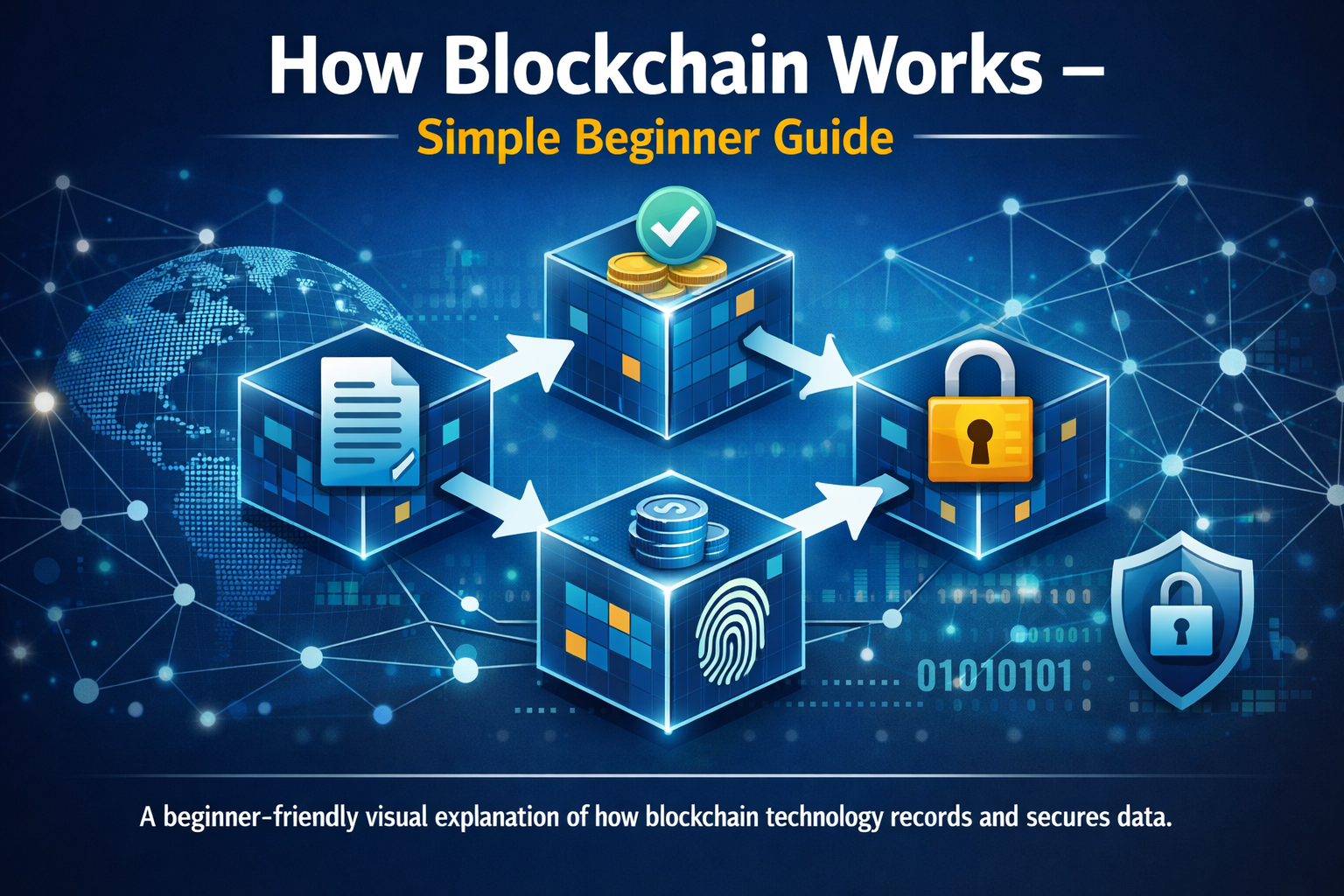
    How Blockchain Works Step by Step (Beginner Breakdown)

    Blockchain may sound complex, but its operation follows a clear and logical process.

    Step 1: A Transaction Is Created

    A transaction is any action involving data. This could include sending cryptocurrency, recording ownership, or storing information.

    For example, Jeremy sends Bitcoin to a friend. That transaction is created and broadcast to the blockchain network.


    Step 2: Transactions Are Grouped Into a Block

    Rather than recording transactions one at a time, the network groups many transactions together into a structure called a block.

    Each block typically contains:

    • A list of transactions
    • A timestamp
    • A unique identification code
    • A reference to the previous block

    Step 3: Network Verification (Consensus)

    Before a block is added to the blockchain, the network must confirm that all transactions inside it are valid. This agreement process is known as consensus.

    Different blockchains use different consensus mechanisms, such as Proof of Work or Proof of Stake. Regardless of the method, the core idea is the same: most of the network must agree that the data is correct.


    Step 4: The Block Is Added to the Chain

    Once verified, the block is permanently added to the existing chain of blocks. It links directly to the previous block, extending the chain forward.

    This continuous linking of blocks is what gives blockchain its name.


    Step 5: Data Becomes Permanent and Secure

    After a block is added, the information inside it cannot be edited or deleted. Any attempt to change past data is automatically rejected by the network.

    This permanence is one of the key reasons blockchain is considered highly secure.


    Why Is Blockchain So Secure?

    Blockchain security is built on three core principles.

    Decentralization

    There is no single owner or central server. Thousands of computers hold copies of the same data. Even if some computers fail, the network continues to function.

    Cryptography

    Blockchain relies on advanced encryption to protect user identities, secure transaction data, and prevent unauthorized changes.

    Transparency

    Most blockchains are public. Anyone can verify transactions, view records, and confirm data integrity. This openness makes fraud extremely difficult.


    What Makes Blockchain Different From Traditional Databases?

    Traditional databases are centralized, editable, and controlled by a single entity. Blockchain systems are decentralized, immutable, and maintained by a distributed network.

    While centralized databases can be efficient, they are more vulnerable to manipulation and large-scale breaches. Blockchain trades some speed and flexibility for transparency, security, and resilience.


    What Is Blockchain Used For?

    Blockchain technology extends far beyond cryptocurrency.

    Cryptocurrencies

    Bitcoin and Ethereum are built on blockchain technology. For beginners exploring this area, our guide on Best Bitcoin Wallets for Beginners can be helpful.

    Smart Contracts

    Smart contracts are self-executing agreements that run automatically when conditions are met. They reduce the need for lawyers, intermediaries, and manual enforcement.

    Supply Chain Tracking

    Companies use blockchain to track goods, prevent counterfeit products, and improve transparency across supply chains.

    Digital Identity

    Blockchain can give users more control over personal data, helping reduce identity theft and improve online security.


    Common Blockchain Myths (Cleared)

    Myth 1: Blockchain Is Illegal

    Blockchain itself is a legal and neutral technology.

    Myth 2: Blockchain Is Only for Tech Experts

    Many modern blockchain platforms are designed for everyday users.

    Myth 3: Blockchain and Bitcoin Are the Same

    Bitcoin uses blockchain, but blockchain technology extends far beyond Bitcoin.


    Advantages of Blockchain Technology

    Blockchain offers several clear benefits, including improved security, transparency, reduced fraud, lower transaction costs, and faster global transfers.


    Disadvantages of Blockchain Technology

    Despite its strengths, blockchain also faces challenges such as energy consumption on some networks, scalability limitations, and a learning curve for new users.


    How Blocks Are Connected on the Blockchain (In Simple Terms)

    Each block is linked to the previous one using a digital fingerprint known as a hash. A hash is a unique string of characters generated through cryptographic algorithms.

    Every block contains its own hash as well as the hash of the previous block. If someone attempts to alter an earlier block, its hash changes immediately, breaking the chain and alerting the network. This makes blockchain data extremely resistant to tampering.


    What Is a Blockchain Node?

    A node is any computer that participates in the blockchain network. Nodes store copies of the blockchain, verify transactions, and enforce network rules.

    Some nodes store the entire blockchain history, while others perform lighter roles. Together, they ensure reliability and prevent single points of failure.


    Proof of Work vs Proof of Stake (Beginner Comparison)

    Blockchain networks must agree on transaction validity through consensus.

    Proof of Work, used by Bitcoin, requires computers to solve complex puzzles to validate blocks. It is very secure but energy-intensive.

    Proof of Stake, used by newer blockchains such as Ethereum, selects validators based on the amount of cryptocurrency they commit to the network. It achieves security with far less energy use.


    Why Blockchain Is Considered Trustless (And Why That’s Good)

    In blockchain, “trustless” does not mean untrustworthy. It means users do not need to trust a central authority. Trust is replaced with mathematics, code, and public verification, reducing fraud and manipulation.


    Blockchain Transparency Explained Simply

    Most public blockchains allow anyone to view transaction history and verify records. While wallet addresses are visible, personal identities remain protected, balancing transparency with privacy.


    Can Blockchain Store Information Other Than Money?

    Yes. Blockchain can store ownership records, digital certificates, contracts, voting data, and even medical information in certain systems. Its permanence makes it suitable for data that must not be altered.


    Blockchain and Real-World Industries

    Blockchain is already being tested across finance, healthcare, and government services.

    Banks use it to speed up international payments and reduce costs. Healthcare systems explore it to secure patient records. Governments test it for digital voting, land registration, and identity verification.


    What Beginners Should Know Before Using Blockchain

    New users should start with reputable platforms, protect private keys carefully, and use small amounts while learning. Understanding the basics helps avoid scams and costly mistakes.


    Blockchain vs Cryptocurrency (Clear Difference)

    Blockchain is the underlying technology. Cryptocurrency is one application of that technology. Bitcoin uses blockchain, but blockchain can exist without Bitcoin.


    Is Blockchain the Future?

    Many experts believe blockchain will reshape finance, improve digital ownership, and strengthen trust in online systems. While adoption takes time, the foundation is already in place.


    Final Beginner Takeaway

    Blockchain works by combining decentralization, cryptography, transparency, and network consensus. Together, these elements create a system that records information securely, openly, and permanently.

    Understanding how blockchain works provides a strong foundation for learning about cryptocurrency, Web3, and the future of digital technology.


    Frequently Asked Questions

    What is blockchain?

    Blockchain is a decentralized digital ledger that records transactions across many computers so data can’t be altered or controlled by a single authority.

    How does blockchain work step‑by‑step?

    Transactions are grouped into blocks, verified by a network of computers (nodes) using consensus, then added to a chain of previous blocks that becomes a permanent record.

    Why is blockchain secure and tamper‑proof?

    Each block contains a cryptographic link to the previous block, and the network must agree before a new block is added, making changes nearly impossible.

    Is blockchain only for Bitcoin and crypto?

    No — while popularized by Bitcoin, blockchain also underpins smart contracts, supply chain tracking, digital identity systems, and more.

    Can blockchain be hacked or changed after recording?

    It’s extremely difficult — altering a block would require rewriting every subsequent block across the decentralized network, so once data is confirmed it’s effectively permanent.