Tag: building wealth

  • How to Build Multiple Streams of Income

    How to Build Multiple Streams of Income

    For decades, the traditional financial blueprint was simple: get a good job, work hard, earn a stable salary, and retire comfortably. For many people today, that model no longer feels secure—or sufficient. Rising living costs, economic uncertainty, and the growing desire for flexibility have reshaped how people think about money. Instead of relying on a single paycheck, more individuals are exploring how to build multiple streams of income as a long-term strategy for stability, freedom, and resilience.

    Multiple streams of income do not mean working nonstop or chasing every opportunity that appears online. At its core, it is about diversification—spreading your earning sources so that no single stream carries all the pressure. When designed thoughtfully, multiple income streams can work together, reinforcing your financial position while giving you more control over your time and choices.

    This article explores what multiple streams of income really mean, why they matter, and how to build them in a sustainable, realistic way.


    Understanding What Multiple Streams of Income Really Are

    Multiple streams of income refer to earning money from more than one source at the same time. These sources can be active, where your time and effort are directly tied to earnings, or passive, where income continues with minimal ongoing involvement. Most people begin with active income and gradually add semi-passive or passive streams as their experience and resources grow.

    It is important to move beyond the popular myth that passive income requires no effort. Nearly every income stream—especially in the beginning—demands planning, learning, and consistent work. The difference lies in scalability. Some income sources can eventually generate earnings without requiring the same level of daily involvement.

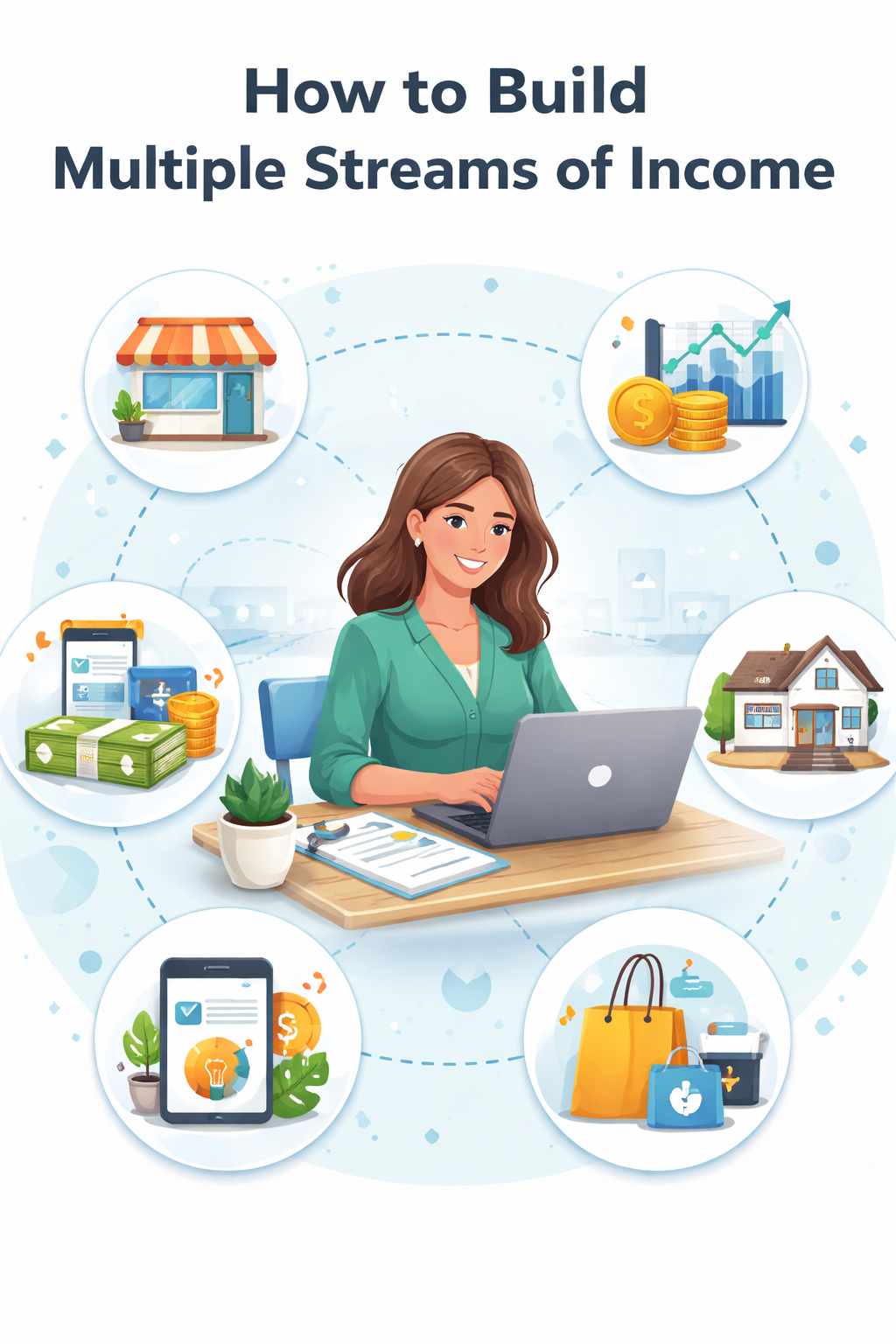
    Common income stream categories include employment income, freelance or consulting income, business income, investment income, and digital income. Understanding these categories helps you choose streams that align with your skills, risk tolerance, and financial goals.


    Why Relying on One Income Source Is Risky

    Depending on a single paycheck concentrates risk in one place. Job loss, reduced hours, company restructuring, or industry downturns can instantly disrupt financial stability. This reality became clear for many households during recent economic shocks in the United States, Canada, the UK, and parts of Europe.

    Multiple income streams create a buffer. When one source slows down, others can help absorb the impact. This does not eliminate risk entirely, but it significantly reduces vulnerability. Financial resilience is less about how much you earn and more about how diversified and adaptable your income is.

    There is also a psychological benefit. Knowing that you are not fully dependent on one employer or one client can reduce stress and improve decision-making. It allows you to negotiate better, take calculated risks, or invest in long-term opportunities without fear of immediate financial collapse.


    The Difference Between Active, Semi-Passive, and Passive Income

    Before building multiple streams, it helps to understand how different income types function.

    Active income requires your direct time and effort. Examples include salaried employment, hourly work, freelancing, and consulting. If you stop working, the income stops.

    Semi-passive income sits in the middle. These streams require upfront work and occasional maintenance but can generate income beyond the hours you actively invest. Rental properties, digital products, and membership-based services often fall into this category.

    Passive income, in its truest sense, is income that continues with minimal ongoing involvement. Dividend-paying investments or interest from certain financial instruments are common examples. However, reaching this stage typically requires capital, time, or both.

    A balanced income strategy often includes a mix of all three, evolving as your financial position strengthens.


    Starting With What You Already Have

    One of the most common mistakes people make is assuming they need entirely new skills or significant capital to build additional income streams. In reality, the most effective place to start is with what you already know.

    Your existing skills, professional experience, hobbies, and interests can often be monetized in ways that complement your primary income. Someone working in marketing might offer freelance services to small businesses. A teacher could create digital resources or offer online tutoring. A finance enthusiast might write educational content or build tools that help others manage money more effectively.

    This approach lowers the learning curve and reduces risk. It also makes it easier to test ideas without disrupting your main source of income. Many successful income streams begin as small side projects before growing into meaningful contributors.


    Building a Strong Financial Foundation First

    Before aggressively adding new income streams, it is essential to stabilize your financial base. Without this foundation, additional income can create more stress instead of relief.

    This includes having a basic budget, manageable debt, and a cash buffer for emergencies. A solid understanding of cash flow ensures that new income is not immediately consumed by poor financial habits. Articles like Understanding Different Types of Income and Budgeting Basics for Beginners provide helpful context for aligning income growth with financial stability.

    A strong foundation also allows you to reinvest earnings strategically. Instead of using every extra dollar for consumption, you can direct surplus income toward assets or opportunities that compound over time.


    Exploring Common Income Stream Options

    There is no universal formula for building multiple streams of income, but certain approaches are consistently popular due to accessibility and scalability.

    Freelancing and consulting remain among the most flexible options. They allow you to exchange expertise for income with minimal startup costs. Platforms are helpful, but long-term success often comes from direct client relationships and reputation.

    Digital products, such as ebooks, courses, templates, or tools, offer scalability. While they require upfront creation and marketing effort, they can reach a global audience across the US, UK, Canada, Europe, and Australia without geographic limitations.

    Online content creation—through blogs, newsletters, podcasts, or video platforms—can evolve into advertising, sponsorship, or affiliate income. This path requires patience, consistency, and trust-building, but it aligns well with long-term brand development.

    Investment-based income streams include stocks, bonds, real estate investment trusts, and other financial instruments. These typically require capital and a long-term mindset. Understanding risk, diversification, and time horizons is essential before committing funds.

    Small business ownership, whether online or offline, offers control and growth potential but comes with higher responsibility. Successful business income often takes longer to stabilize but can eventually outperform other streams.


    The Role of Time Management and Energy Allocation

    One overlooked aspect of building multiple income streams is managing time and energy. Adding income sources without considering capacity can lead to burnout and diminishing returns.

    The goal is not to do everything at once but to layer income streams intentionally. Many people begin by dedicating a few focused hours per week to a secondary project. Over time, as systems improve and income stabilizes, the workload becomes more manageable.

    Evaluating return on time invested is critical. An income stream that generates modest income but consumes significant mental energy may not be sustainable long-term. Prioritization helps ensure that each stream supports your broader financial goals.


    Avoiding Common Pitfalls Along the Way

    While the concept of multiple income streams is appealing, there are common mistakes that can undermine progress.

    One is chasing trends without understanding fundamentals. Not every popular opportunity aligns with your skills or risk tolerance. Sustainable income is built on value creation, not hype.

    Another mistake is spreading yourself too thin. Managing too many income streams at once can dilute focus and reduce overall effectiveness. Depth often matters more than breadth, especially in the early stages.

    There is also the risk of neglecting legal, tax, and compliance considerations. Different income streams may have different reporting requirements depending on whether you operate in the US, Canada, the UK, or the EU. Staying informed prevents costly issues later.


    How Multiple Streams Support Long-Term Financial Goals

    Multiple income streams are not just about earning more money; they support broader life goals. They can accelerate debt repayment, increase savings, fund investments, or provide flexibility to reduce working hours in your primary job.

    Over time, income diversification can create options. Some people use it to transition into self-employment, while others use it to supplement retirement savings or build generational wealth. The key is alignment—each stream should serve a clear purpose within your financial plan.

    Resources like How to Create a Long-Term Financial Plan and Smart Ways to Invest Extra Income can help connect income growth with meaningful outcomes.


    Thinking Long-Term Instead of Overnight Success

    Building multiple streams of income is a long-term process. It rarely happens overnight, and it often involves experimentation, setbacks, and refinement. The most successful individuals view income streams as evolving assets rather than quick wins.

    Consistency matters more than intensity. Small, regular efforts compound over time, especially when paired with learning and adaptation. What starts as a modest side income can grow into a significant pillar of financial security.

    It is also important to periodically review and adjust your income mix. Life circumstances, market conditions, and personal goals change. Flexibility ensures that your income strategy remains relevant and effective.


    Creating a Sustainable Income Ecosystem

    At its best, multiple streams of income form an ecosystem rather than a collection of disconnected efforts. One stream can support another by sharing skills, audiences, or resources. For example, content creation can support digital products, which in turn can fund investments.

    This interconnected approach reduces friction and increases efficiency. It also makes income growth feel more natural and less overwhelming.

    Ultimately, building multiple streams of income is about intentional design. It requires patience, self-awareness, and a willingness to grow. While the journey looks different for everyone, the underlying principle remains the same: financial stability is stronger when it rests on more than one foundation.

    By approaching income diversification thoughtfully and sustainably, you position yourself not just to earn more, but to live with greater confidence, flexibility, and control over your financial future.


    Frequently Asked Questions

    What does it mean to have multiple streams of income?

    Having multiple streams of income means earning money from more than one source at the same time. Instead of relying on a single paycheck, you diversify how you earn, which can improve financial stability and reduce the impact if one income source slows down or stops.

    Do I need a lot of money to start building multiple income streams?

    No. Many income streams can be started with little or no upfront capital, especially those based on skills, services, or digital products. While investment-based income may require money, beginners often start by leveraging time, knowledge, or experience instead of cash.

    How many income streams should a beginner aim for?

    There is no fixed number, but beginners should focus on building one additional stream at a time. Starting small allows you to learn, manage your time effectively, and avoid burnout. Over time, you can add more streams as your capacity and confidence grow.

    Is it better to focus on passive income or active income first?

    Most beginners start with active income because it is more accessible and easier to control. Passive income usually requires either upfront work or capital. Active income can later fund or support passive income opportunities as your financial position improves.

    How long does it take to see results from a new income stream?

    The timeline varies depending on the type of income stream and the effort involved. Some service-based income can generate earnings quickly, while digital products or investments may take months or longer. Consistency and realistic expectations are key to long-term success.
  • How Much Should You Invest vs Save?

    How Much Should You Invest vs Save?

    Few personal finance questions create as much quiet anxiety as this one. Every month, after paying rent or a mortgage, utilities, groceries, and the rest of adult life, there is a remainder. It might be large or modest, but it carries weight. Should it be saved for safety, or invested for growth? And if both matter, how much goes where?

    The tension between saving and investing is not really about numbers. It is about security versus opportunity, stability versus progress, peace of mind versus long-term ambition. Many people assume there must be a universal rule that solves this once and for all. In reality, the right balance evolves with income, age, responsibilities, and even temperament.

    This article breaks down how to think about saving and investing in a way that feels grounded and realistic, not rigid. Instead of formulas carved in stone, it offers principles you can adapt as your life changes.


    Why Saving and Investing Serve Different Purposes

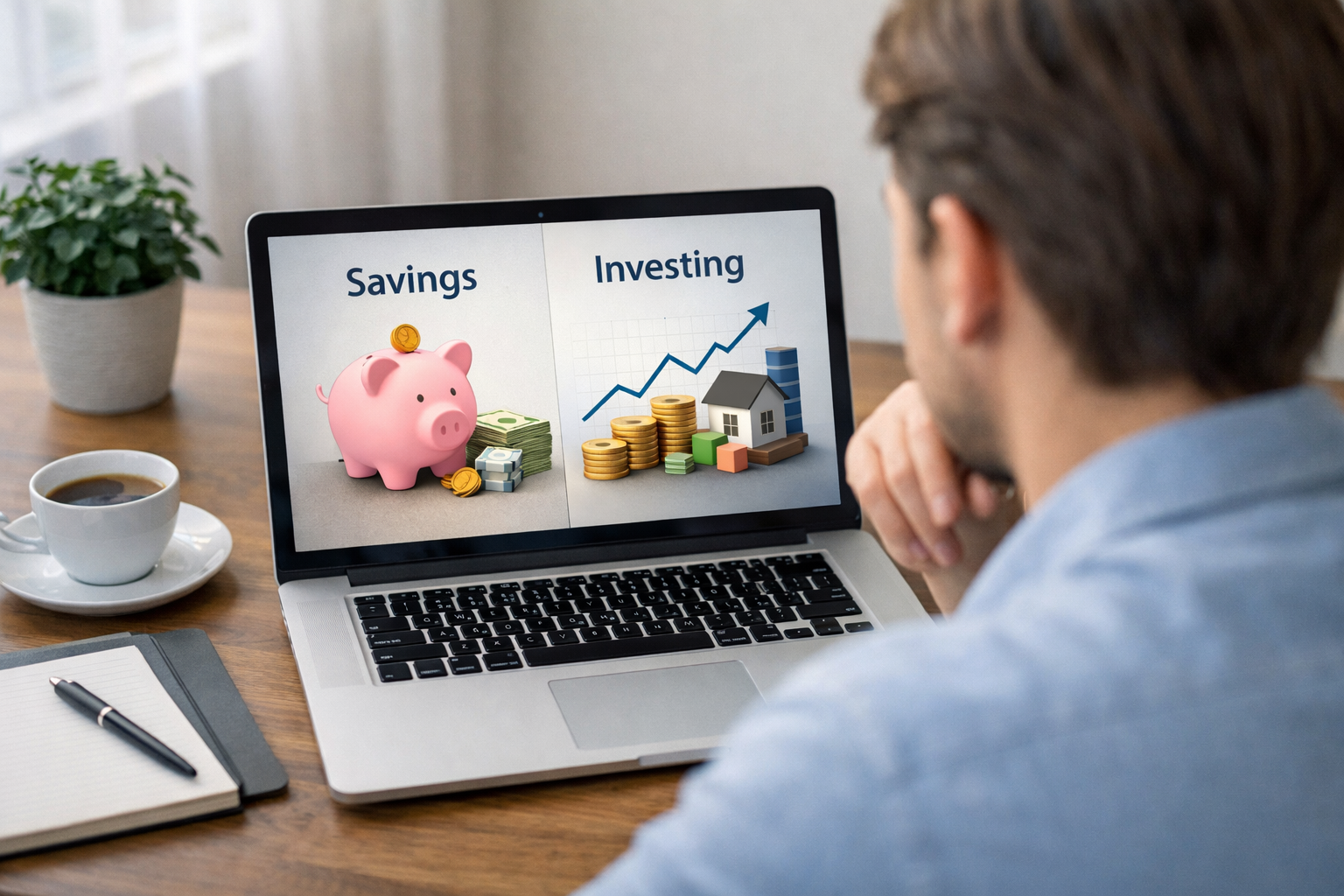
    At a glance, saving and investing can look like two versions of the same behavior: putting money aside instead of spending it. Under the surface, they serve very different roles.

    Saving is defensive by nature. It protects you from surprises. A car repair in Texas, a dental emergency in Ontario, a sudden job transition in London, or a medical expense in Germany all demand liquidity and certainty. Savings exist to keep your life stable when the unexpected happens.

    Investing, by contrast, is offensive. It is about growth, compounding, and time. Investments accept short-term uncertainty in exchange for the possibility of long-term gains. When done thoughtfully, investing is how people build wealth beyond what their salaries alone can provide.

    Understanding this difference matters because it reframes the question. You are not choosing between good and bad. You are choosing how much protection you need right now, and how much growth you can responsibly pursue.


    The Cost of Getting the Balance Wrong

    Leaning too far in either direction carries consequences.

    If you save excessively and avoid investing altogether, your money slowly loses purchasing power to inflation. Cash sitting in a standard savings account in the US or UK may feel safe, but over years, it quietly buys less. The opportunity cost becomes invisible until decades have passed.

    On the other hand, investing aggressively without sufficient savings can turn minor setbacks into financial crises. A market downturn combined with a job loss or unexpected expense forces people to sell investments at the worst possible time. What was meant to be long-term growth becomes short-term stress.

    The goal is not perfection. It is resilience. A healthy balance allows you to stay invested through market cycles without feeling financially exposed.


    Start With Your Financial Foundation

    Before discussing percentages, it helps to establish what saving actually means in practice. For most households, this begins with an emergency fund.

    An emergency fund is not an abstract concept. It is the difference between inconvenience and panic. Whether you live in the US, Canada, or the EU, the principle is the same: money that is accessible, stable, and separate from your daily spending.

    Most financial professionals suggest holding three to six months of essential expenses in savings. This range is intentionally broad. Someone with a stable government job in Australia may be comfortable closer to three months, while a freelancer in the UK might need closer to six.

    Until this foundation is in place, investing should remain limited. Not absent, but restrained. Without savings, every market fluctuation feels personal.

    For a deeper understanding of this baseline, many readers find it helpful to revisit Emergency Savings Fund: What It Is, How Much You Need, and Where to Keep It before committing heavily to investments.


    Income Stability Changes the Equation

    One of the most overlooked factors in the save-versus-invest decision is income reliability.

    If your income is predictable and consistent, you can generally afford to invest a higher percentage once your emergency savings are established. A salaried employee in California or a civil servant in France often has more flexibility than someone whose income varies month to month.

    Variable income requires a different mindset. When cash flow fluctuates, savings act as a buffer that smooths income gaps. In these cases, allocating a larger portion to savings during high-income months can prevent stress during leaner periods.

    This is not about being conservative. It is about matching your financial strategy to reality rather than ideals.


    Age Is a Factor, But Not the Only One

    Age is often used as a shortcut for financial advice, and while it matters, it should not be the sole determinant.

    Younger adults typically have a longer time horizon. This allows them to invest more aggressively because they have time to recover from downturns. Someone in their twenties in the US or Canada may reasonably prioritize investing once basic savings are in place.

    However, life circumstances complicate this narrative. A 28-year-old with dependents, student loans, and an unstable job may need more savings than a 45-year-old with no debt and a secure career.

    Likewise, older individuals are not automatically barred from investing. The focus simply shifts. As retirement approaches, preserving capital and ensuring liquidity become more important, but growth does not disappear entirely.

    The question is less about age and more about how soon you might need the money.


    Short-Term Goals Belong in Savings

    Time horizon is one of the clearest dividing lines between saving and investing.

    Money needed within the next few years should generally be saved, not invested. Market volatility over short periods is unpredictable, and there is no guarantee your investment will be worth more when you need it.

    Down payments on homes in the UK or Australia, upcoming tuition in the US or EU, or a planned career break all fall into this category. These goals benefit from stability, even if that means lower returns.

    Investments shine when time is on your side. Retirement, long-term wealth building, and future financial independence are well-suited to market exposure.


    A Practical Way to Think About Percentages

    Many people search for a single ratio that applies universally. While no ratio fits everyone, ranges can be useful starting points.

    For someone early in their career with stable income and no major short-term goals, a rough split after essential expenses might lean toward investing. This could mean directing a majority of surplus funds into retirement accounts or diversified investment portfolios.

    For those balancing multiple priorities, a more even split between saving and investing often feels sustainable. Savings cover emergencies and near-term plans, while investments quietly compound in the background.

    If you are rebuilding finances, managing debt, or facing uncertainty, prioritizing savings temporarily is not a failure. It is strategic patience.

    What matters most is consistency. Regular contributions, even modest ones, matter more than perfectly optimized ratios.


    Debt Changes the Conversation

    Debt adds another layer to the decision.

    High-interest debt, such as credit cards, often deserves attention before aggressive investing. The guaranteed return of paying down a 20 percent interest balance often outweighs expected market returns.

    Lower-interest debt, like many student loans or mortgages in the US, Canada, or Europe, allows for more nuance. Some individuals choose to invest while making regular debt payments, especially when interest rates are relatively low.

    The key is clarity. Understanding the cost of your debt helps determine whether saving, investing, or debt reduction offers the greatest benefit at a given moment.

    Readers exploring this balance alongside long-term planning often connect this topic with Smart Ways to Invest Extra Income, where the focus shifts from whether to invest to how to do so responsibly.


    Emotional Comfort Matters More Than Optimization

    Personal finance is deeply personal, even when numbers suggest a clear answer.

    Some people sleep better knowing they have substantial savings. Others feel uneasy seeing large amounts of cash sitting idle. Neither reaction is wrong.

    An optimal strategy on paper that causes constant anxiety is unlikely to be sustained. The best approach is one you can maintain through market swings, job changes, and life transitions.

    This emotional dimension explains why two people with identical incomes can reasonably choose different balances between saving and investing.


    How Life Events Shift Priorities

    Financial strategies are not static. Major life events often force reassessment.

    Marriage, children, relocation, or career changes typically increase the value of liquidity. Savings often take precedence during these transitions, even for experienced investors.

    Conversely, periods of stability can justify a renewed focus on investing. When expenses are predictable and savings are sufficient, directing more toward growth becomes logical.

    The mistake many people make is failing to adjust. What worked five years ago may no longer fit today.


    The Role of Automation and Structure

    One way to reduce the mental burden of this decision is structure.

    Automating contributions to both savings and investments removes emotion from the process. Savings grow quietly. Investments compound in the background. Decisions happen once, not every month.

    This structure also prevents extremes. You are less likely to over-save out of fear or over-invest out of optimism when both are built into your system.

    For beginners still finding their footing, Investing for Beginners: How to Start Building Wealth the Smart Way provides helpful context on building confidence without rushing the process.


    Re-framing the Question

    Instead of asking how much you should invest versus save, a more useful question often emerges: what does my current stage of life require?

    Sometimes the answer emphasizes safety. Other times it favors growth. Most often, it calls for both.

    Saving and investing are not rivals competing for your money. They are partners serving different roles at different times. When balanced thoughtfully, they create both stability today and opportunity tomorrow.


    Final Perspective

    There is no finish line where you suddenly stop saving and start investing, or vice versa. The two move together, adjusting as your life evolves.

    A solid savings foundation gives you the confidence to invest patiently. Wise investing ensures your future self is not solely dependent on income or luck. When aligned, they reinforce each other.

    The most important step is not finding the perfect ratio. It is building a system that reflects your reality, respects your comfort level, and adapts as your goals change.

    When you approach saving and investing this way, the question becomes less stressful and more empowering. You are no longer choosing between security and growth. You are intentionally designing both.


    Frequently Asked Questions

    How do I know whether I should save or invest my money first?

    If you don’t yet have an emergency fund, saving usually comes first. Having cash set aside for unexpected expenses protects you from needing to sell investments at a bad time. Once that safety net exists, investing becomes far less stressful and more sustainable.

    Is it okay to invest if I don’t have a lot of savings yet?

    Yes, but in moderation. Many beginners start investing small amounts while still building savings. The key is making sure a surprise expense won’t force you to pull money out of the market prematurely. Balance matters more than speed.

    How much money should I keep in savings before investing seriously?

    A common guideline is three to six months of essential expenses, but this depends on job stability, income consistency, and personal comfort. Someone with unpredictable income may need more, while a stable salaried worker may need less.

    Should I stop investing when the market feels risky and save instead?

    Not necessarily. Market ups and downs are normal, and stopping investments during uncertainty can hurt long-term results. Instead of reacting emotionally, many beginners benefit from maintaining steady contributions while keeping adequate savings for short-term needs.

    Does my age really matter when deciding how much to save versus invest?

    Age matters, but it’s not everything. Time horizon, income stability, and upcoming expenses often matter more. Younger people usually have more time to recover from market swings, but life responsibilities can shift priorities at any age.